What does Proverbs 12:20 mean?
“Deceit is in the heart of them that imagine evil: but to the counsellors of peace is joy.” — Proverbs 12:20
“Deceit is in the heart of them that imagine evil: but to the counsellors of peace is joy.” (Proverbs 12:20, KJV)
In this proverb Solomon sets two inner worlds side by side and shows how the life of the heart inevitably ripens into an atmosphere of either unrest or gladness. The verse begins with the hidden center of a person, “the heart,” because Proverbs repeatedly treats the heart not merely as the seat of emotion but as the command center of thought, desire, intention, and moral direction. When it says, “Deceit is in the heart of them that imagine evil,” it is not speaking only of occasional dishonesty, but of a settled inward condition. The word “imagine” points to deliberate planning and mental shaping. Evil is not merely stumbled into; it is pictured as rehearsed, devised, and entertained. The result is “deceit” within—an inward crookedness that accompanies a crooked aim. The one who plots wrongdoing must also cultivate falsehood: falsehood toward others to conceal the plot, and often falsehood toward self to justify it. In that sense the proverb uncovers a moral irony: those who are occupied with evil end up inhabited by deception. Their interior life becomes divided, double, and unstable, because evil typically requires concealment, manipulation, and the masking of true motives.
The second half provides a contrasting portrait: “but to the counsellors of peace is joy.” The phrase “counsellors of peace” emphasizes speech that guides, not merely speech that comments. A counsellor is someone who gives direction, advice, and planning. Peace in the biblical sense is more than the absence of conflict; it is the pursuit of wholeness, right order, and restored relationships. So these are people who do not merely wish peace vaguely; they counsel it, meaning they labor with words and wisdom to bring about reconciliation, stability, and upright outcomes. Their inward state and their outward work agree with one another. Instead of hidden schemes they offer open guidance; instead of manipulation they seek settlement and healing. The proverb says the fruit of that orientation is “joy.” This joy is not presented as a shallow mood but as a moral consequence: when a person’s counsel aims at peace, the inner life is not burdened by the strain of secrecy and duplicity. Joy fits the counsellor of peace because their conscience is not continually negotiating with lies, and because peace-making participates in what God commends as good.
The structure of the verse is a classic Proverbial contrast, and its context in Proverbs 12 reinforces the idea that character and speech are inseparable. Throughout the chapter, righteousness is linked with truthful lips and steadiness, while wickedness is linked with perverse speech, snares, and self-inflicted trouble. In that stream of thought, Proverbs 12:20 functions as a window into the engine room behind speech: words come from counsel, counsel comes from the heart, and the heart is shaped by what it continually “imagines.” If a person habitually imagines evil, deception will not remain an occasional tool; it becomes an internal atmosphere. If a person is committed to peace, joy is not an accidental bonus; it is the fitting companion of integrity and constructive purpose.
There is also symbolism in the movement from “heart” to “counsellors.” Evil and deceit are described as residing within, suggesting hiddenness and inward captivity. Peace and joy are described in relation to counsel, suggesting outward expression and shared benefit. Deceit is solitary and secretive; counsel for peace is communal and constructive. The proverb therefore hints at the social consequences of inner life: the schemer spreads confusion, mistrust, and fracture; the peacemaker spreads stability, confidence, and harmony. Yet Solomon’s focus remains on what these paths do to the person walking them. The one path breeds inward falseness; the other yields inward gladness.
The significance of Proverbs 12:20, then, is that it exposes planning as moral. It is not only actions that are judged, but the counsels and imaginings that precede them. The verse warns that to entertain evil is to invite deceit into the very heart, and it commends peace-making as a vocation of wisdom whose reward is joy. It teaches that the interior life cannot be safely separated from the counsel one gives and the world one helps create: the heart that plots wrong becomes a home for lies, while the heart that advises peace becomes a home for joy.
Get our apps


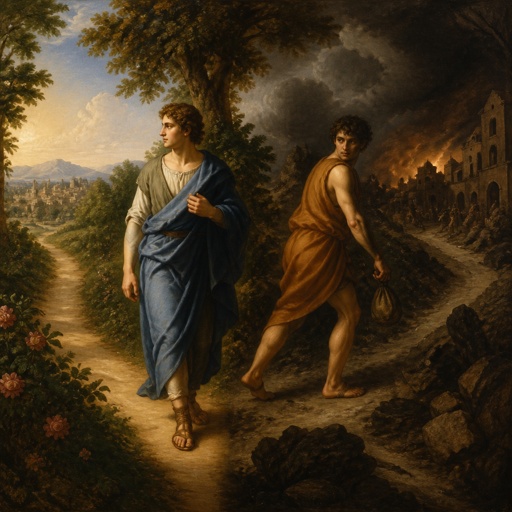
Artwork for Proverbs 12:20

Proverbs 12:20 - "Deceit is in the heart of them that imagine evil: but to the counsellors of peace is joy."

"Deceit is in the heart of them that imagine evil: but to the counsellors of peace is joy." - Proverbs 12:20

Proverbs 20:12 - "The hearing ear, and the seeing eye, the LORD hath made even both of them."

"The hearing ear, and the seeing eye, the LORD hath made even both of them." - Proverbs 20:12

proverbs 1:20

proverbs 1:20
Proverbs 20:24

proverbs 1:20

proverbs 1:20

proverbs 1:20

proverbs 1:20

proverbs 1:20

proverbs 1:20

proverbs 1:20

proverbs 1:20

proverbs 1:20

proverbs 1:20

proverbs 1:20

proverbs 1:20

Proverbs 1:20

proverbs 1:20

proverbs 1:20

proverbs 1:20

proverbs 1:20

proverbs 1:20

Proverbs 26:20

proverbs 1:20

proverbs 1:20

proverbs 1:20

proverbs 1:20