What does Proverbs 16:10 mean?
“A divine sentence is in the lips of the king: his mouth transgresseth not in judgment.” — Proverbs 16:10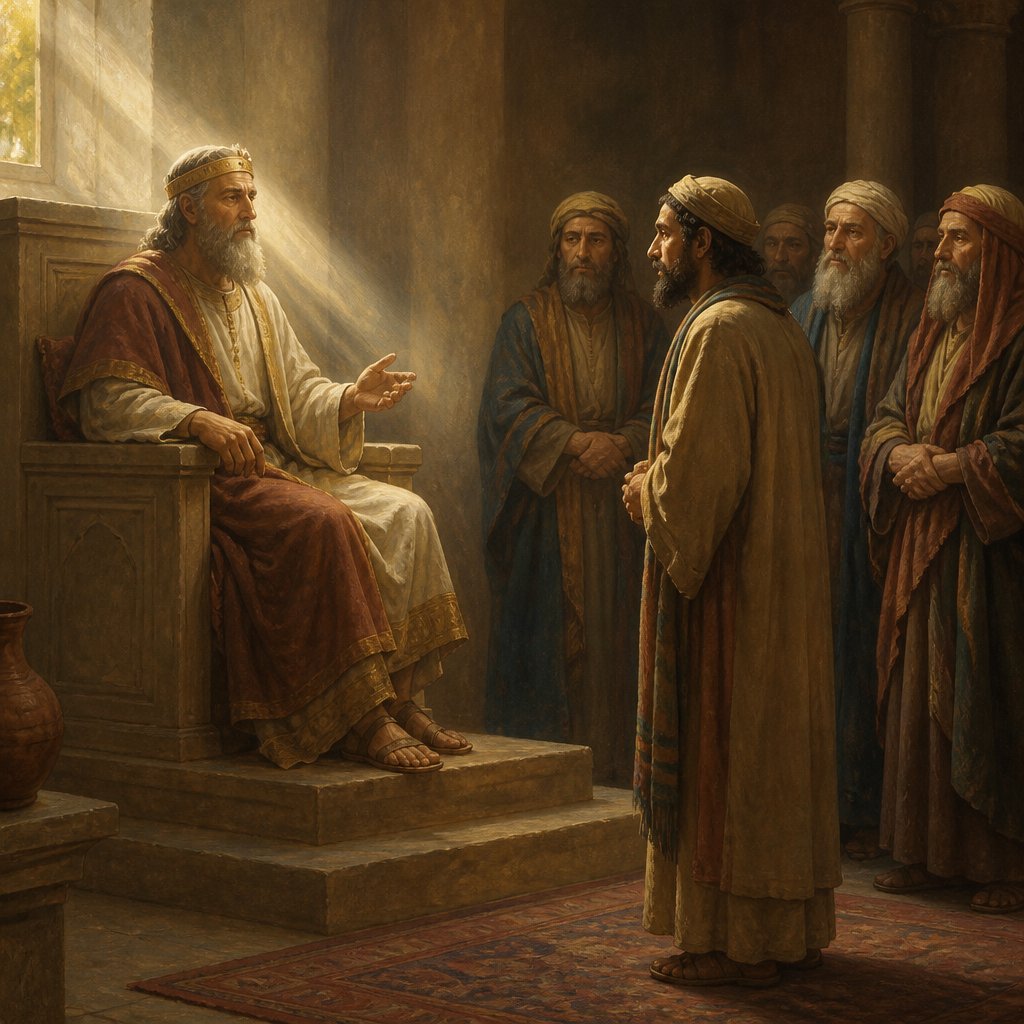
Proverbs 16:10 in the King James Version of the Bible says, "A divine sentence is in the lips of the king: his mouth transgresseth not in judgment." This verse speaks to the concept of divine authority and the responsibility of rulers to exercise fair and just judgment.
In this verse, the "divine sentence" is a reflection of the righteousness and wisdom that the king is supposed to embody. It suggests that the words spoken by a king should reflect righteous judgment and be in line with the will of God. This is a significant concept in the Bible, as the role of a king or ruler was often seen as a reflection of the authority of God. In this sense, the verse conveys the idea that the words and actions of a ruler should align with the divine will and be a reflection of justice and righteousness.
The second part of the verse, "his mouth transgresseth not in judgment," further emphasizes the importance of fair and just judgment. It implies that the words spoken by the king should not go against the principles of righteousness and morality. This speaks to the idea that a ruler should be held accountable for their actions and decisions, and that they should strive to always act in a just and fair manner.
The themes present in this verse are those of divine authority, responsibility, and justice. The verse reflects the belief in the divine right of kings, which was a concept that held that a monarch's authority to rule came directly from God. This idea is rooted in the Bible, where God is often depicted as the ultimate authority, and earthly rulers are seen as having a responsibility to govern in accordance with God's will.
The verse also speaks to the responsibility of those in positions of authority to exercise fair and just judgment. It conveys the idea that rulers should be guided by moral principles and should strive to act in a way that reflects the righteousness and justice of God. This theme is consistent with the broader biblical emphasis on justice and righteousness, and the importance of treating others with fairness and compassion.
In terms of context, the book of Proverbs is a collection of wise sayings and teachings attributed to King Solomon, who was known for his wisdom. The verse in question is part of a larger section of Proverbs that focuses on the qualities of a wise and righteous ruler. Throughout the book, there is an emphasis on the importance of seeking wisdom and living in accordance with moral principles. This verse fits into that broader context by highlighting the importance of rulers embodying the principles of righteousness and justice.
Symbolically, the "divine sentence" mentioned in the verse can be seen as representing the will of God. The idea is that the words spoken by the king should reflect God's will and be in line with divine wisdom and righteousness. This symbolizes the belief in divine guidance and the importance of seeking God's will in matters of governance.
Overall, Proverbs 16:10 conveys the important theme of divine authority and the responsibility of rulers to exercise fair and just judgment. It reflects the biblical emphasis on seeking wisdom and living according to moral principles, and highlights the importance of rulers embodying these principles in their words and actions. It serves as a reminder of the importance of leaders acting in a way that reflects the will of God and promotes righteousness and justice.
Get our apps


Artwork for Proverbs 16:10

Proverbs 16:10 - "A divine sentence is in the lips of the king: his mouth transgresseth not in judgment."

"A divine sentence is in the lips of the king: his mouth transgresseth not in judgment." - Proverbs 16:10
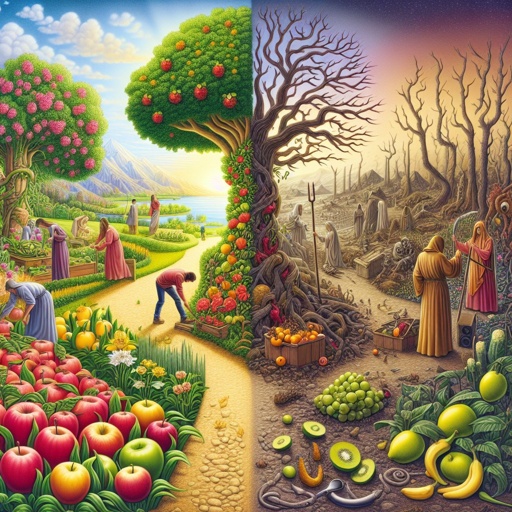
Proverbs 10:16 - "The labour of the righteous tendeth to life: the fruit of the wicked to sin."

"The labour of the righteous tendeth to life: the fruit of the wicked to sin." - Proverbs 10:16

Proverbs 16

Proverbs 27:16

Proverbs 10

Proverbs 16:16 - "How much better is it to get wisdom than gold! and to get understanding rather to be chosen than silver!"

Proverbs 18 10

Proverbs 18 10

Proverbs 10:10 - "He that winketh with the eye causeth sorrow: but a prating fool shall fall."

Proverbs 10:1 - "The proverbs of Solomon. A wise son maketh a glad father: but a foolish son is the heaviness of his mother."

Proverbs 3:9-10

Proverbs 16:33 - "The lot is cast into the lap; but the whole disposing thereof is of the LORD."

Proverbs 16:24 - "Pleasant words are as an honeycomb, sweet to the soul, and health to the bones."

Proverbs 16:31 - "The hoary head is a crown of glory, if it be found in the way of righteousness."

Proverbs 16:14 - "The wrath of a king is as messengers of death: but a wise man will pacify it."

Proverbs 1:16 - "For their feet run to evil, and make haste to shed blood."

Proverbs 16:1 - "The preparations of the heart in man, and the answer of the tongue, is from the LORD."

Proverbs 16:12 - "It is an abomination to kings to commit wickedness: for the throne is established by righteousness."

Proverbs 16:26 - "He that laboureth laboureth for himself; for his mouth craveth it of him."

Proverbs 16:19 - "Better it is to be of an humble spirit with the lowly, than to divide the spoil with the proud."

Proverbs 5:16 - "Let thy fountains be dispersed abroad, and rivers of waters in the streets."

Proverbs 8:16 - "By me princes rule, and nobles, even all the judges of the earth."

Proverbs 16:13 - "Righteous lips are the delight of kings; and they love him that speaketh right."

Proverbs 16:8 - "Better is a little with righteousness than great revenues without right."

Proverbs 11:16 - "A gracious woman retaineth honour: and strong men retain riches."

Proverbs 16:28 - "A froward man soweth strife: and a whisperer separateth chief friends."

Proverbs 12:16 - "A fool's wrath is presently known: but a prudent man covereth shame."

Proverbs 23:10 - "Remove not the old landmark; and enter not into the fields of the fatherless:"