What does Proverbs 16:20 mean?
“He that handleth a matter wisely shall find good: and whoso trusteth in the LORD, happy is he.” — Proverbs 16:20
“Proverbs 16:20” in the King James Version reads, “He that handleth a matter wisely shall find good: and whoso trusteth in the LORD, happy is he.”
In its plain sense, the verse joins two inseparable truths that Proverbs often keeps side by side: the responsible use of understanding in the affairs of life, and the deeper, Godward posture of faith. The first clause speaks of a person “that handleth a matter wisely.” The wording suggests more than merely knowing what is right; it suggests taking something in hand, bearing it, managing it, carrying it through with discretion. A “matter” in Proverbs can be a dispute, a duty, a decision, a business, a relationship, a word to be spoken, or any providential circumstance that falls to a person’s stewardship. To “handle” it “wisely” is to deal with it according to the kind of wisdom Proverbs has been commending all along: wisdom that is practical, moral, restrained, teachable, and aware that God governs outcomes. When such wisdom governs the handling of the matter, the promise is that the person “shall find good.” “Find” is significant; it implies that good is not always immediately visible or effortless, but it is discovered as one proceeds in the path of prudent obedience. “Good” in Proverbs is not mere pleasantness or worldly advantage only, but what is truly beneficial, fitting, sound, and conducive to life as God intends it. It includes the kind of good that comes through peaceable words, fair dealing, patience, humility, and the avoidance of rashness, because these are recurring marks of the wise.
The second clause takes what might otherwise be read as a general maxim about skillful living and anchors it in the covenant reality of Israel’s God: “and whoso trusteth in the LORD, happy is he.” Wisdom in Proverbs is never meant to be detached self-reliance; it is meant to be the fruit of fearing the LORD and leaning on His direction rather than one’s own understanding. By adding “whoso trusteth in the LORD,” the verse teaches that the highest wisdom is not merely competent management of circumstances but confidence placed in the LORD Himself. The result named here is “happy,” a word that in the Proverbs tradition points to a settled blessedness rather than a passing mood. It is the well-being of a person whose life rests in God’s care, whose conscience is not at war with God, and whose expectations are not ultimately chained to uncertain outcomes. Even when the “good” one “find[s]” is not immediate prosperity, the one who trusts in the LORD possesses a happiness grounded in God’s faithfulness rather than in the volatility of the “matter” being handled.
The context of Proverbs 16 strengthens this reading. The chapter repeatedly teaches that human plans and actions are real, but God’s rule is decisive, and therefore humility and dependence are central to wisdom. This chapter speaks of the LORD’s ordering, the danger of pride, the value of righteous speech, and the superior worth of wisdom over mere gain. In that light, “handleth a matter wisely” is not a celebration of human cleverness as an end in itself; it is the proper exercise of discernment under divine sovereignty. Likewise, “trusteth in the LORD” is not an alternative to wisdom but its foundation and crown. Proverbs often holds together the call to diligence and prudence with the call to faith, because wisdom without trust can become anxious control, and trust without wisdom can become presumption or carelessness. This verse quietly unites both: wise engagement with real responsibilities, and restful reliance upon God.
There is also a subtle symbolism in the movement of the verse. The “matter” represents the tangible, immediate sphere of life—the thing in your hands. “Wisely” represents the inner moral and spiritual skill that governs how the hands act. “Find good” suggests that wisdom leads a person into paths where goodness is encountered rather than manufactured by force. Then the verse lifts the eyes higher: beyond the matter, beyond even the wise handling of it, to the LORD Himself. The final word, “happy,” becomes the atmosphere of the life oriented by trust. In that way the verse teaches significance on two levels at once: it commends wise conduct as the ordinary instrument by which God brings “good” into a person’s path, and it declares that the truest blessedness is not finally in mastering the situation but in trusting the LORD who stands above every situation.
Taken together, Proverbs 16:20 is a compact portrait of biblical wisdom: the wise person takes life seriously enough to “handle” what is given with discernment, and the godly person takes God seriously enough to entrust outcomes and identity to the LORD. The promise is not that every matter will be easy, but that wisdom will not be wasted, goodness will be found in God’s appointed ways, and happiness belongs to the one whose confidence is in the LORD.
Get our apps


Artwork for Proverbs 16:20

Proverbs 16:20 - "He that handleth a matter wisely shall find good: and whoso trusteth in the LORD, happy is he."

"He that handleth a matter wisely shall find good: and whoso trusteth in the LORD, happy is he." - Proverbs 16:20

Proverbs 20:16 - "Take his garment that is surety for a stranger: and take a pledge of him for a strange woman."
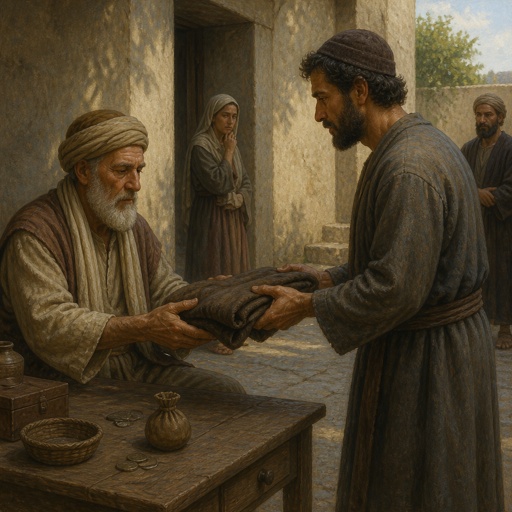
"Take his garment that is surety for a stranger: and take a pledge of him for a strange woman." - Proverbs 20:16

proverbs 1:20

proverbs 1:20

Proverbs 16

proverbs 1:20

proverbs 1:20

proverbs 1:20

proverbs 1:20

proverbs 1:20

proverbs 1:20

proverbs 1:20

proverbs 1:20

proverbs 1:20

proverbs 1:20

proverbs 1:20

proverbs 1:20

Proverbs 1:20

proverbs 1:20

proverbs 1:20

proverbs 1:20

proverbs 1:20

proverbs 1:20

proverbs 1:20

proverbs 1:20

proverbs 1:20

proverbs 1:20

proverbs 1:20