What does Proverbs 25:7 mean?
“For better it is that it be said unto thee, Come up hither; than that thou shouldest be put lower in the presence of the prince whom thine eyes have seen.” — Proverbs 25:7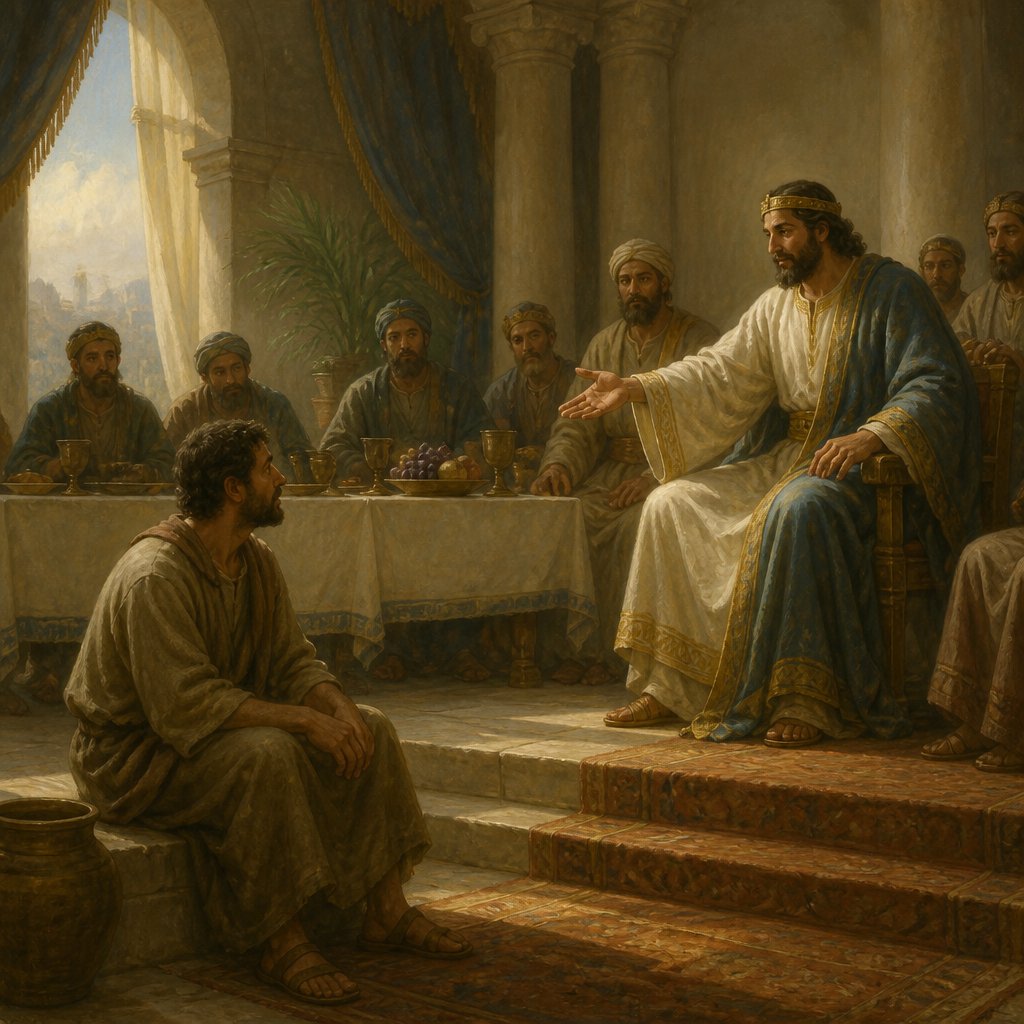
Proverbs 25:7 in the King James Version of the Bible states, "For better it is that it be said unto thee, Come up hither; than that thou shouldest be put lower in the presence of the prince whom thine eyes have seen." This verse is a part of the Book of Proverbs, which is attributed to King Solomon, who is considered one of the wisest and most influential figures in the Old Testament.
The verse can be understood as a piece of advice on humility and self-awareness. The image of being called up to a higher place in the presence of a king or prince is contrasted with the humiliation of being moved down to a lower position. The verse suggests that it is better to be humble and modest, allowing others to acknowledge and elevate you, rather than seeking to exalt yourself and risk being humiliated in the presence of those in authority.
One of the key themes present in this verse is the virtue of humility. Humility is frequently emphasized in the Bible, and it is often contrasted with the negative qualities of pride and self-importance. The verse encourages individuals to be humble and to avoid seeking recognition or status for themselves. Instead, it promotes the idea of allowing others to honor and elevate them, rather than seeking self-promotion.
The verse also addresses the importance of self-awareness and understanding one's place in the world. It suggests that individuals should be mindful of their own positions and not seek to elevate themselves beyond what is appropriate. By acknowledging and being content with one's rightful place, individuals can avoid the embarrassment and shame that can come from being overly ambitious or presumptuous.
This verse can also be understood within the context of the social and political structures of the time in which it was written. During the biblical era, honor and status were highly valued, and individuals were often eager to seek recognition and position themselves favorably in the eyes of those in authority. In this context, the verse serves as a cautionary reminder about the dangers of ambition and the risks of overstepping one's place in the social hierarchy.
Symbolically, the imagery of being called up or put lower in the presence of a prince can be seen as representative of the spiritual and moral dynamics at play in the world. The prince can be interpreted as a symbol of authority and power, while the act of being called up or put lower reflects the ways in which individuals interact with and respond to those in positions of influence. By using this imagery, the verse conveys a deeper message about the importance of humility and the potential consequences of seeking to exalt oneself.
Ultimately, Proverbs 25:7 offers timeless wisdom about the virtues of humility, self-awareness, and contentment. It encourages individuals to approach their relationships and interactions with a mindset of modesty and respect, while also highlighting the potential pitfalls of pride and ambition. In its broader context, this verse reflects the moral and spiritual principles that are woven throughout the Bible, emphasizing the importance of humility and the dangers of arrogance.
Get our apps


Artwork for Proverbs 25:7

Proverbs 25:7 - "For better it is that it be said unto thee, Come up hither; than that thou shouldest be put lower in the presence of the prince whom thine eyes have seen."
"For better it is that it be said unto thee, Come up hither; than that thou shouldest be put lower in the presence of the prince whom thine eyes have seen." - Proverbs 25:7

Proverbs 7:25 - "Let not thine heart decline to her ways, go not astray in her paths."

"Let not thine heart decline to her ways, go not astray in her paths." - Proverbs 7:25

Proverbs 25:1 - "These are also proverbs of Solomon, which the men of Hezekiah king of Judah copied out."

Proverbs 25:25 - "As cold waters to a thirsty soul, so is good news from a far country."

Proverbs 7:25-27 - "Let not thine heart decline to her ways, go not astray in her paths. For she hath cast down many wounded: yea, many strong men have been slain by her. Her house is the way to hell, going down to the chambers of death."

Proverbs 21:25 - "The desire of the slothful killeth him; for his hands refuse to labour."

Proverbs 30:25 - "The ants are a people not strong, yet they prepare their meat in the summer;"

Proverbs 25:3 - "The heaven for height, and the earth for depth, and the heart of kings is unsearchable."

Proverbs 25:15 - "By long forbearing is a prince persuaded, and a soft tongue breaketh the bone."

Proverbs 10:25 - "As the whirlwind passeth, so is the wicked no more: but the righteous is an everlasting foundation."

Proverbs 14:25 - "A true witness delivereth souls: but a deceitful witness speaketh lies."

Proverbs 15:25 - "The LORD will destroy the house of the proud: but he will establish the border of the widow."

Proverbs 25:11 - "A word fitly spoken is like apples of gold in pictures of silver."

Proverbs 3:25 - "Be not afraid of sudden fear, neither of the desolation of the wicked, when it cometh."

Proverbs 17:25 - "A foolish son is a grief to his father, and bitterness to her that bare him."

Proverbs 25:24 - "It is better to dwell in the corner of the housetop, than with a brawling woman and in a wide house."

Proverbs 8:25 - "Before the mountains were settled, before the hills was I brought forth:"

Proverbs 12:25 - "Heaviness in the heart of man maketh it stoop: but a good word maketh it glad."

Proverbs 22:25 - "Lest thou learn his ways, and get a snare to thy soul."

Proverbs 27:25 - "The hay appeareth, and the tender grass sheweth itself, and herbs of the mountains are gathered."

"As cold waters to a thirsty soul, so is good news from a far country." - Proverbs 25:25

Proverbs 25:2 - "It is the glory of God to conceal a thing: but the honour of kings is to search out a matter."

Proverbs 31:25 - "Strength and honour are her clothing; and she shall rejoice in time to come."

Proverbs 25:6 - "Put not forth thyself in the presence of the king, and stand not in the place of great men:"

Proverbs 16:25 - "There is a way that seemeth right unto a man, but the end thereof are the ways of death."

Proverbs 13:25 - "The righteous eateth to the satisfying of his soul: but the belly of the wicked shall want."

Proverbs 25:9 - "Debate thy cause with thy neighbour himself; and discover not a secret to another:"

Proverbs 20:25 - "It is a snare to the man who devoureth that which is holy, and after vows to make enquiry."