What does Psalms 106:19 mean?
“They made a calf in Horeb, and worshipped the molten image.” — Psalms 106:19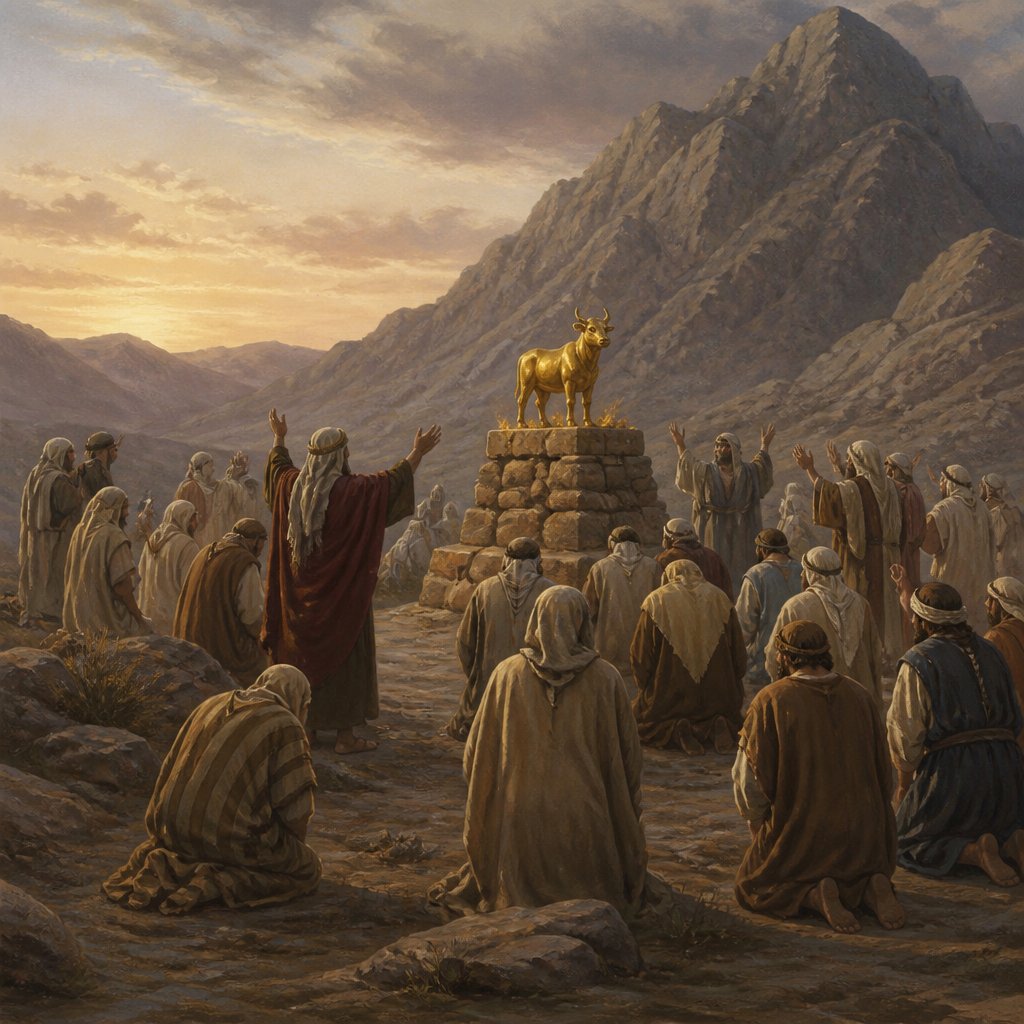
Psalms 106:19 (KJV) "They made a calf in Horeb, and worshipped the molten image."
This verse is a part of Psalm 106, which is a reflection on the history of Israel and God's faithfulness to them. The psalm recalls the acts of the Lord and the disobedience of the people. The verse speaks of the incident when the Israelites made a golden calf at Horeb and worshipped it.
The context of this verse is the time when the Israelites had just been delivered from slavery in Egypt by the mighty hand of God. God had performed numerous miracles to demonstrate His power and free the Israelites from bondage. However, despite experiencing God's faithfulness and provision, the Israelites quickly turned away from Him and resorted to idol worship.
The theme of this verse is the unfaithfulness and disobedience of the Israelites. Throughout their history, the Israelites repeatedly turned away from God and sought after false gods and idols. The incident at Horeb is a poignant example of the Israelites' lack of faith and their inclination towards idolatry.
The act of making a golden calf and worshipping it was a direct violation of the first commandment given to Moses, "Thou shalt have no other gods before me" (Exodus 20:3). The Israelites' actions at Horeb revealed their ingratitude towards God's deliverance and their willingness to forsake the one true God for a man-made idol.
The symbolism of the golden calf is significant in this verse. In ancient Near Eastern cultures, the bull was often considered a symbol of strength and fertility. By making a golden calf, the Israelites were essentially rejecting the spiritual strength and fertility that God provided and seeking it in a man-made object. The calf also symbolizes the impatience and lack of trust that the Israelites had in God's promises, as they chose to create their own god rather than wait for the true God to reveal His plans for them.
The verse also serves as a warning to future generations about the dangers of idolatry and disobedience. The psalmist uses the example of the golden calf to remind the readers of the consequences of turning away from the true God. The Israelites' actions led to God's anger and judgment upon them, which resulted in severe consequences for their disobedience.
In the broader context of Psalm 106, this verse is a part of a larger narrative that highlights the cyclical nature of Israel's disobedience and God's forgiveness. Despite the Israelites' repeated failures, God remained faithful to His covenant and continued to show mercy towards them.
Overall, Psalm 106:19 serves as a sobering reminder of the consequences of turning away from God and the dangers of idolatry. It is a call to examine our own lives and ensure that we are not putting anything above God in our hearts. The verse challenges us to remain faithful and obedient to God, acknowledging His sovereignty and rejecting the false idols that seek to take His place in our lives.
Get our apps


Artwork for Psalms 106:19

Psalms 106:19 - "They made a calf in Horeb, and worshipped the molten image."
"They made a calf in Horeb, and worshipped the molten image." - Psalms 106:19

"Then believed they his words; they sang his praise." - Psalms 106:12

"Yea, they sacrificed their sons and their daughters unto devils," - Psalms 106:37

"They soon forgat his works; they waited not for his counsel:" - Psalms 106:13

"Thus they changed their glory into the similitude of an ox that eateth grass." - Psalms 106:20

"They envied Moses also in the camp, and Aaron the saint of the LORD." - Psalms 106:16

"Yea, they despised the pleasant land, they believed not his word:" - Psalms 106:24

"And he gave them their request; but sent leanness into their soul." - Psalms 106:15

"They did not destroy the nations, concerning whom the LORD commanded them:" - Psalms 106:34

Psalms 106:14 - "But lusted exceedingly in the wilderness, and tempted God in the desert."

Psalms 106:35 - "But were mingled among the heathen, and learned their works."

"Wondrous works in the land of Ham, and terrible things by the Red sea." - Psalms 106:22

"The earth opened and swallowed up Dathan, and covered the company of Abiram." - Psalms 106:17

Psalms 106:37 - "Yea, they sacrificed their sons and their daughters unto devils,"

Psalms 106:11 - "And the waters covered their enemies: there was not one of them left."

Psalms 106:12 - "Then believed they his words; they sang his praise."

Psalms 106:25 - "But murmured in their tents, and hearkened not unto the voice of the LORD."

Psalms 106:20 - "Thus they changed their glory into the similitude of an ox that eateth grass."

Psalms 106:13 - "They soon forgat his works; they waited not for his counsel:"

Psalms 106:36 - "And they served their idols: which were a snare unto them."

"Then stood up Phinehas, and executed judgment: and so the plague was stayed." - Psalms 106:30

"They forgat God their saviour, which had done great things in Egypt;" - Psalms 106:21

Psalms 106:16 - "They envied Moses also in the camp, and Aaron the saint of the LORD."

Psalms 106:18 - "And a fire was kindled in their company; the flame burned up the wicked."

Psalms 106:15 - "And he gave them their request; but sent leanness into their soul."

Psalms 106:24 - "Yea, they despised the pleasant land, they believed not his word:"

"They joined themselves also unto Baal-peor, and ate the sacrifices of the dead." - Psalms 106:28

Psalms 106:31 - "And that was counted unto him for righteousness unto all generations for evermore."

Psalms 106:27 - "To overthrow their seed also among the nations, and to scatter them in the lands."