What does Psalms 106:30 mean?
“Then stood up Phinehas, and executed judgment: and so the plague was stayed.” — Psalms 106:30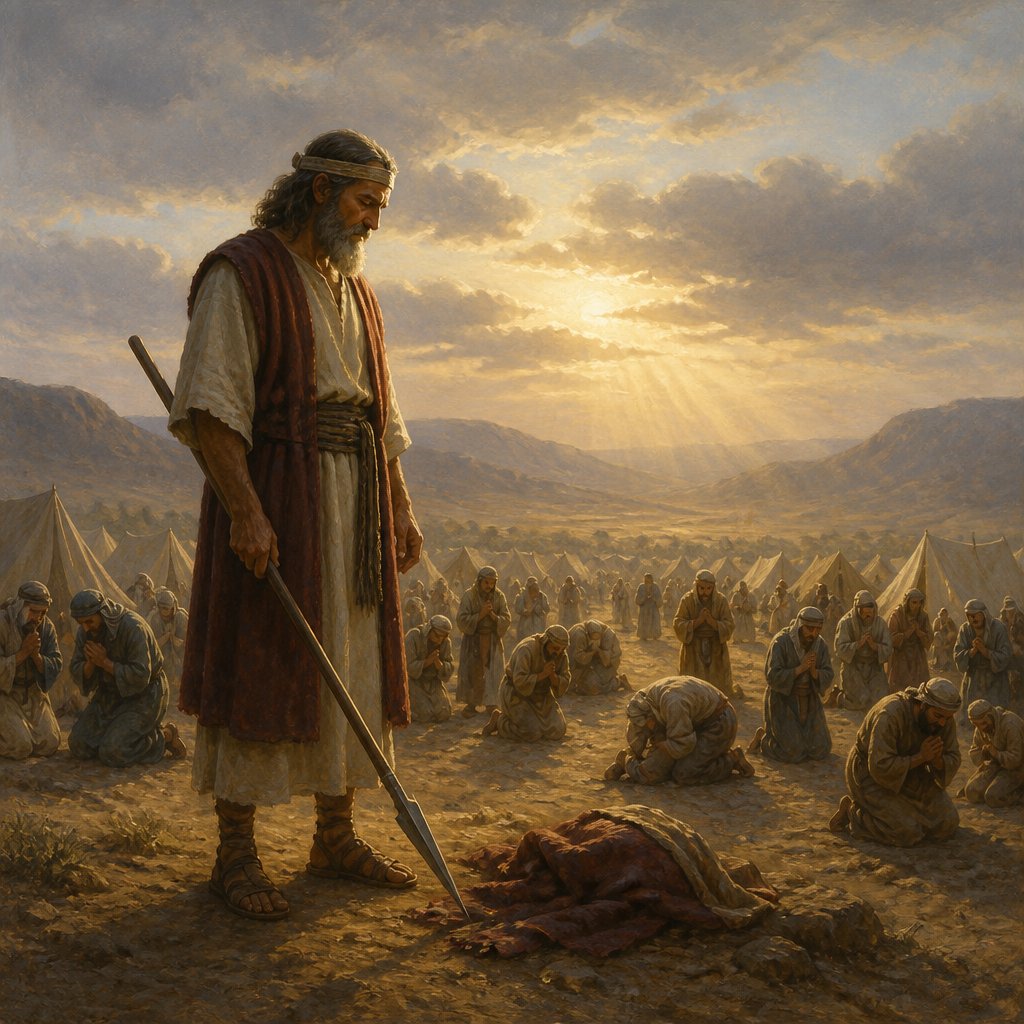
Psalms 106:30 (KJV) says, "Then stood up Phinehas, and executed judgment: and so the plague was stayed."
This verse comes from the book of Psalms, which is a collection of songs and poetry that are often attributed to King David. The context of this particular verse is found in Psalm 106, which is a reflection on the history of Israel and their repeated disobedience to God. The psalmist recounts the various ways in which the Israelites turned away from God and went after idols, but also acknowledges God's faithfulness and mercy towards them.
The specific verse, Psalms 106:30, refers to an incident found in the book of Numbers, chapter 25. In this chapter, the people of Israel began to indulge in sexual immorality and worship the gods of Moab, which led to God's anger being kindled against them. As a result, a plague broke out among the people, and many of them were dying. In the midst of this crisis, Phinehas, the grandson of Aaron the high priest, took a stand for the Lord and executed judgment by killing an Israelite man and a Midianite woman who were publicly engaged in idolatrous and immoral behavior. This act of Phinehas' zealousness for God's holiness and faithfulness to the covenant brought a halt to the plague, and the people were spared from further destruction.
The themes present in this verse include the concepts of judgment, zealousness for God's holiness, and the consequences of disobedience. Phinehas's actions exemplify the idea of taking a stand for righteousness and being willing to confront sin and its effects. There is also a clear demonstration of the importance of upholding the covenant and following the commandments of God. Additionally, the verse underscores the idea of intercession and the power of one person's actions to bring about a change in a dire situation.
The symbolism in this verse is significant as well. Phinehas can be seen as a foreshadowing of Christ, who would ultimately bring an end to the ultimate plague of sin and death through his sacrifice on the cross. His zealousness for God's holiness mirrors the righteousness of Christ, who upheld the law perfectly and intervened on behalf of sinful humanity. Furthermore, the stopping of the plague can be seen as a symbol of God's mercy and grace, even in the face of judgment. It serves as a reminder that God is faithful to his people and will provide a way out of even the most dire circumstances.
As a whole, Psalms 106:30 serves as a reminder of the importance of remaining faithful to God and standing up for righteousness, even in the midst of a sinful and rebellious world. It also serves as a reflection on the mercy and grace of God, and the ultimate sacrifice of Christ that brings an end to the plague of sin. It is a call to action for believers to be zealous for the things of God and to intercede on behalf of those who are suffering due to sin.
Get our apps


Artwork for Psalms 106:30

Psalms 106:30 - "Then stood up Phinehas, and executed judgment: and so the plague was stayed."

"Then stood up Phinehas, and executed judgment: and so the plague was stayed." - Psalms 106:30

"Then believed they his words; they sang his praise." - Psalms 106:12

"Yea, they sacrificed their sons and their daughters unto devils," - Psalms 106:37

"They soon forgat his works; they waited not for his counsel:" - Psalms 106:13

"Thus they changed their glory into the similitude of an ox that eateth grass." - Psalms 106:20

"They envied Moses also in the camp, and Aaron the saint of the LORD." - Psalms 106:16

"Yea, they despised the pleasant land, they believed not his word:" - Psalms 106:24

"And he gave them their request; but sent leanness into their soul." - Psalms 106:15

"They did not destroy the nations, concerning whom the LORD commanded them:" - Psalms 106:34

Psalms 106:14 - "But lusted exceedingly in the wilderness, and tempted God in the desert."

Psalms 106:19 - "They made a calf in Horeb, and worshipped the molten image."

Psalms 106:35 - "But were mingled among the heathen, and learned their works."

"Wondrous works in the land of Ham, and terrible things by the Red sea." - Psalms 106:22

"The earth opened and swallowed up Dathan, and covered the company of Abiram." - Psalms 106:17

Psalms 106:37 - "Yea, they sacrificed their sons and their daughters unto devils,"

Psalms 106:12 - "Then believed they his words; they sang his praise."

Psalms 106:11 - "And the waters covered their enemies: there was not one of them left."

Psalms 106:25 - "But murmured in their tents, and hearkened not unto the voice of the LORD."

Psalms 106:20 - "Thus they changed their glory into the similitude of an ox that eateth grass."

Psalms 106:13 - "They soon forgat his works; they waited not for his counsel:"

Psalms 106:36 - "And they served their idols: which were a snare unto them."

"They forgat God their saviour, which had done great things in Egypt;" - Psalms 106:21

"They joined themselves also unto Baal-peor, and ate the sacrifices of the dead." - Psalms 106:28

Psalms 106:16 - "They envied Moses also in the camp, and Aaron the saint of the LORD."

Psalms 106:15 - "And he gave them their request; but sent leanness into their soul."

Psalms 106:18 - "And a fire was kindled in their company; the flame burned up the wicked."

Psalms 106:24 - "Yea, they despised the pleasant land, they believed not his word:"

Psalms 106:31 - "And that was counted unto him for righteousness unto all generations for evermore."

Psalms 106:27 - "To overthrow their seed also among the nations, and to scatter them in the lands."