What does Psalms 111:1 mean?
“Praise ye the LORD. I will praise the LORD with my whole heart, in the assembly of the upright, and in the congregation.” — Psalms 111:1
Psalms 111:1 from the King James Version of the Bible reads, "Praise ye the Lord. I will praise the Lord with my whole heart, in the assembly of the upright, and in the congregation." This verse is the opening of Psalm 111, which is a hymn of praise and thanksgiving to the Lord for his wondrous works and faithfulness to his people. In this verse, the psalmist expresses his dedication and commitment to praise the Lord wholeheartedly, both in private and public settings.
The verse begins with a call to praise the Lord, "Praise ye the Lord." This is a common theme throughout the book of Psalms, as it reflects the central purpose of the psalms as poetic expressions of praise and worship to God. The Hebrew word used here for "praise" is "hallelu," which is where the English word "hallelujah" comes from, meaning "praise Yahweh." By opening with this exhortation to praise, the psalmist sets the tone for the rest of the psalm, emphasizing the importance of praising God in all circumstances.
The psalmist then declares his personal commitment to praise the Lord with his whole heart. This indicates a deep and sincere devotion to God, as the heart is often seen as the seat of emotions and the source of one's devotion and commitment. The psalmist's whole-hearted praise reflects his genuine and fervent love for the Lord, and a desire to honor and glorify him in all things. This is a powerful reminder for believers to worship God with sincerity and authenticity, rather than simply going through the motions.
Furthermore, the psalmist expresses his intention to praise the Lord "in the assembly of the upright, and in the congregation." This suggests that his praise is not limited to private worship, but extends to communal worship as well. The "assembly of the upright" refers to the community of faithful believers, while the "congregation" denotes the larger gathering of worshippers. The psalmist's willingness to praise the Lord in both settings reflects the importance of corporate worship and the fellowship of believers in the life of the faithful.
The themes of praise, worship, and commitment to the Lord in Psalm 111:1 resonate throughout the entire book of Psalms. The psalms are filled with expressions of adoration, thanksgiving, and reverence for God, as well as laments, petitions, and confessions of sin. Together, they provide a rich and diverse portrait of the believer's relationship with the Lord, encompassing all aspects of human experience and emotion.
In its broader context, Psalm 111 celebrates the greatness and faithfulness of God, proclaiming his wondrous works and mighty deeds. The psalmist praises God for his righteousness, mercy, and redemption, and extols his steadfast love and faithfulness to his covenant people. The psalm serves as a reminder of God's sovereignty and goodness, and a call to remember and give thanks for his mighty acts on behalf of his people.
In addition to its thematic significance, Psalm 111:1 also holds symbolic value within the Christian tradition. The psalmist's whole-hearted praise and commitment to worshiping the Lord in the assembly of the upright and the congregation can be seen as a foreshadowing of the church's role in glorifying God and edifying the body of Christ. The verse underscores the importance of communal worship and fellowship, as well as the individual believer's responsibility to offer sincere and authentic praise to God.
Overall, Psalm 111:1 is a powerful declaration of the psalmist's devotion to praise the Lord with his whole heart, both in private and public worship. It serves as a timeless reminder for believers to offer genuine and heartfelt worship to God, and to participate in the community of faith with joy and gratitude. The verse embodies the central themes of praise, worship, and commitment to God that are woven throughout the entire book of Psalms, and it continues to inspire and uplift believers in their journey of faith.
Get our apps


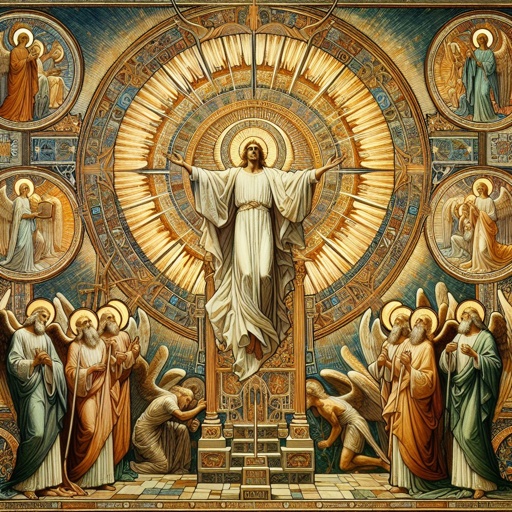
Artwork for Psalms 111:1

Psalms 111:1 - "Praise ye the LORD. I will praise the LORD with my whole heart, in the assembly of the upright, and in the congregation."

"Praise ye the LORD. I will praise the LORD with my whole heart, in the assembly of the upright, and in the congregation." - Psalms 111:1
Psalms 111:3 - "His work is honourable and glorious: and his righteousness endureth for ever."

Psalms 111:8 - "They stand fast for ever and ever, and are done in truth and uprightness."

Psalms 119:111 - "Thy testimonies have I taken as an heritage for ever: for they are the rejoicing of my heart."

Psalms 111:7 - "The works of his hands are verity and judgment; all his commandments are sure."

Psalms 111:2 - "The works of the LORD are great, sought out of all them that have pleasure therein."

Psalms 111:4 - "He hath made his wonderful works to be remembered: the LORD is gracious and full of compassion."

Psalms 111:5 - "He hath given meat unto them that fear him: he will ever be mindful of his covenant."

Psalms 111:6 - "He hath shewed his people the power of his works, that he may give them the heritage of the heathen."

Psalms 111:10 - "The fear of the LORD is the beginning of wisdom: a good understanding have all they that do his commandments: his praise endureth for ever."

"They stand fast for ever and ever, and are done in truth and uprightness." - Psalms 111:8

Psalms 111:9 - "He sent redemption unto his people: he hath commanded his covenant for ever: holy and reverend is his name."

"His work is honourable and glorious: and his righteousness endureth for ever." - Psalms 111:3

"He sent redemption unto his people: he hath commanded his covenant for ever: holy and reverend is his name." - Psalms 111:9

"The works of his hands are verity and judgment; all his commandments are sure." - Psalms 111:7

"Thy testimonies have I taken as an heritage for ever: for they are the rejoicing of my heart." - Psalms 119:111

"The works of the LORD are great, sought out of all them that have pleasure therein." - Psalms 111:2

"He hath made his wonderful works to be remembered: the LORD is gracious and full of compassion." - Psalms 111:4

"He hath given meat unto them that fear him: he will ever be mindful of his covenant." - Psalms 111:5

"He hath shewed his people the power of his works, that he may give them the heritage of the heathen." - Psalms 111:6

"The fear of the LORD is the beginning of wisdom: a good understanding have all they that do his commandments: his praise endureth for ever." - Psalms 111:10

Psalms 119:105 NUN. Thy word is a lamp unto my feet, and a light unto my path. Psalms 119:106 I have sworn, and I will perform it, that I will keep thy righteous judgments. Psalms 119:107 I am afflicted very much: quicken me, O LORD, according unto thy word. Psalms 119:108 Accept, I beseech thee, the freewill offerings of my mouth, O LORD, and teach me thy judgments. Psalms 119:109 My soul is continually in my hand: yet do I not forget thy law. Psalms 119:110 The wicked have laid a snare for me: yet I erred not from thy precepts. Psalms 119:111 Thy testimonies have I taken as an heritage for ever: for they are the rejoicing of my heart. Psalms 119:112 I have inclined mine heart to perform thy statutes alway, even unto the end.

psalm 80:1-7

Psalms 128:1 - "Blessed is every one that feareth the LORD; that walketh in his ways."

Psalms 122:1 - "I was glad when they said unto me, Let us go into the house of the LORD."

Psalms 15:1 (KJVA) 1 A Psalm of David. LORD, who shall abide in thy tabernacle? who shall dwell in thy holy hill?

Psalms 15:1 (KJVA) 1 A Psalm of David. LORD, who shall abide in thy tabernacle? who shall dwell in thy holy hill?

Psalms 64:1 - "Hear my voice, O God, in my prayer: preserve my life from fear of the enemy."

Psalms 14:1 (KJVA) 1 To the chief Musician, A Psalm of David. The fool hath said in his heart, There is no God. They are corrupt, they have done abominable works, there is none that doeth good.