What does Psalms 119:150 mean?
“They draw nigh that follow after mischief: they are far from thy law.” — Psalms 119:150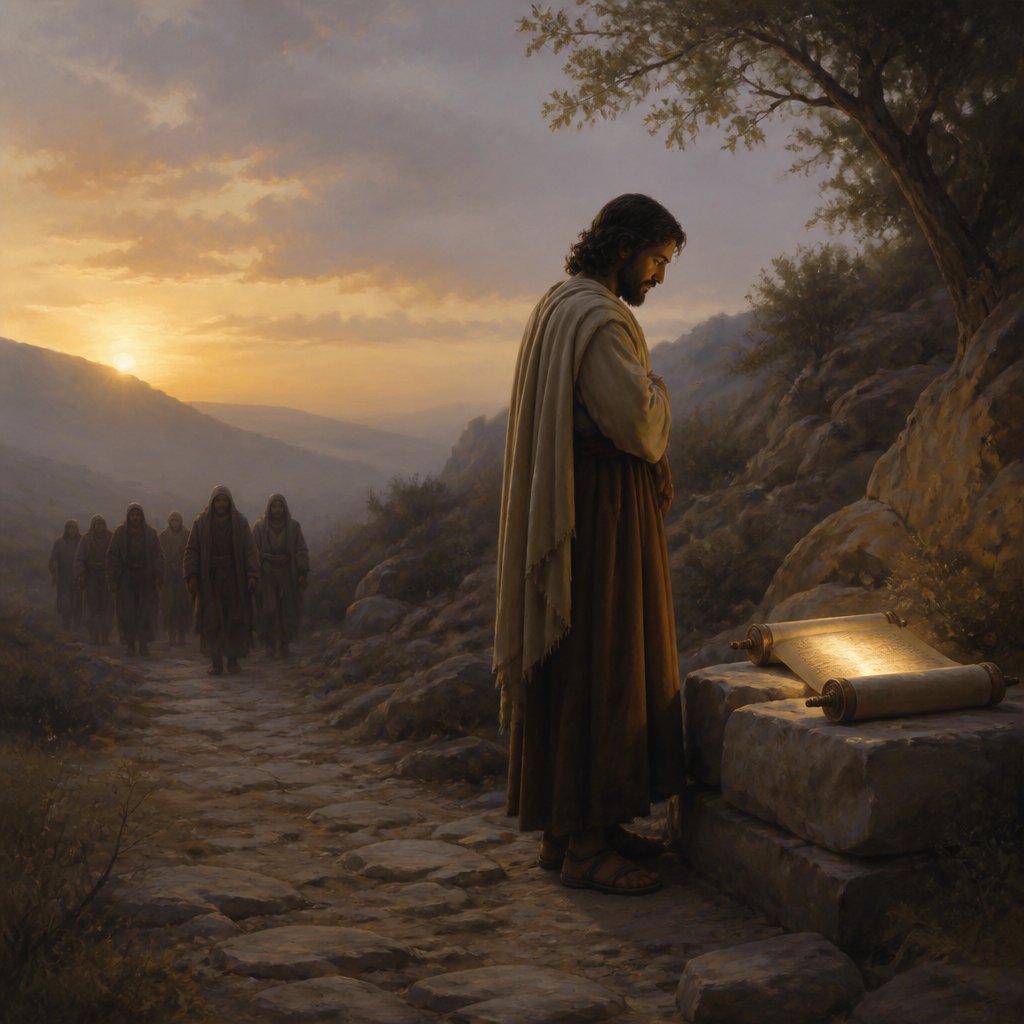
Psalms 119:150 (KJV) "They draw night that follow after mischief: they are far from thy law."
In this verse from Psalm 119, the psalmist is lamenting the actions of those who actively pursue wickedness and disobey God's law. The psalmist is expressing deep concern for the moral decay and sinfulness that is prevalent in the world. The verse highlights the contrast between those who follow after mischief and those who are obedient to God's law.
The overarching theme of Psalm 119 is the importance, value, and beauty of God's law. The psalmist expresses a deep love and reverence for God's commands and statutes. Throughout the psalm, the psalmist reflects on the benefits of obeying God's law and the detrimental consequences of straying from it. The psalmist seeks to encourage others to follow God's law diligently and wholeheartedly.
The specific verse, Psalm 119:150, addresses the reality of sin and wickedness in the world. The psalmist observes that those who pursue mischief and wickedness are far from God's law. This serves as a reminder that those who engage in sinful behavior are in direct opposition to God's standards and principles. It also emphasizes the idea that disobedience and rebellion lead individuals away from the righteous path laid out by God.
In a broader context, this verse can be seen as a call to righteousness and obedience to God's law. It serves as a warning against the allure of sinful behavior and the consequences of straying from God's commandments. The verse also acknowledges the existence of those who actively pursue mischief and rebellion, serving as a reminder of the spiritual warfare between good and evil.
The symbolism in this verse lies in the contrasting imagery of drawing near and being far away. "They draw near" suggests a deliberate and intentional action, indicating that those who follow after mischief are actively pursuing it. On the other hand, "far from thy law" signifies a distance or separation from God's law. This juxtaposition symbolizes the division between righteousness and sin, obedience and rebellion.
The verse also speaks to the spiritual and moral distance that is created by disobedience and sinful behavior. This distance represents a separation from God and His law, leading to spiritual disconnection and alienation from God's truth.
Overall, Psalm 119:150 serves as a poignant reflection on the reality of sin and evil in the world, as well as the importance of aligning one's life with God's law. It conveys a deep sense of concern for the spiritual well-being of individuals who engage in sinful behavior, while also emphasizing the need for steadfast obedience to God's commands. Through its symbolism and thematic elements, the verse underscores the enduring relevance of God's law and the eternal struggle between righteousness and wickedness.
Get our apps


Artwork for Psalms 119:150

Psalms 119:150 - "They draw nigh that follow after mischief: they are far from thy law."

"They draw nigh that follow after mischief: they are far from thy law." - Psalms 119:150

Psalms 150

"Praise him with the sound of the trumpet: praise him with the psaltery and harp." - Psalms 150:3

Psalms 150:3 - "Praise him with the sound of the trumpet: praise him with the psaltery and harp."

Psalms 150:4 - "Praise him with the timbrel and dance: praise him with stringed instruments and organs."

Psalms 150:6 - "Let every thing that hath breath praise the LORD. Praise ye the LORD."

"Let every thing that hath breath praise the LORD. Praise ye the LORD." - Psalms 150:6

Psalms 150:2 - "Praise him for his mighty acts: praise him according to his excellent greatness."

Psalms 150:5 - "Praise him upon the loud cymbals: praise him upon the high sounding cymbals."

Psalms 150:1 - "Praise ye the LORD. Praise God in his sanctuary: praise him in the firmament of his power."

"Praise ye the LORD. Praise God in his sanctuary: praise him in the firmament of his power." - Psalms 150:1
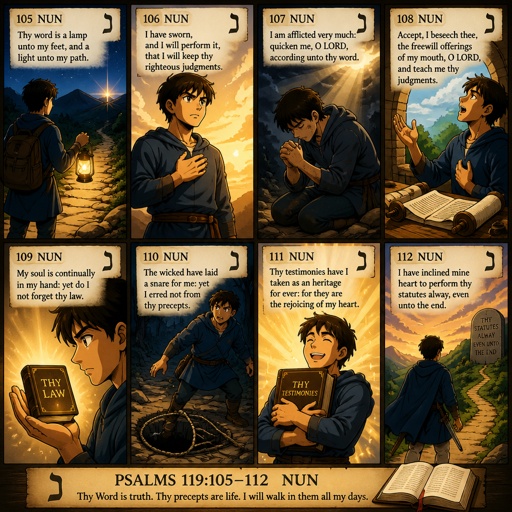
Psalms 119:105 NUN. Thy word is a lamp unto my feet, and a light unto my path. Psalms 119:106 I have sworn, and I will perform it, that I will keep thy righteous judgments. Psalms 119:107 I am afflicted very much: quicken me, O LORD, according unto thy word. Psalms 119:108 Accept, I beseech thee, the freewill offerings of my mouth, O LORD, and teach me thy judgments. Psalms 119:109 My soul is continually in my hand: yet do I not forget thy law. Psalms 119:110 The wicked have laid a snare for me: yet I erred not from thy precepts. Psalms 119:111 Thy testimonies have I taken as an heritage for ever: for they are the rejoicing of my heart. Psalms 119:112 I have inclined mine heart to perform thy statutes alway, even unto the end.

Psalms 119:153 - "Consider mine affliction, and deliver me: for I do not forget thy law."
Psalms 119:11

Psalms 119:174 - "I have longed for thy salvation, O LORD; and thy law is my delight."

Psalms 119:61 - "The bands of the wicked have robbed me: but I have not forgotten thy law."

Psalms 119:32 - "I will run the way of thy commandments, when thou shalt enlarge my heart."

"Praise him with the timbrel and dance: praise him with stringed instruments and organs." - Psalms 150:4
Psalms 119:15

"Salvation is far from the wicked: for they seek not thy statutes." - Psalms 119:155

"For ever, O LORD, thy word is settled in heaven." - Psalms 119:89

Psalms 119:176 - "I have gone astray like a lost sheep; seek thy servant; for I do not forget thy commandments."

"Praise him upon the loud cymbals: praise him upon the high sounding cymbals." - Psalms 150:5

"I beheld the transgressors, and was grieved; because they kept not thy word." - Psalms 119:158

"Praise him for his mighty acts: praise him according to his excellent greatness." - Psalms 150:2

Psalms 119:119 - "Thou puttest away all the wicked of the earth like dross: therefore I love thy testimonies."

"Righteous art thou, O LORD, and upright are thy judgments." - Psalms 119:137

Psalms 119:3 - "They also do no iniquity: they walk in his ways."

"Thy testimonies that thou hast commanded are righteous and very faithful." - Psalms 119:138