What does Psalms 135:9 mean?
“Who sent tokens and wonders into the midst of thee, O Egypt, upon Pharaoh, and upon all his servants.” — Psalms 135:9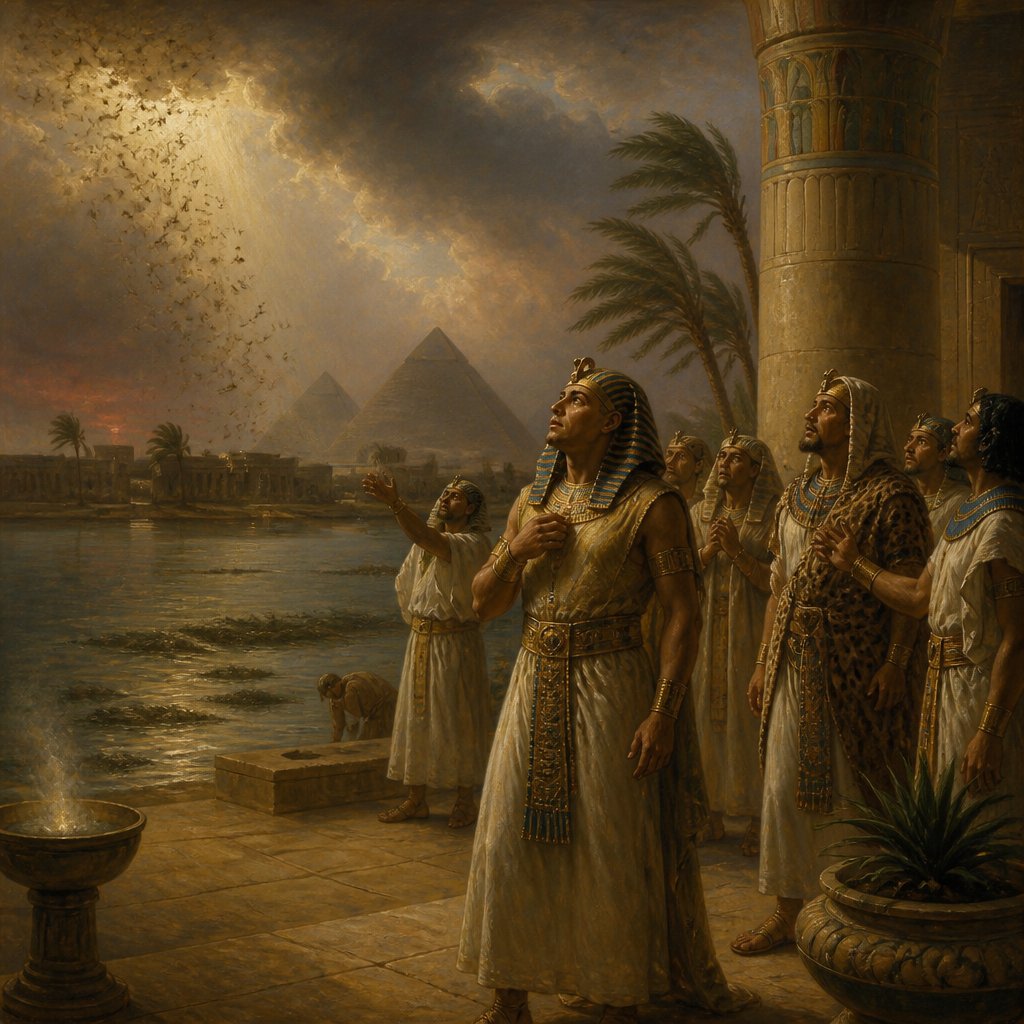
Psalms 135:9 in the King James Version (KJV) of the Bible reads, "Who sent tokens and wonders into the midst of thee, O Egypt, upon Pharaoh, and upon all his servants." This verse is a part of a larger psalm focused on the greatness and sovereignty of God. In this specific verse, the psalmist is referencing the events of the Exodus, specifically the plagues and miracles that God sent to deliver the Israelites from their bondage in Egypt.
This verse can be interpreted in several ways, each of which provides insight into the themes, context, and symbolism at play. It is important to first understand the historical context of the verse, which dates back to the time when the Israelites were enslaved in Egypt. The pharaoh of Egypt had enslaved the Israelites and oppressed them for generations. In response to the cries of the Israelites, God chose Moses to lead his people out of Egypt. When Pharaoh refused to let the Israelites go, God sent a series of ten plagues upon the land of Egypt. These plagues were not only meant to demonstrate God's power and authority over the false gods of Egypt, but also to compel Pharaoh to release the Israelites from slavery.
In this verse, the psalmist is recounting the awe-inspiring events that took place during the Exodus. The "tokens and wonders" refer to the miraculous signs and plagues that God sent to demonstrate his power and to compel Pharaoh to release the Israelites. These events were remarkable and extraordinary, displaying God's sovereignty and his ability to bring about his will in the world.
The themes present in this verse include the power and sovereignty of God, the deliverance of his people, and the concept of divine justice. The entire psalm emphasizes the greatness of God and his superiority over the false gods of the nations. The verse serves as a reminder of God's ability to intervene in human affairs and to bring about deliverance for his people. It also highlights the notion of divine justice, as the plagues were a response to the injustice and oppression experienced by the Israelites in Egypt.
The symbolism in this verse is multi-layered. On one level, the plagues and miracles can be seen as a demonstration of God's power and authority. Each plague was not only a physical manifestation of God's power, but also a symbolic act that challenged the false gods of Egypt. The symbolism of the plagues served to show that the gods of Egypt were powerless in the face of the one true God. Additionally, the deliverance of the Israelites from slavery can be seen as a symbol of God's faithfulness and his commitment to delivering his people from bondage.
Overall, Psalms 135:9 is a powerful reminder of God's sovereignty and his ability to intervene in human affairs. The verse serves as a testament to the miraculous acts that God performed to deliver his people from oppression and to demonstrate his power over the false gods of the nations. It is a reminder of the themes of deliverance, justice, and the ultimate superiority of God. The symbolism present in this verse serves to emphasize the significance of these events and to underscore the power and faithfulness of God.通过阅读《圣经》《诗篇》135:9,在国王詹姆斯版本(KJV)中的经文,我们可以得出许多深层含意,观念和象征。观察到这个经文,我们可以看到这是有关上帝的权柄,认识,和对他的国度的恩典和支配的权利。这个经文是关于上帝奇妙作为的探索和描述。这段话来自一个更大的《诗篇》论述了关于上帝的伟大和统治。在这个特定的经文中,诗人引用了出埃及记的事件,特别是上帝派遣的十灾和奇迹来拯救以色列人脱离他们在埃及的奴役。
这个经文可以有多种解释,每一种都提供了对这个包括了主题,上下文和象征的认识。我们首先需要明白这个经文的历史背景,这个事件可以追溯到以色列人被奴役在埃及的时候。埃及的法老奴役和压迫了以色列人很多年。作为对以色列人的呼声的回应,上帝选择了摩西来带领他的子民离开埃及。当法老拒绝放开以色列人的时候,上帝派了十灾来扰乱埃及。这些灾祸不仅仅展示了上帝的力量,也让埃及的法老放开了以色列人。
在这个经文中,诗人描述了出埃及记中发生的让人震惊的事件。"奇迹和神迹"指的是上帝派出的奇迹和十灾,以显示他的大能和迫使埃及的法老放开以色列人。这些事件是了不起和非凡的,展示了上帝的统治和他能在世界上实现他的目的。
在这个段落中有很多主题,包括了上帝的能力和统治,上帝对他的子民的拯救,神圣公义的概念。整部《诗篇》强调了上帝的伟大和他对其他国家的虚假神的优越性。这个经文见证了上帝的能力干预人的事务,拯救他的子民。它还突出了神圣公义的观念,因为这些灾难是对埃及奴役以色列的回应。
这个经文的象征有多种层面。首先,这些灾难和奇迹是上帝的大能和权柄的展示。每一种灾难不仅仅是上帝力量的体现,还是一个象征意义的行动,对埃及的虚假神构成了挑战。灾难的象征是为了说明埃及的神在真神面前是无能为力的。此外,以色列人在奴役中被解救也可以看作上帝对他信实的象征和对解救他子民的承诺。
总的来说,《诗篇》135:9是一个强有力的见证了上帝的统治和他能干预人类事务的能力。这个经文提到了上帝派遣的奇迹来拯救他的子民,并展示了上帝对其他国家的假神的权柄和伟大的见证。它是对拯救,公义和最后上帝的优越性主题的一个见证。这个经文中的象征突出了这些事件的重要性,强调了上帝的力量和对上帝的忠诚的重要性。
Get our apps


Artwork for Psalms 135:9

Psalms 135:9 - "Who sent tokens and wonders into the midst of thee, O Egypt, upon Pharaoh, and upon all his servants."
"Who sent tokens and wonders into the midst of thee, O Egypt, upon Pharaoh, and upon all his servants." - Psalms 135:9

Psalms 135 : 14
"They have mouths, but they speak not; eyes have they, but they see not;" - Psalms 135:16

Psalms 135:15 - "The idols of the heathen are silver and gold, the work of men's hands."

Psalms 135:10 - "Who smote great nations, and slew mighty kings;"
"Who smote great nations, and slew mighty kings;" - Psalms 135:10
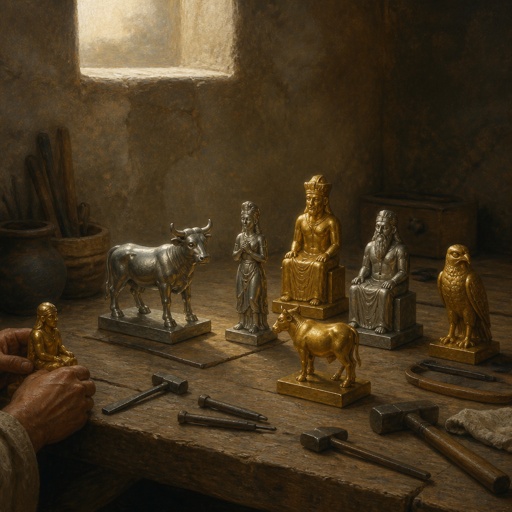
"The idols of the heathen are silver and gold, the work of men's hands." - Psalms 135:15

Psalms 135:16 - "They have mouths, but they speak not; eyes have they, but they see not;"

Psalms 135:2 - "Ye that stand in the house of the LORD, in the courts of the house of our God,"
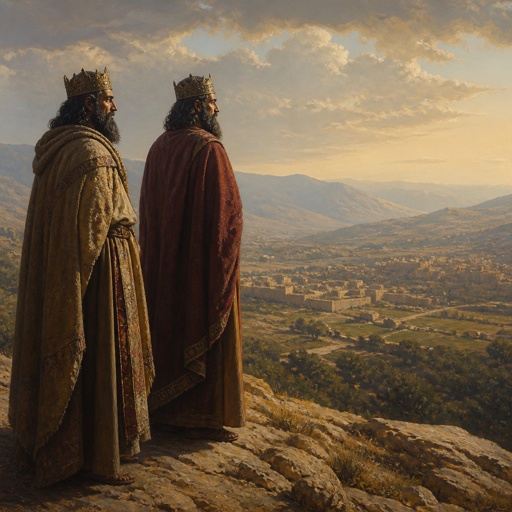
"Sihon king of the Amorites, and Og king of Bashan, and all the kingdoms of Canaan:" - Psalms 135:11

Psalms 135:8 - "Who smote the firstborn of Egypt, both of man and beast."

Psalms 135:17 - "They have ears, but they hear not; neither is there any breath in their mouths."

Psalms 135:11 - "Sihon king of the Amorites, and Og king of Bashan, and all the kingdoms of Canaan:"

Psalms 135:12 - "And gave their land for an heritage, an heritage unto Israel his people."

Psalms 135:20 - "Bless the LORD, O house of Levi: ye that fear the LORD, bless the LORD."

Psalms 135:14 - "For the LORD will judge his people, and he will repent himself concerning his servants."

Psalms 135:4 - "For the LORD hath chosen Jacob unto himself, and Israel for his peculiar treasure."

Psalms 135:5 - "For I know that the LORD is great, and that our Lord is above all gods."

Psalms 119:135 - "Make thy face to shine upon thy servant; and teach me thy statutes."

"For the LORD will judge his people, and he will repent himself concerning his servants." - Psalms 135:14

Psalms 135:19 - "Bless the LORD, O house of Israel: bless the LORD, O house of Aaron:"

Psalms 135:18 - "They that make them are like unto them: so is every one that trusteth in them."

Psalms 135:3 - "Praise the LORD; for the LORD is good: sing praises unto his name; for it is pleasant."

Psalms 135:21 - "Blessed be the LORD out of Zion, which dwelleth at Jerusalem. Praise ye the LORD."

"Make thy face to shine upon thy servant; and teach me thy statutes." - Psalms 119:135

Psalms 135:13 - "Thy name, O LORD, endureth for ever; and thy memorial, O LORD, throughout all generations."

Psalms 135:6 - "Whatsoever the LORD pleased, that did he in heaven, and in earth, in the seas, and all deep places."

"Whatsoever the LORD pleased, that did he in heaven, and in earth, in the seas, and all deep places." - Psalms 135:6

Psalms 135:1 - "Praise ye the LORD. Praise ye the name of the LORD; praise him, O ye servants of the LORD."