What does Psalms 145:13 mean?
“Thy kingdom is an everlasting kingdom, and thy dominion endureth throughout all generations.” — Psalms 145:13
Psalm 145 is David’s hymn of praise that moves like a steady ascent: it begins with personal resolve to bless God, widens into public proclamation “from generation to generation,” and settles into a sweeping vision of the LORD’s character as King over all. Within that flow, Psalm 145:13 stands as a central statement about the kind of King God is and the kind of reign He exercises. In the KJV it reads, “Thy kingdom is an everlasting kingdom, and thy dominion endureth throughout all generations.”
The first thing the verse does is name God’s rule as a kingdom, not merely an influence or an idea. “Thy kingdom” points to God as the rightful sovereign whose authority is real, ordered, and personal, a reign grounded in who He is. David is not praising a distant force but the LORD who governs, judges, provides, and hears. In the immediate context of Psalm 145, that kingship is celebrated as “glorious” and “mighty” (Psalm 145:11–12), meaning it is weighty, radiant, and effective. God’s reign is not fragile or dependent on human consent; it is majestic in itself.
When David says, “Thy kingdom is an everlasting kingdom,” he is contrasting the LORD’s rule with every human realm. Human kingdoms rise, fracture, get conquered, fade, or become footnotes; God’s kingdom does not. “Everlasting” emphasizes permanence, but it also implies stability and faithfulness. A kingdom that lasts forever is not subject to the panic of succession, the erosion of time, or the decay of moral authority. In Scripture’s larger frame, this is a profoundly comforting claim because it means history is not finally steered by the strongest empire of the moment but by the eternal King. The verse is not only about length of time; it is about the quality of God’s reign as unbreakable and therefore trustworthy.
The second line deepens the thought: “and thy dominion endureth throughout all generations.” “Dominion” speaks of active governance, the exercise of rule. The LORD’s kingdom is not merely everlasting in the abstract; it is enduring in lived reality, spanning “all generations.” That phrase has both breadth and intimacy. It asserts that God’s authority runs continuously through the entire human story, yet it also meets each generation where it is. Every age has its own crises, idols, and powers, but none of them displace God’s dominion. David’s praise therefore becomes a bridge from past to present to future: the God who ruled before David rules in David’s day, and will rule when David is gone. This is why the psalm repeatedly emphasizes generational testimony, such as, “One generation shall praise thy works to another” (Psalm 145:4). If God’s dominion truly endures through all generations, then praise is not a momentary mood but a sacred inheritance handed down as witness.
Symbolically, the language of “kingdom” and “dominion” evokes the ancient world’s experience of royal power—thrones, decrees, courts, protection, and provision—yet Psalm 145 reshapes that symbolism by describing a King whose power is expressed through goodness. Immediately after verse 13, the psalm highlights God’s faithfulness and compassion in action: “The LORD upholdeth all that fall, and raiseth up all those that be bowed down” (Psalm 145:14). This matters for interpreting Psalm 145:13, because it prevents us from hearing “dominion” as mere domination. In this psalm, God’s kingship is not celebrated because He is tyrannical or distant, but because His rule is righteous, sustaining, and attentive to the weak. The everlasting kingdom is not cold eternity; it is a reign in which God continually acts for His creatures.
The verse also carries a theme of assurance in the face of change. “Throughout all generations” quietly acknowledges that generations pass. People die; cultures turn; memory fades; leaders disappoint. Yet the believer is invited to anchor confidence not in what can be handed down by human hands, but in what endures by God’s nature. The significance is both theological and pastoral: the LORD’s kingdom is the fixed point that makes praise reasonable, obedience meaningful, and hope coherent. David’s worship is not escapism; it is a declaration that the ultimate government of reality is stable, moral, and permanent.
Finally, Psalm 145:13 functions as a hinge in the psalm’s argument: because God’s reign is everlasting and His dominion spans every generation, His mighty acts must be spoken of, His “glorious majesty” must be declared, and His care must be trusted. The verse gathers the psalm’s praise into a single confession: God is King forever, and therefore He is worthy forever. In a world where everything human is temporary, Psalm 145:13 proclaims the LORD as the enduring center of history and the unfailing ruler whose kingdom does not end.
Get our apps


Artwork for Psalms 145:13

Psalms 145:13 - "Thy kingdom is an everlasting kingdom, and thy dominion endureth throughout all generations."

"Thy kingdom is an everlasting kingdom, and thy dominion endureth throughout all generations." - Psalms 145:13

"Thy kingdom is an everlasting kingdom, and thy dominion endureth throughout all generations." - Psalms 145:13

"Thy kingdom is an everlasting kingdom, and thy dominion endureth throughout all generations." - Psalms 145:13
Psalms 145
Psalms 145
Psalms 145
Psalms 145

Psalms 145

"Great is the LORD, and greatly to be praised; and his greatness is unsearchable." - Psalms 145:3

Psalms 145:3 - "Great is the LORD, and greatly to be praised; and his greatness is unsearchable."

Psalms 145:8 - "The LORD is gracious, and full of compassion; slow to anger, and of great mercy."

Psalms 145:11 - "They shall speak of the glory of thy kingdom, and talk of thy power;"
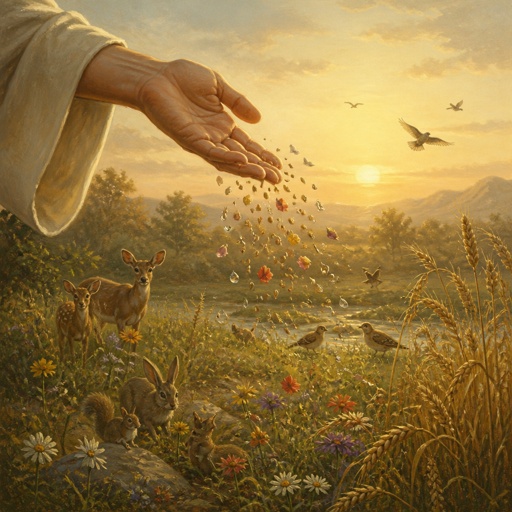
"Thou openest thine hand, and satisfiest the desire of every living thing." - Psalms 145:16

"The LORD is righteous in all his ways, and holy in all his works." - Psalms 145:17

Psalms 145:17 - "The LORD is righteous in all his ways, and holy in all his works."

Psalms 145:5 - "I will speak of the glorious honour of thy majesty, and of thy wondrous works."

Psalms 145:16 - "Thou openest thine hand, and satisfiest the desire of every living thing."

Psalms 145:14 - "The LORD upholdeth all that fall, and raiseth up all those that be bowed down."

Psalms 145:9 - "The LORD is good to all: and his tender mercies are over all his works."

Psalms 145:20 - "The LORD preserveth all them that love him: but all the wicked will he destroy."

Salmos 145
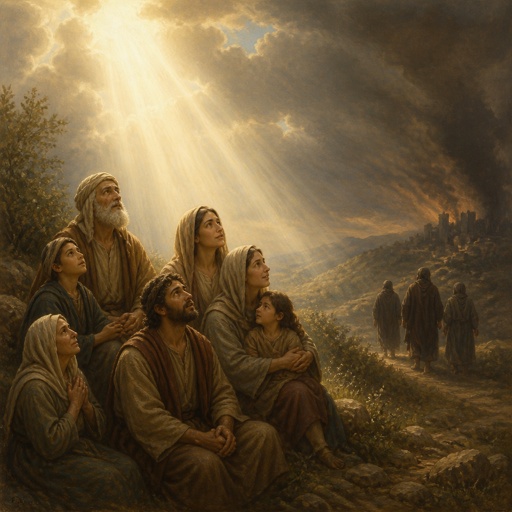
"The LORD preserveth all them that love him: but all the wicked will he destroy." - Psalms 145:20

Psalms 145:6 - "And men shall speak of the might of thy terrible acts: and I will declare thy greatness."

Psalms 145:2 - "Every day will I bless thee; and I will praise thy name for ever and ever."

Psalms 145:7 - "They shall abundantly utter the memory of thy great goodness, and shall sing of thy righteousness."

Psalms 145:15 - "The eyes of all wait upon thee; and thou givest them their meat in due season."

Psalms 145:12 - "To make known to the sons of men his mighty acts, and the glorious majesty of his kingdom."
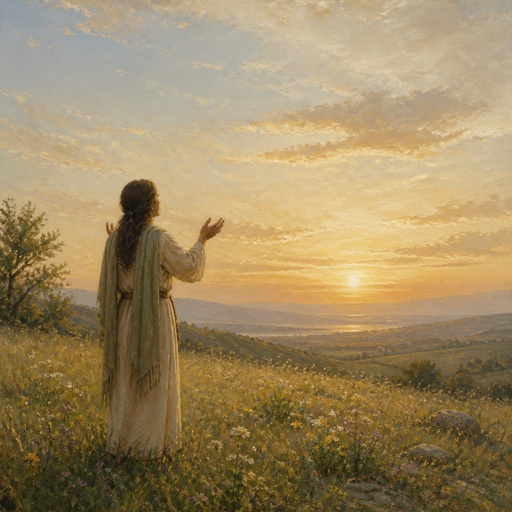
"Every day will I bless thee; and I will praise thy name for ever and ever." - Psalms 145:2
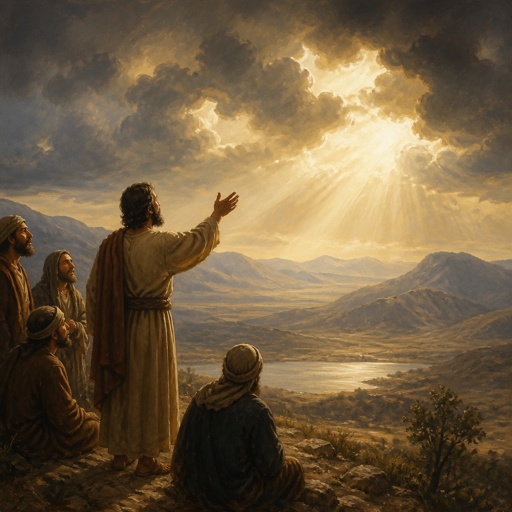
"And men shall speak of the might of thy terrible acts: and I will declare thy greatness." - Psalms 145:6