What does Psalms 146:8 mean?
“The LORD openeth the eyes of the blind: the LORD raiseth them that are bowed down: the LORD loveth the righteous:” — Psalms 146:8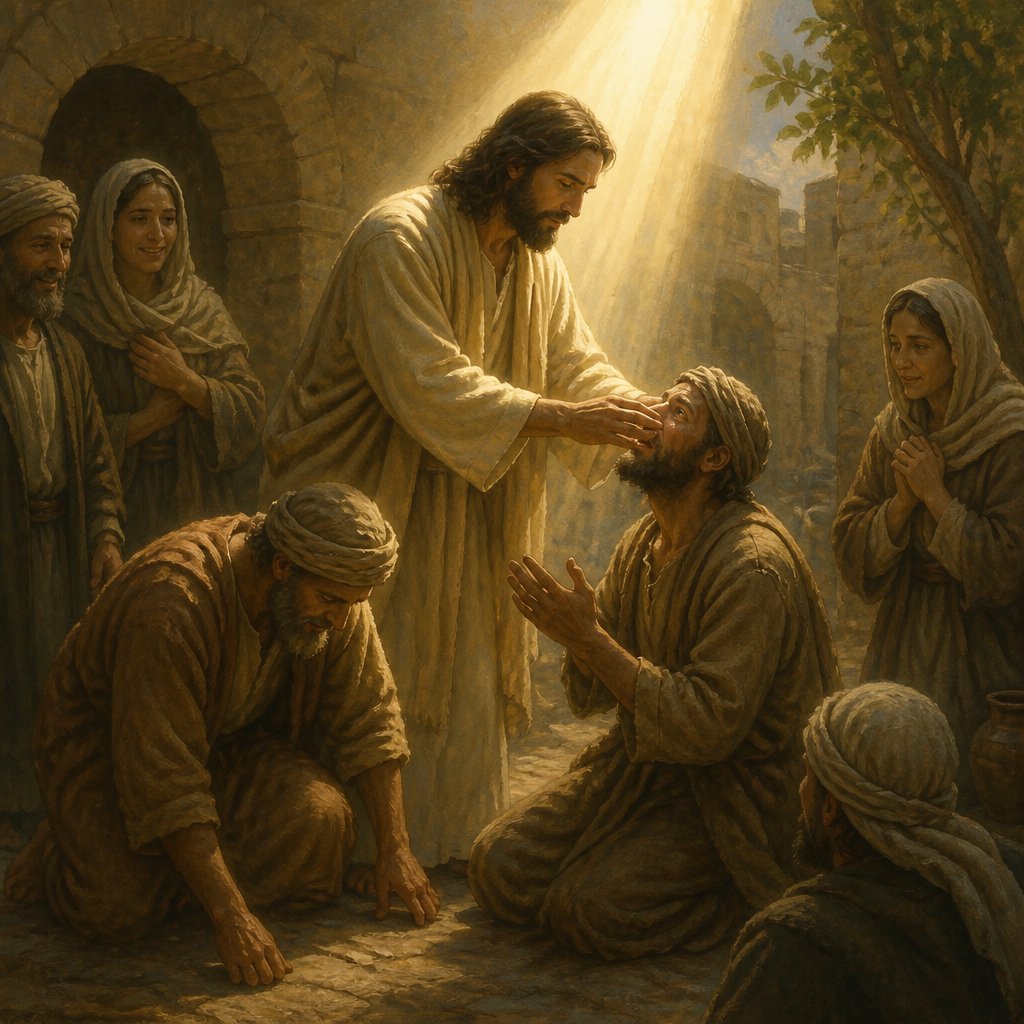
The Bible verse Psalms 146:8 in the King James Version (KJV) reads, "The Lord openeth the eyes of the blind: the Lord raiseth them that are bowed down: the Lord loveth the righteous."
This verse is a beautiful expression of the compassion, power, and love of God. It speaks to the overarching theme of God's care and provision for his people, particularly those who are marginalized, oppressed, or in need of help. In this verse, the psalmist presents a poetic description of the transformative and life-giving work of God in the lives of his people.
The first part of the verse, "The Lord openeth the eyes of the blind," speaks to God's ability to bring sight to the physically blind. This not only demonstrates God's miraculous power over the physical world, but it also serves as a metaphor for the spiritual blindness that can afflict humanity. In the Bible, the concept of spiritual blindness is often used to describe a lack of understanding or discernment concerning God's truth. By including this phrase, the psalmist emphasizes God's ability to bring clarity, understanding, and enlightenment to those who are spiritually blind, offering hope and transformation to all who seek him.
The second part of the verse, "the Lord raiseth them that are bowed down," showcases God's compassion for those who are weighed down by the burdens of life. This image of God lifting up the downtrodden and alleviating their suffering speaks to the theme of God's care for the oppressed and the marginalized. Throughout the Bible, God is portrayed as a protector of the weak, a defender of the marginalized, and a comforter of the oppressed. This verse beautifully captures God's desire to lift up those who are burdened and bring them relief and hope.
The final part of the verse, "the Lord loveth the righteous," underscores the theme of God's love for those who seek to live in alignment with his will. This love extends beyond mere affection; it encompasses God's favor, protection, and care for those who strive to live according to his righteousness. In the Bible, righteousness is often linked with faithfulness, obedience, and moral integrity, and those who pursue these qualities are upheld as beloved by God.
The context of this verse is crucial for understanding its full significance. The book of Psalms is a collection of songs and prayers used in worship by the ancient Israelites. These psalms cover a wide range of emotions and themes, from praise and thanksgiving to lament and petition. Though the authorship of many of the individual psalms is unknown, traditionally King David is credited as the primary author. Psalms 146 falls within the final section of the Book of Psalms, which is known as the Hallelujah psalms. These psalms exhort God's people to praise him and express confidence in his faithfulness and care.
Symbolism also plays a significant role in this verse. The image of God opening the eyes of the blind represents his ability to bring clarity and understanding to those who are spiritually blind. This metaphor underscores the transformative power of God's grace and the hope that comes from experiencing a new way of seeing the world. Likewise, the image of God raising up those who are bowed down symbolizes his ability to bring relief and restoration to those who are burdened and oppressed. These symbols convey a powerful message of God's care and compassion for all who are in need.
In conclusion, Psalms 146:8 in the King James Version delivers a profound message of God’s love, compassion, and transformative power. It speaks to the themes of God's care for the oppressed, his ability to bring clarity and understanding, and his love for those who seek righteousness. This verse continues to offer hope and encouragement to believers today, reminding them of the unchanging character of God and his faithful provision for his people.
Get our apps


Artwork for Psalms 146:8

Psalms 146:8 - "The LORD openeth the eyes of the blind: the LORD raiseth them that are bowed down: the LORD loveth the righteous:"

"The LORD openeth the eyes of the blind: the LORD raiseth them that are bowed down: the LORD loveth the righteous:" - Psalms 146:8

"Praise ye the LORD. Praise the LORD, O my soul." - Psalms 146:1

Psalms 146:7 - "Which executeth judgment for the oppressed: which giveth food to the hungry. The LORD looseth the prisoners:"

Psalms 146:1 - "Praise ye the LORD. Praise the LORD, O my soul."

Psalms 146:3 - "Put not your trust in princes, nor in the son of man, in whom there is no help."

Psalms 119:146 - "I cried unto thee; save me, and I shall keep thy testimonies."

Psalms 146:6 - "Which made heaven, and earth, the sea, and all that therein is: which keepeth truth for ever:"

Psalms 146:5 - "Happy is he that hath the God of Jacob for his help, whose hope is in the LORD his God:"

Psalms 146:9 - "The LORD preserveth the strangers; he relieveth the fatherless and widow: but the way of the wicked he turneth upside down."

"The LORD shall reign for ever, even thy God, O Zion, unto all generations. Praise ye the LORD." - Psalms 146:10

Psalms 146:10 - "The LORD shall reign for ever, even thy God, O Zion, unto all generations. Praise ye the LORD."

"His breath goeth forth, he returneth to his earth; in that very day his thoughts perish." - Psalms 146:4

Psalms 146:2 - "While I live will I praise the LORD: I will sing praises unto my God while I have any being."

"Which made heaven, and earth, the sea, and all that therein is: which keepeth truth for ever:" - Psalms 146:6

"I cried unto thee; save me, and I shall keep thy testimonies." - Psalms 119:146

"Put not your trust in princes, nor in the son of man, in whom there is no help." - Psalms 146:3

"Happy is he that hath the God of Jacob for his help, whose hope is in the LORD his God:" - Psalms 146:5

"Which executeth judgment for the oppressed: which giveth food to the hungry. The LORD looseth the prisoners:" - Psalms 146:7

"Happy is he that hath the God of Jacob for his help, whose hope is in the LORD his God:" - Psalms 146:5

"The LORD preserveth the strangers; he relieveth the fatherless and widow: but the way of the wicked he turneth upside down." - Psalms 146:9
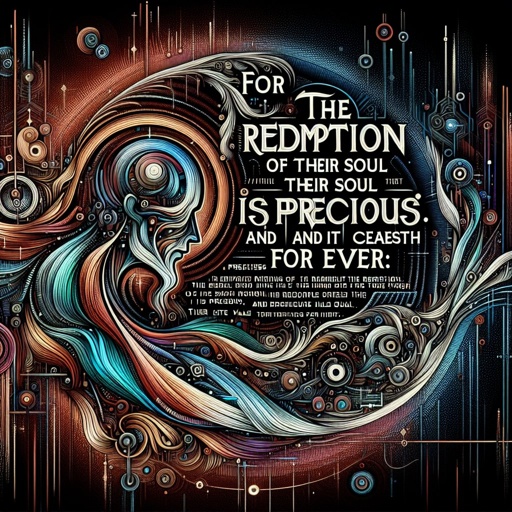
Psalms 49:8 - "(For the redemption of their soul is precious, and it ceaseth for ever:)"

"To bind their kings with chains, and their nobles with fetters of iron;" - Psalms 149:8

"While I live will I praise the LORD: I will sing praises unto my God while I have any being." - Psalms 146:2

"All sheep and oxen, yea, and the beasts of the field;" - Psalms 8:7

"But thou, LORD, art most high for evermore." - Psalms 92:8

Psalms 78:8 - "And might not be as their fathers, a stubborn and rebellious generation; a generation that set not their heart aright, and whose spirit was not stedfast with God."

"They are brought down and fallen: but we are risen, and stand upright." - Psalms 20:8

"Let the floods clap their hands: let the hills be joyful together" - Psalms 98:8

"They are corrupt, and speak wickedly concerning oppression: they speak loftily." - Psalms 73:8