What does Psalms 34:8 mean?
“O taste and see that the LORD is good: blessed is the man that trusteth in him.” — Psalms 34:8
Psalm 34:8 in the King James Version reads, “O taste and see that the LORD is good: blessed is the man that trusteth in him.” The verse is a personal invitation spoken with the warmth of experience rather than the chill of mere argument. David is not presenting a theory about God’s character; he is summoning the hearer into a lived encounter with it. The words “taste and see” are the language of the senses, as though faith were not only a matter of the mind but something that can be proved in the soul the way food is proved on the tongue. To “taste” is to take in, to try, to receive; to “see” is to perceive the result, to verify by outcome what has been received. The verse therefore presses beyond secondhand religion. It calls the hearer to stop standing at a distance and instead to come close enough to know, by personal trial, that “the LORD is good.”
The context of Psalm 34 intensifies the invitation. The psalm is David’s song of praise and instruction, shaped by deliverance and the nearness of danger. It is not written from the comfort of a life untouched by fear; it is sung by one who has known distress and has found God faithful in it. Earlier he declares, “I sought the LORD, and he heard me, and delivered me from all my fears,” and he adds, “They looked unto him, and were lightened: and their faces were not ashamed.” Within that movement—from fear to deliverance, from darkness to light—Psalm 34:8 functions like the turning point where testimony becomes exhortation. David has “tasted,” so he urges others to “taste.” He has “seen,” so he calls others to “see.” The goodness of the LORD is not presented as a vague optimism, but as a reality that meets the human condition where it actually aches: fear, trouble, need, and the search for refuge.
The symbolism in “taste and see” is especially rich because it portrays the knowledge of God as both intimate and verifiable. Taste is the most inward of the senses; it requires nearness and participation. Seeing is outward and confirming; it acknowledges what is real. Joined together, they suggest that the LORD’s goodness is not only inwardly satisfying but also outwardly demonstrable in the ways God sustains, guides, comforts, and delivers. This pairing also implies progression. A taste may begin small, even tentative, yet it is enough to awaken appetite and invite deeper trust. Seeing follows as the believer recognizes, through experience, that God’s ways are faithful. In that sense the verse carries the gentle logic of faith: not a demand to know everything before coming, but a call to come and know.
When the verse says “that the LORD is good,” it is speaking of God’s moral beauty, His kindness, His faithfulness, and His benevolent intent toward those who seek Him. In the psalm’s surrounding lines, the goodness of the LORD shows itself in protection and provision: “The angel of the LORD encampeth round about them that fear him, and delivereth them,” and, “O fear the LORD, ye his saints: for there is no want to them that fear him.” The goodness is not an abstract label; it is revealed as refuge, deliverance, and care. The LORD is good in what He is, and He is good in what He does.
The second half of the verse, “blessed is the man that trusteth in him,” explains how this goodness is received and enjoyed. In the KJV, “blessed” is not merely happy in a fleeting sense; it is favored, upheld, and spiritually well-placed. The blessing described is attached to trust, and trust here is more than general belief. It is reliance, the act of resting one’s safety and hope upon God. In the psalm’s world, trust is the opposite of self-rescue and the alternative to panic. It is choosing the LORD as refuge when threats are real. That is why the verse begins with an invitation to experience and ends with the promise of blessing: trust is not blind leap but response to the discovered goodness of God. As one tastes and sees, one learns to trust; as one trusts, one enters the blessedness of being kept by the One who is good.
The significance of Psalm 34:8, then, is that it presents faith as experiential and relational. It calls the reader not merely to agree that God is good, but to come close enough to prove it in the heart and to confirm it in life. It tells of a God whose goodness is not reserved for the strong and untroubled, but available as refuge to the one who will trust. In one line it bridges testimony and invitation, sense and spirit, human need and divine character: “O taste and see that the LORD is good: blessed is the man that trusteth in him.”
Get our apps


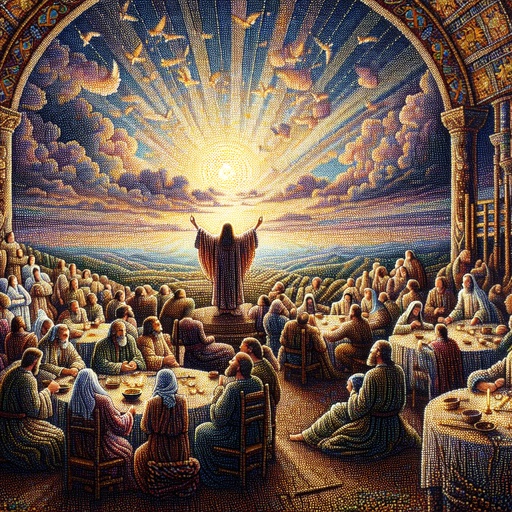
Artwork for Psalms 34:8

Psalms 34:8 - "O taste and see that the LORD is good: blessed is the man that trusteth in him."

"O taste and see that the LORD is good: blessed is the man that trusteth in him." - Psalms 34:8

Psalms 104:34 KJVA (34) My meditation of him shall be sweet: I will be glad in the LORD.

Psalms 34:18

Psalms 34:18

"They did not destroy the nations, concerning whom the LORD commanded them:" - Psalms 106:34

Psalms 49:8 - "(For the redemption of their soul is precious, and it ceaseth for ever:)"

"He keepeth all his bones: not one of them is broken." - Psalms 34:20

Psalms 37:34 - "Wait on the LORD, and keep his way, and he shall exalt thee to inherit the land: when the wicked are cut off, thou shalt see it."

"The LORD is nigh unto them that are of a broken heart; and saveth such as be of a contrite spirit." - Psalms 34:18

Psalms 105:34 - "He spake, and the locusts came, and caterpillers, and that without number,"

"O magnify the LORD with me, and let us exalt his name together." - Psalms 34:3

Psalms 34:5 - "They looked unto him, and were lightened: and their faces were not ashamed."

Psalms 34:20 - "He keepeth all his bones: not one of them is broken."

Psalms 34:14 - "Depart from evil, and do good; seek peace, and pursue it."

Psalms 107:34 - "A fruitful land into barrenness, for the wickedness of them that dwell therein."

Psalms 104:34 KJVA (34) My meditation of him shall be sweet: I will be glad in the LORD.

Psalms 34:15 - "The eyes of the LORD are upon the righteous, and his ears are open unto their cry."

Psalms 34:18 - "The LORD is nigh unto them that are of a broken heart; and saveth such as be of a contrite spirit."

Psalms 34:19 - "Many are the afflictions of the righteous: but the LORD delivereth him out of them all."

Psalms 106:34 - "They did not destroy the nations, concerning whom the LORD commanded them:"

Psalms 104:34 - "My meditation of him shall be sweet: I will be glad in the LORD."

Psalms 34:21 - "Evil shall slay the wicked: and they that hate the righteous shall be desolate."
Psalms 104:34 KJVA (34) My meditation of him shall be sweet: I will be glad in the LORD.

Psalms 34:17 - "The righteous cry, and the LORD heareth, and delivereth them out of all their troubles."

"What man is he that desireth life, and loveth many days, that he may see good?" - Psalms 34:12

"All sheep and oxen, yea, and the beasts of the field;" - Psalms 8:7

Psalms 89:34 - "My covenant will I not break, nor alter the thing that is gone out of my lips."

Psalms 18:34 - "He teacheth my hands to war, so that a bow of steel is broken by mine arms."

Psalms 34:22 - "The LORD redeemeth the soul of his servants: and none of them that trust in him shall be desolate."