What does Psalms 36:4 mean?
“He deviseth mischief upon his bed; he setteth himself in a way that is not good; he abhorreth not evil.” — Psalms 36:4
The verse Psalm 36:4 in the King James Version of the Bible reads, "He deviseth mischief upon his bed; he setteth himself in a way that is not good; he abhorreth not evil." This verse is part of a longer psalm attributed to King David, and it serves as a warning against wickedness and evildoers.
At first glance, this verse appears to describe the actions of a specific individual who plans and commits evil deeds. The image of someone "devising mischief upon his bed" suggests a deliberate and premeditated intention to harm others. The phrase "he setteth himself in a way that is not good" further emphasizes the deliberate and conscious choice to follow a path of wrongdoing. Finally, the statement "he abhorreth not evil" indicates a lack of moral conscience and a willful disregard for the consequences of his actions.
On a deeper level, this verse can be seen as a reflection of the broader human tendency towards sin and wickedness. It serves as a stark reminder of the capacity for evil that exists within the hearts of all people. However, the psalmist's purpose in highlighting this dark aspect of human nature is not to condemn or discourage, but rather to prompt reflection and repentance.
The theme of wickedness and the consequences of sinful actions is prevalent throughout the book of Psalms and the Bible as a whole. The psalmists often lament the presence of evil in the world and the suffering it causes, while also seeking divine intervention and guidance in the face of such adversity. This particular verse serves as a continuation of this theme, emphasizing the need for vigilance and moral righteousness in the face of temptation and wickedness.
The context of Psalm 36 further illuminates the significance of this verse. The psalm opens with a meditation on the nature of evil and the steadfast love and faithfulness of God. The contrast between the wickedness of human hearts and the righteousness of God is a central theme throughout the psalm. It serves as a reminder of the fundamental difference between the ways of the world and the ways of God.
In this light, Psalm 36:4 can be seen as a call to resist the temptations of evil and to align oneself with the will of God. It serves as a cautionary warning against falling into the trap of moral complacency or ethical compromise. By highlighting the deliberate and calculated nature of wickedness, the verse encourages individuals to be mindful of their actions and to strive for moral purity in their lives.
Symbolically, the bed mentioned in the verse may represent a place of solitude and introspection, where the individual is left to confront their own thoughts and intentions. The act of "devising mischief" in this private setting underscores the insidious nature of sin and the need for internal vigilance. The verse suggests that evil deeds often originate in the depths of one's own heart and mind, emphasizing the importance of cultivating moral integrity and self-discipline.
Overall, Psalm 36:4 serves as a powerful reminder of the enduring struggle between good and evil in the human experience. It challenges readers to recognize the potential for wickedness within themselves and to actively resist its allure. At the same time, it offers hope and reassurance in the steadfast love and righteousness of God, serving as a source of encouragement and guidance for those who seek to live in accordance with divine will.
Get our apps


Artwork for Psalms 36:4

Psalms 36:4 - "He deviseth mischief upon his bed; he setteth himself in a way that is not good; he abhorreth not evil."

"He deviseth mischief upon his bed; he setteth himself in a way that is not good; he abhorreth not evil." - Psalms 36:4

Psalms 36 verse 3-6

"He smote also all the firstborn in their land, the chief of all their strength." - Psalms 105:36

Psalms 119:36 - "Incline my heart unto thy testimonies, and not to covetousness."

Psalms 106:36 - "And they served their idols: which were a snare unto them."

"Thy mercy, O LORD, is in the heavens; and thy faithfulness reacheth unto the clouds." - Psalms 36:5

Psalms 36:12 - "There are the workers of iniquity fallen: they are cast down, and shall not be able to rise."

Psalms 107:36 - "And there he maketh the hungry to dwell, that they may prepare a city for habitation;"

"Thy mercy, O LORD, is in the heavens; and thy faithfulness reacheth unto the clouds." - Psalms 36:5

Psalms 78:36 - "Nevertheless they did flatter him with their mouth, and they lied unto him with their tongues."

Psalms 105:36 - "He smote also all the firstborn in their land, the chief of all their strength."

Psalms 36:9 - "For with thee is the fountain of life: in thy light shall we see light."

Psalms 36:5 - "Thy mercy, O LORD, is in the heavens; and thy faithfulness reacheth unto the clouds."

Psalms 89:36 - "His seed shall endure for ever, and his throne as the sun before me."

Psalms 36:2 - "For he flattereth himself in his own eyes, until his iniquity be found to be hateful."

Psalms 18:36 - "Thou hast enlarged my steps under me, that my feet did not slip."

Psalms 36:1 - "The transgression of the wicked saith within my heart, that there is no fear of God before his eyes."

Psalms 36:11 - "Let not the foot of pride come against me, and let not the hand of the wicked remove me."

Psalms 114:4 - "The mountains skipped like rams, and the little hills like lambs."

Psalms 69:36 - "The seed also of his servants shall inherit it: and they that love his name shall dwell therein."

"For this was a statute for Israel, and a law of the God of Jacob." - Psalms 81:4

Psalms 36:10 - "O continue thy lovingkindness unto them that know thee; and thy righteousness to the upright in heart."

Psalms 36:3 - "The words of his mouth are iniquity and deceit: he hath left off to be wise, and to do good."

"For there are no bands in their death: but their strength is firm." - Psalms 73:4

Psalms 37:36 - "Yet he passed away, and, lo, he was not: yea, I sought him, but he could not be found."
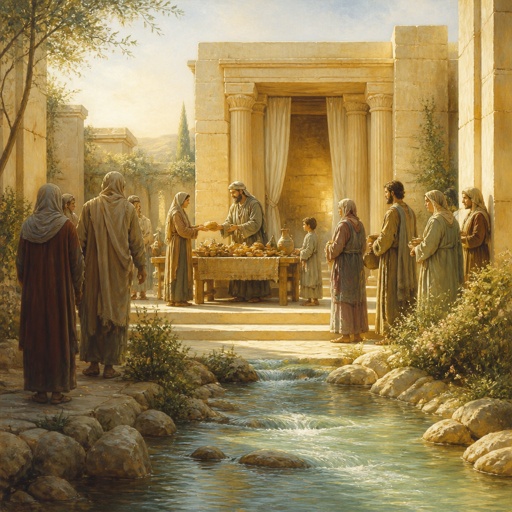
"They shall be abundantly satisfied with the fatness of thy house; and thou shalt make them drink of the river of thy pleasures." - Psalms 36:8

Psalms 36:8 - "They shall be abundantly satisfied with the fatness of thy house; and thou shalt make them drink of the river of thy pleasures."

Psalms 104:4 - "Who maketh his angels spirits; his ministers a flaming fire:"

Psalms 36:7 - "How excellent is thy lovingkindness, O God! therefore the children of men put their trust under the shadow of thy wings."