What does Psalms 36:8 mean?
“They shall be abundantly satisfied with the fatness of thy house; and thou shalt make them drink of the river of thy pleasures.” — Psalms 36:8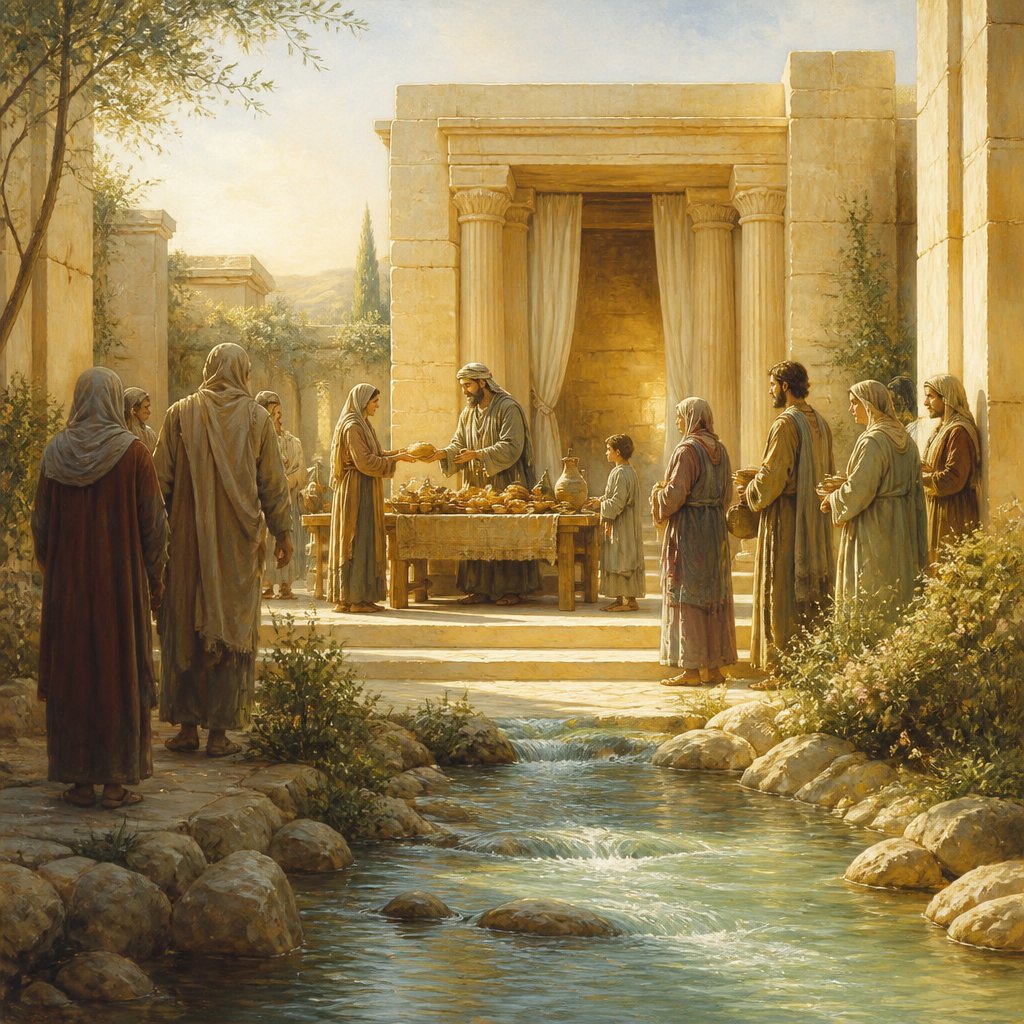
Psalm 36 is a psalm of David that sets two realities side by side: the dark inward nature of “the transgression of the wicked” and, in deliberate contrast, the bright, expansive goodness of God. The early part of the psalm describes sin as something that speaks within a person, removing “the fear of God” and leading to self-flattery, crooked speech, and chosen wrongdoing. Then the psalm turns upward and outward to God’s character: “Thy mercy, O LORD, is in the heavens; and thy faithfulness reacheth unto the clouds.” In that movement, Psalm 36:8 becomes a warm center of the psalm’s hope, showing what it means for those who are not living by that inward rebellion but instead are sheltered under God’s covenant love.
The verse reads, in the King James Version: “They shall be abundantly satisfied with the fatness of thy house; and thou shalt make them drink of the river of thy pleasures.” In context, “they” points back to those described immediately before as being under God’s protection: “How excellent is thy lovingkindness, O God! therefore the children of men put their trust under the shadow of thy wings.” The promise of Psalm 36:8 is thus not aimed at the proud self-sufficiency of the wicked described earlier, but at the trusting “children of men” who take refuge in God. The verse is the language of welcome, provision, and joy, portraying God not as a reluctant giver but as a generous host.
The first image, “abundantly satisfied with the fatness of thy house,” uses “fatness” as a Hebrew way of speaking of richness, fullness, and the best portion. In Scripture’s imagery, fatness is not shameful excess but a sign of plenty and favor, the opposite of famine, scarcity, and abandonment. “Thy house” can be heard with temple overtones, since God’s house was the place of His presence, worship, sacrifice, and fellowship. To be satisfied with the fatness of God’s house is to be brought near, not kept at a distance; to receive from God not crumbs but abundance; to be filled by what belongs to God Himself. It implies nourishment of the whole life. David is not merely talking about bodily provision, though God does provide; he is speaking of the deep sufficiency found in communion with God, the kind of satisfaction that the earlier description of the wicked cannot produce because sin finally empties rather than fills.
The second image expands the thought from food to drink: “thou shalt make them drink of the river of thy pleasures.” Here the symbolism becomes even more vivid. A river is a continuing, living supply, not a stagnant pool and not a single cup handed out once. In a world where water meant survival and where drought meant death, a river suggests unstoppable refreshment. The phrase “thy pleasures” locates joy in God Himself. This is not merely pleasure permitted by God, but pleasure that belongs to Him, that flows from His own goodness. The verse therefore presents God’s blessing not as a meager allowance but as a river; not as reluctant tolerance but as “pleasures”; not as humanly generated happiness but as something God gives so fully that He is said to make His people drink from it.
Within the psalm’s larger structure, Psalm 36:8 also functions as a direct answer to the problem introduced at the beginning. The wicked person, having “no fear of God,” lives as if life and satisfaction can be secured apart from God, and the result is moral and spiritual ruin. David counters that the true source of satisfaction is not autonomy but refuge. “Trust under the shadow of thy wings” evokes the image of a mother bird protecting her young, a symbol of safety, warmth, and nearness. From that shelter, the protected ones are fed and given drink. The verse thus ties together protection and provision: God’s love both covers and fills.
The verse also prepares for what follows immediately after it: “For with thee is the fountain of life: in thy light shall we see light.” The “river” of pleasures and the “fountain of life” belong to the same stream of thought. Joy is connected to life, and life is connected to God’s own being. Light, too, is connected to sight and truth. David is showing that God is not merely a help in emergencies; God is the source from whom life, joy, and understanding flow. Psalm 36:8, then, is not promising a shallow prosperity gospel of uninterrupted comfort, but describing the spiritual reality of those reconciled to God: they are brought into God’s presence, fed with what is rich, and refreshed with joy that proceeds from God’s own fullness.
The significance of Psalm 36:8 is that it portrays salvation and fellowship as abundance rather than scarcity. It speaks against the lie that sin offers the richer table. Sin may flatter, but it cannot satisfy; it may promise pleasure, but it cannot provide a river. God, by contrast, has a house whose “fatness” satisfies and a river whose “pleasures” refresh. The verse invites the reader to see God as the true host of the soul, and the life of trust as the place where hunger and thirst are met, not by human striving, but by what God Himself gives.
Get our apps


Artwork for Psalms 36:8

Psalms 36:8 - "They shall be abundantly satisfied with the fatness of thy house; and thou shalt make them drink of the river of thy pleasures."
"They shall be abundantly satisfied with the fatness of thy house; and thou shalt make them drink of the river of thy pleasures." - Psalms 36:8

Psalms 36 verse 3-6

"They shall be abundantly satisfied with the fatness of thy house; and thou shalt make them drink of the river of thy pleasures." - Psalm 36:8
Psalms 49:8 - "(For the redemption of their soul is precious, and it ceaseth for ever:)"

"He smote also all the firstborn in their land, the chief of all their strength." - Psalms 105:36

Psalms 119:36 - "Incline my heart unto thy testimonies, and not to covetousness."

Psalms 106:36 - "And they served their idols: which were a snare unto them."

"Thy mercy, O LORD, is in the heavens; and thy faithfulness reacheth unto the clouds." - Psalms 36:5

Psalms 36:12 - "There are the workers of iniquity fallen: they are cast down, and shall not be able to rise."

Psalms 107:36 - "And there he maketh the hungry to dwell, that they may prepare a city for habitation;"

Psalms 78:36 - "Nevertheless they did flatter him with their mouth, and they lied unto him with their tongues."

Psalms 105:36 - "He smote also all the firstborn in their land, the chief of all their strength."

Psalms 36:9 - "For with thee is the fountain of life: in thy light shall we see light."

Psalms 36:5 - "Thy mercy, O LORD, is in the heavens; and thy faithfulness reacheth unto the clouds."

Psalms 89:36 - "His seed shall endure for ever, and his throne as the sun before me."

Psalms 36:2 - "For he flattereth himself in his own eyes, until his iniquity be found to be hateful."

Psalms 18:36 - "Thou hast enlarged my steps under me, that my feet did not slip."

Psalms 36:1 - "The transgression of the wicked saith within my heart, that there is no fear of God before his eyes."

Psalms 36:11 - "Let not the foot of pride come against me, and let not the hand of the wicked remove me."

Psalms 69:36 - "The seed also of his servants shall inherit it: and they that love his name shall dwell therein."

"All sheep and oxen, yea, and the beasts of the field;" - Psalms 8:7
Psalms 36:10 - "O continue thy lovingkindness unto them that know thee; and thy righteousness to the upright in heart."
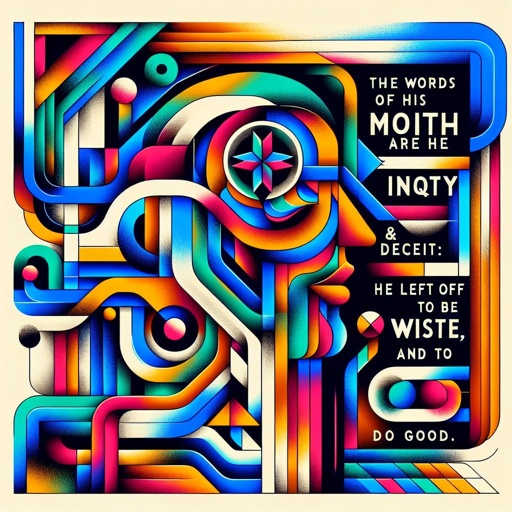
Psalms 36:3 - "The words of his mouth are iniquity and deceit: he hath left off to be wise, and to do good."

"To bind their kings with chains, and their nobles with fetters of iron;" - Psalms 149:8

Psalms 37:36 - "Yet he passed away, and, lo, he was not: yea, I sought him, but he could not be found."

"But thou, LORD, art most high for evermore." - Psalms 92:8

Psalms 36:4 - "He deviseth mischief upon his bed; he setteth himself in a way that is not good; he abhorreth not evil."

Psalms 78:8 - "And might not be as their fathers, a stubborn and rebellious generation; a generation that set not their heart aright, and whose spirit was not stedfast with God."

Psalms 36:7 - "How excellent is thy lovingkindness, O God! therefore the children of men put their trust under the shadow of thy wings."