What does Psalms 51:17 mean?
“The sacrifices of God are a broken spirit: a broken and a contrite heart, O God, thou wilt not despise.” — Psalms 51:17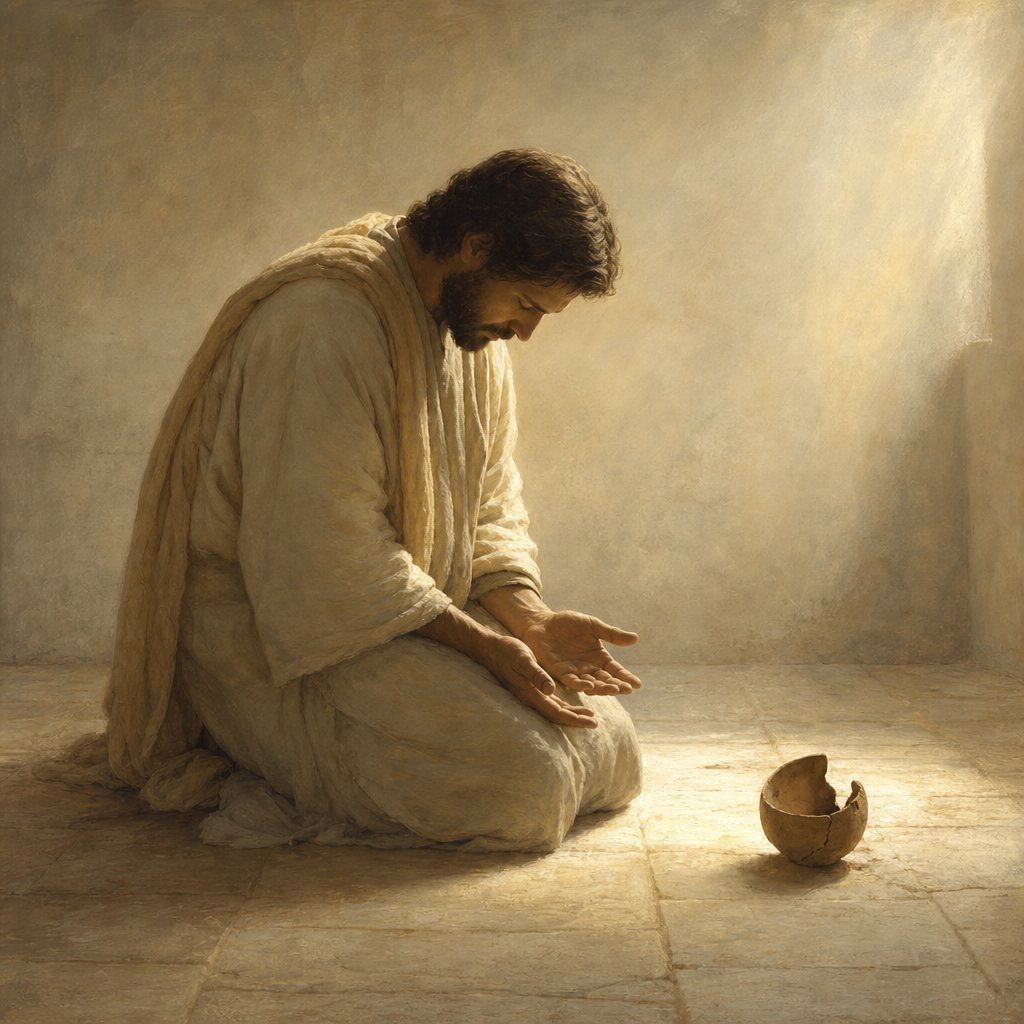
Psalm 51:17 in the KJV reads, “The sacrifices of God are a broken spirit: a broken and a contrite heart, O God, thou wilt not despise.” In this single sentence David gathers up the whole point of his repentance and sets it in contrast to every attempt to deal with sin by appearances, payment, or ceremony. The verse does not dismiss sacrifice as though God had never appointed it; rather, it declares what God is truly seeking beneath and within every outward offering. God’s acceptable “sacrifices” are not first the things a person brings in the hand, but what grace and truth have produced in the inner man: a spirit broken of pride and self-will, and a heart made contrite, humbled, and grief-stricken over sin.
The setting of Psalm 51 is a penitential cry, traditionally associated with David’s confession after his great transgression. The psalm moves like a soul coming into the light: it begins with an appeal to God’s “mercy” and “lovingkindness,” acknowledges sin without excuse, asks for cleansing and renewed purity, and seeks restoration to joy and fellowship with God. By the time David says, “The sacrifices of God are a broken spirit,” he has already learned that what he needs cannot be achieved by self-repair. His wrongdoing is not a surface stain but something that has reached the depths of his person, so the remedy must be more than outward. Earlier in the psalm he has said, “Behold, thou desirest truth in the inward parts,” and he has prayed, “Create in me a clean heart, O God.” Psalm 51:17 matches those lines: God’s desire is inward truth and inward transformation, and the “sacrifice” that corresponds to that desire is inner collapse of arrogance and inner yielding to God.
The language of sacrifice is symbolic and intentional. Under the law, sacrifice involved the life of another laid on the altar, blood shed, and the worshipper approaching God by means of an offering God had appointed. David uses that vocabulary, but he presses beyond the ritual form to the spiritual reality the ritual was meant to teach: sin is costly, life must be yielded, and reconciliation with God is not achieved by human merit. When he says, “The sacrifices of God,” he means the sacrifices God recognizes as truly His—what He owns, what He values, what answers His holiness. The plural “sacrifices” suggests that this inner posture is not a one-time act but an ongoing worship. A “broken spirit” is not merely a sad mood; it is the shattering of self-justification. It is the end of bargaining, the end of managing impressions, the end of calling evil by softer names. It is the spirit brought low so that God alone may be exalted. “Broken” implies something that cannot be put back together by the same hands that broke it; it must be remade. That matches David’s plea for God to “create” a clean heart, since creation is God’s work, not man’s.
The phrase “a broken and a contrite heart” deepens the meaning by moving from “spirit” to “heart,” from the general inward disposition to the seat of desire, choice, and love. “Contrite” carries the sense of being crushed or bruised, not in the sense of despairing hopelessness, but in the sense of being tenderized by truth. Contrition is the opposite of hardness. It is the heart that no longer defends itself against God’s verdict, but agrees with it. In the context of Psalm 51, this contrition includes honest confession, grief over having sinned “against thee, thee only,” and a longing to be restored to right relationship. The brokenness here is moral and spiritual: it is sorrow that springs from seeing sin as sin before God, not merely as an embarrassment or a consequence to be escaped. Yet it is also hopeful, because it turns toward God rather than away from Him.
The final clause, “O God, thou wilt not despise,” is the verse’s great assurance. David is not saying that his brokenness earns God’s favor as a new kind of merit; he is saying that God receives the repentant. The God who is holy does not mock the humbled sinner. He does not treat contrition as weakness to be scorned. He does not “despise” it, meaning He will not reject it, turn it away, or count it worthless. This is vital in Psalm 51 because the psalmist’s guilt could easily persuade him that he is beyond hope. The verse answers that fear: the door is not shut to the one who comes without pretense. God’s willingness to receive a contrite heart reveals both His justice and His mercy. His justice is honored because the sinner is no longer excusing sin; His mercy is magnified because God Himself welcomes the one who has nothing to claim.
Psalm 51:17 also clarifies the relationship between outward religion and inward reality. In the psalm David will say, “For thou desirest not sacrifice; else would I give it: thou delightest not in burnt offering.” That does not mean God never cared about sacrifices; it means sacrifices divorced from repentance are empty. The symbolism is that God is not appeased by mere performance. He is not bought off by religious gifts while the heart remains proud or unchanged. The true worshipper, in David’s understanding, comes with an inward offering first: surrender, confession, humility, and a desire for cleansing. Outward acts of worship have their place, but their meaning depends on this inward truth.
The significance of Psalm 51:17, then, is that it defines the essence of repentance and the kind of worship God accepts. It teaches that what God receives is not self-confidence dressed in religious language, but self-abasement that yields to divine mercy. It shows that the path back from sin begins where pride ends. It also preserves the believer from two errors: from thinking God can be satisfied by externals while the heart stays untouched, and from thinking God will reject the sinner who comes sincerely humbled. In David’s prose-like confession, a “broken spirit” is both the admission of ruin and the beginning of renewal, because the God addressed here is the God who “wilt not despise” the contrite heart that turns to Him.
Get our apps


Artwork for Psalms 51:17

Psalms 51:17 - "The sacrifices of God are a broken spirit: a broken and a contrite heart, O God, thou wilt not despise."
"The sacrifices of God are a broken spirit: a broken and a contrite heart, O God, thou wilt not despise." - Psalms 51:17

Psalm 51:17

Psalms 78:51 - "And smote all the firstborn in Egypt; the chief of their strength in the tabernacles of Ham:"

"Then will I teach transgressors thy ways; and sinners shall be converted unto thee." - Psalms 51:13

Psalms 51:5 - "Behold, I was shapen in iniquity; and in sin did my mother conceive me."

Psalms 51:13 - "Then will I teach transgressors thy ways; and sinners shall be converted unto thee."

Psalms 51:3 - "For I acknowledge my transgressions: and my sin is ever before me."

Psalms 51:9 - "Hide thy face from my sins, and blot out all mine iniquities."

Psalms 51:10 - "Create in me a clean heart, O God; and renew a right spirit within me."

Psalms 51:2 - "Wash me throughly from mine iniquity, and cleanse me from my sin."

"For thou desirest not sacrifice; else would I give it: thou delightest not in burnt offering." - Psalms 51:16

Psalms 51:16 - "For thou desirest not sacrifice; else would I give it: thou delightest not in burnt offering."

Psalms 51:12 - "Restore unto me the joy of thy salvation; and uphold me with thy free spirit."

Psalms 51:18 - "Do good in thy good pleasure unto Zion: build thou the walls of Jerusalem."

Have mercy upon me, O God, according to thy lovingkindness: according unto the multitude of thy tender mercies blot out my transgressions. (Psalms 51:1)

"Create in me a clean heart, O God; and renew a right spirit within me." - Psalms 51:10
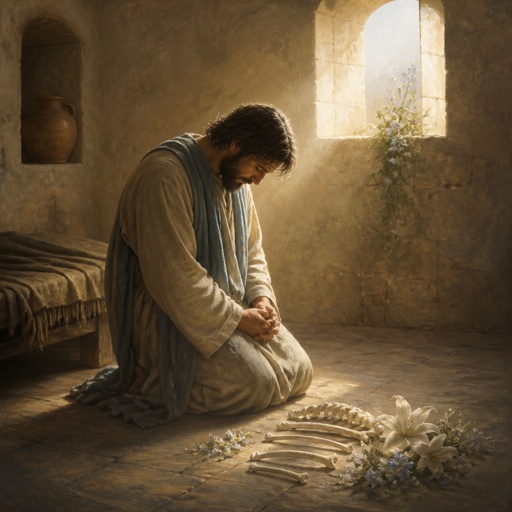
"Make me to hear joy and gladness; that the bones which thou hast broken may rejoice." - Psalms 51:8

Psalms 89:51 - "Wherewith thine enemies have reproached, O LORD; wherewith they have reproached the footsteps of thine anointed."

Psalms 51:8 - "Make me to hear joy and gladness; that the bones which thou hast broken may rejoice."

Psalms 51:11 - "Cast me not away from thy presence; and take not thy holy spirit from me."

Psalms 17:5 - "Hold up my goings in thy paths, that my footsteps slip not."

Psalms 51:6 - "Behold, thou desirest truth in the inward parts: and in the hidden part thou shalt make me to know wisdom."

Psalms 51:15 - "O Lord, open thou my lips; and my mouth shall shew forth thy praise."

Psalms 119:51 - "The proud have had me greatly in derision: yet have I not declined from thy law."

Psalms 136:17 - "To him which smote great kings: for his mercy endureth for ever:"

"Have mercy upon me, O God, according to thy lovingkindness: according unto the multitude of thy tender mercies blot out my transgressions." (Psalms 51:1)

Psalms 51:14 - "Deliver me from bloodguiltiness, O God, thou God of my salvation: and my tongue shall sing aloud of thy righteousness."

Psalms 51:19 - "Then shalt thou be pleased with the sacrifices of righteousness, with burnt offering and whole burnt offering: then shall they offer bullocks upon thine altar."

Psalms 17:2 - "Let my sentence come forth from thy presence; let thine eyes behold the things that are equal."