What does Psalms 8:3 mean?
“When I consider thy heavens, the work of thy fingers, the moon and the stars, which thou hast ordained;” — Psalms 8:3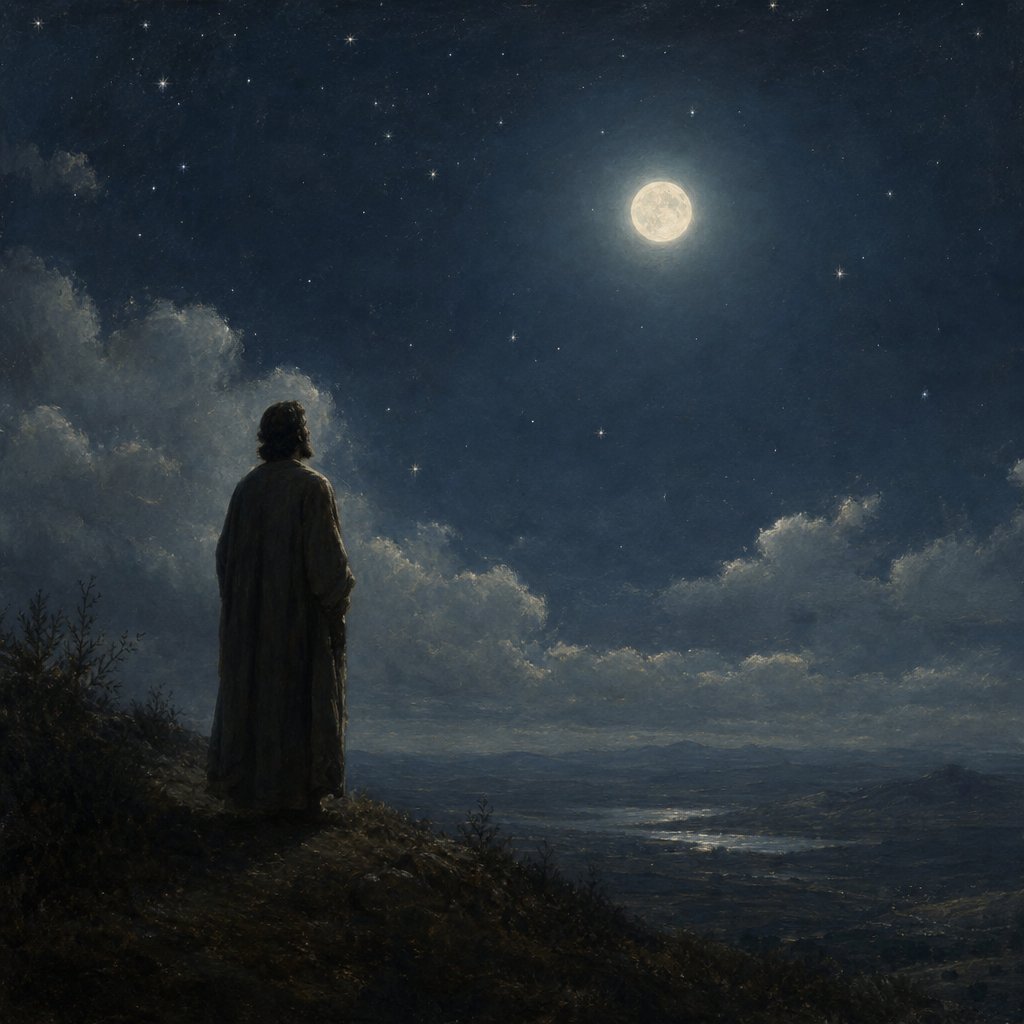
Psalm 8 is a hymn of praise that begins and ends with the same exclamation: “O LORD our Lord, how excellent is thy name in all the earth!” In between those bookends, David reflects on the contrast between the greatness of God and the smallness of man, and he does so by looking up into the night sky. Psalm 8:3 sits at the center of that reflection and provides the scene that makes the rest of the psalm feel inevitable. The verse in the King James Bible reads, “When I consider thy heavens, the work of thy fingers, the moon and the stars, which thou hast ordained.”
The meaning of the verse turns on the word “consider.” David is not describing a passing glance but a sustained, reverent contemplation. The heavens become a kind of sanctuary ceiling for meditation; they invite the mind to pause and weigh what they imply about the One who made them. In Scripture, “the heavens” often stand for the vast expanse above, the realm that seems unreachable and immeasurable to human sight. By calling them “thy heavens,” David treats the sky not as impersonal nature but as God’s possession and display. The heavens are not autonomous; they belong to the LORD and speak to His majesty.
The phrase “the work of thy fingers” is a deliberate piece of symbolism. David could have said “the work of thine hands,” but “fingers” conveys carefulness, ease, and precision. The imagery suggests craftsmanship rather than strain. The sky is not the product of divine effort as though God struggled to form it; it is as though the LORD traced it out with effortless skill. That symbolism strengthens the central theme of Psalm 8: God’s greatness is so far above man’s that what overwhelms human imagination is, for God, the refined work of His fingers. It is also intimate language. Fingers imply nearness and personal touch, not distance. The heavens, though unimaginably vast, are still presented as something God has personally fashioned.
David then names “the moon and the stars,” selecting the lights that rule the night. In his setting, the night sky would have been brilliant and crowded with stars, a natural theater for awe. By mentioning the moon and the stars rather than the sun, David draws attention to the quiet grandeur that appears when human activity diminishes and the world grows still. The moon and the stars also function symbolically as fixed witnesses above a changing earth. They mark seasons and times, and in that sense they suggest order rather than chaos. David’s wonder is not only at their beauty but at their stability and arrangement.
That leads into the final clause: “which thou hast ordained.” In the KJV, “ordained” carries more than the idea of mere creation; it implies appointment, arrangement, and purpose. The moon and stars are not random points of light; they have been set in place by divine decree. The heavens therefore do not merely display power; they display government. David is contemplating not only that God can make, but that God can order, assign, and sustain. This helps explain why the next verse asks, “What is man, that thou art mindful of him?” The question is not asked in despair but in astonishment: if God is the One who has ordained the moon and the stars, how astonishing that He is “mindful” of man at all.
Within the context of the whole psalm, Psalm 8:3 is the doorway into the psalm’s main contrast. God’s creation is immense and meticulously arranged, yet God gives man a remarkable place within it. The verse sets up the later lines about man being made “a little lower than the angels” and crowned “with glory and honour,” with dominion over the works of God’s hands. That dominion does not diminish God; it magnifies Him, because it shows that the LORD who ordains the heavens also chooses to entrust responsibility and dignity to man. Thus Psalm 8:3 contributes to a theme that runs throughout Scripture: creation is a witness to the Creator’s majesty, and that majesty makes God’s attention to humanity all the more striking.
The significance of Psalm 8:3, then, is that it portrays awe as the beginning of understanding. David is teaching the reader how to look at the world: not as a closed system, but as “thy heavens,” crafted with divine precision, ordered by divine will, and meant to lead the heart from wonder at creation to worship of the Creator.
Get our apps


Artwork for Psalms 8:3

Psalms 8:3 - "When I consider thy heavens, the work of thy fingers, the moon and the stars, which thou hast ordained;"
"When I consider thy heavens, the work of thy fingers, the moon and the stars, which thou hast ordained;" - Psalms 8:3
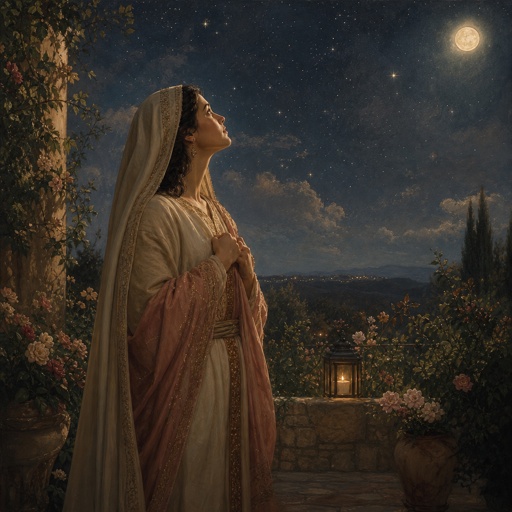
"When I consider thy heavens, the work of thy fingers, the moon and the stars, which thou hast ordained; What is man, that thou art mindful of him? and the son of man, that thou visitest him?" - Psalms 8:3-4
"Salvation belongeth unto the LORD: thy blessing is upon thy people. Selah." - Psalms 3:8
Psalms 3:8 - "Salvation belongeth unto the LORD: thy blessing is upon thy people. Selah."
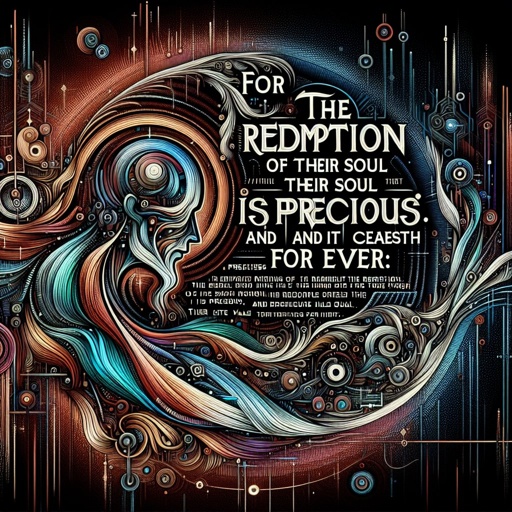
Psalms 49:8 - "(For the redemption of their soul is precious, and it ceaseth for ever:)"
Psalms 111:3 - "His work is honourable and glorious: and his righteousness endureth for ever."

Psalm 8:3

Psalm 8:3

Psalms 88:3 - "For my soul is full of troubles: and my life draweth nigh unto the grave."

Psalms 103:3 - "Who forgiveth all thine iniquities; who healeth all thy diseases;"

Psalms 87:3 - "Glorious things are spoken of thee, O city of God. Selah."

Psalm 8:3-6

Psalm 8:3-6

"All sheep and oxen, yea, and the beasts of the field;" - Psalms 8:7

"To bind their kings with chains, and their nobles with fetters of iron;" - Psalms 149:8

"But thou, LORD, art most high for evermore." - Psalms 92:8

Psalms 78:8 - "And might not be as their fathers, a stubborn and rebellious generation; a generation that set not their heart aright, and whose spirit was not stedfast with God."

Psalms 67:3 - "Let the people praise thee, O God; let all the people praise thee."

"They are brought down and fallen: but we are risen, and stand upright." - Psalms 20:8

"Let the floods clap their hands: let the hills be joyful together" - Psalms 98:8

"They are corrupt, and speak wickedly concerning oppression: they speak loftily." - Psalms 73:8

Psalms 116:3 - "The sorrows of death compassed me, and the pains of hell gat hold upon me: I found trouble and sorrow."

"The sea saw it, and fled: Jordan was driven back." - Psalms 114:3

Psalms 138:3 - "In the day when I cried thou answeredst me, and strengthenedst me with strength in my soul."

"There is no speech nor language, where their voice is not heard." - Psalms 19:3

"The LORD is their strength, and he is the saving strength of his anointed." - Psalms 28:8

"Great is the LORD, and greatly to be praised; and his greatness is unsearchable." - Psalms 145:3

"He healeth the broken in heart, and bindeth up their wounds." - Psalms 147:3

"Good and upright is the LORD: therefore will he teach sinners in the way." - Psalms 25:8