What does Revelation 18:21 mean?
“And a mighty angel took up a stone like a great millstone, and cast it into the sea, saying, Thus with violence shall that great city Babylon be thrown down, and shall be found no more at all.” — Revelation 18:21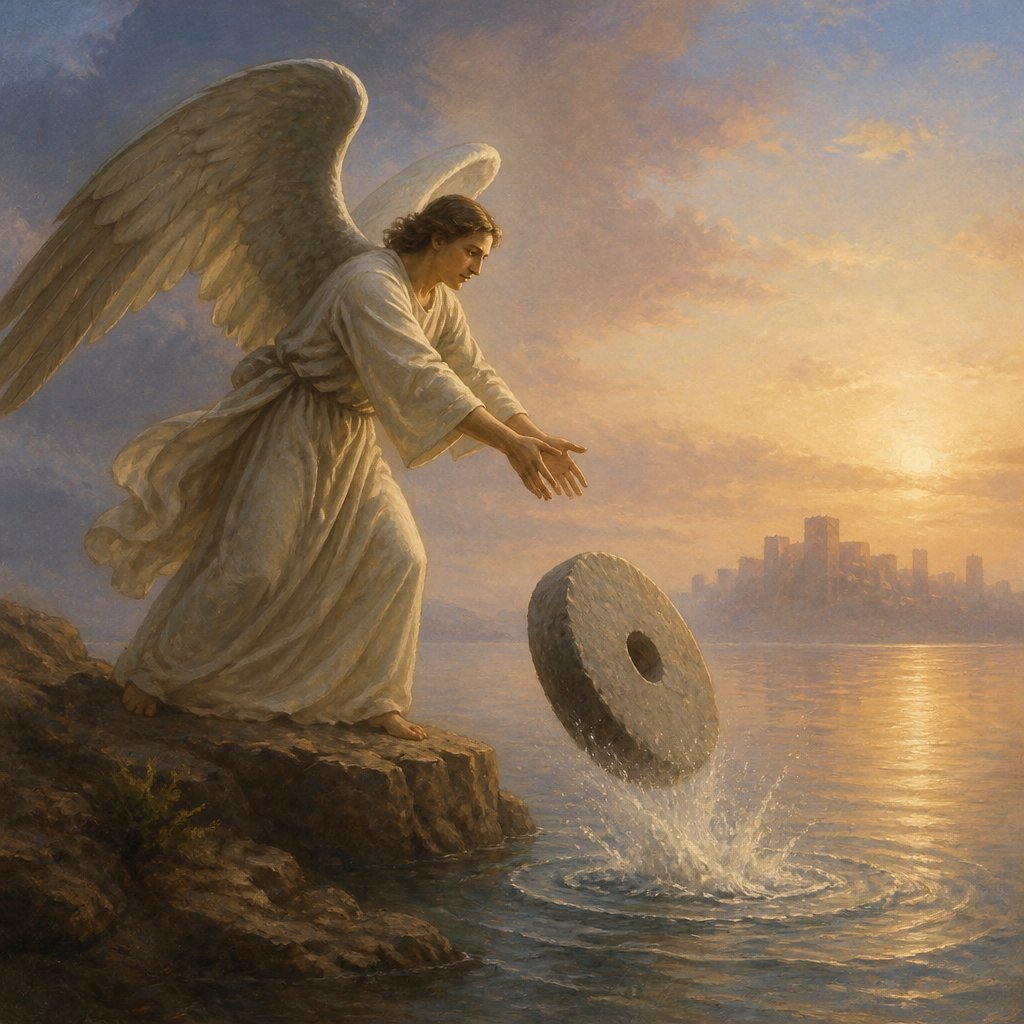
Revelation 18:21 (KJV) reads, "And a mighty angel took up a stone like a great millstone, and cast it into the sea, saying, Thus with violence shall that great city Babylon be thrown down, and shall be found no more at all." This verse is part of the larger context of the Book of Revelation, the final book of the New Testament, which is attributed to the Apostle John and contains vivid imagery and prophecies about the end times and the second coming of Jesus Christ.
In this specific verse, the "mighty angel" is depicted as casting a stone like a great millstone into the sea, proclaiming the destruction of the great city of Babylon with violence, assuring that it will be found no more at all. This imagery of a mighty angel and the violent destruction of Babylon carries deep and profound symbolism and themes.
One of the key themes in this verse is the concept of judgment and retribution. The city of Babylon is often understood as a symbol of worldly power, wealth, and idolatry. Its destruction represents the judgment of God upon the wickedness and sinfulness of human society. The violent and decisive nature of its destruction communicates the severity of God's judgment and the finality of the city's downfall. This theme of judgment is a common motif throughout the Book of Revelation, where the righteous are vindicated and the wicked are ultimately brought to account for their actions.
Another significant theme in this verse is the contrast between earthly power and the sovereignty of God. The city of Babylon, with all its wealth and influence, is ultimately rendered powerless in the face of God's divine judgment. The imagery of the mighty angel casting a stone like a great millstone into the sea conveys the futility and insignificance of human strength and pride in comparison to the might and authority of God. This serves as a powerful reminder of the ultimate supremacy of God's will and the transience of human accomplishments in the face of divine judgment.
The symbolism in this verse is also rich and multi-layered. The use of the term "Babylon" harkens back to the ancient city of Babylon, a historical center of wealth, power, and idolatry in the ancient world. In the context of the Book of Revelation, Babylon has come to symbolize the corrupt and oppressive systems of the world that stand in opposition to God and His kingdom. The violent and dramatic imagery of the city's destruction serves as a symbol of the overthrow of all worldly powers and the triumph of God's kingdom in the end times.
The use of the millstone as a symbol of destruction further emphasizes the thorough and irreversible nature of Babylon's downfall. In biblical times, a millstone was a heavy and essential tool used for grinding grain into flour. Here, it is employed as a symbol of crushing and pulverizing, underscoring the completeness and finality of Babylon's destruction. The casting of the stone into the sea also carries biblical significance, as the sea is often associated with chaos and the forces of evil in the Old Testament. By casting the stone into the sea, the angel is symbolically banishing the city of Babylon into the abyss, ensuring that it will never rise again.
In conclusion, Revelation 18:21 (KJV) conveys powerful themes of judgment, the sovereignty of God, and the triumph of His kingdom over the corrupt systems of the world. The vivid imagery and symbolism of the verse serve to underscore the ultimate futility of human power and the certainty of divine judgment. This verse serves as a potent reminder of the transience of worldly wealth and power in comparison to the eternal and unshakable authority of God.
Get our apps


Artwork for Revelation 18:21

Revelation 18:21 - "And a mighty angel took up a stone like a great millstone, and cast it into the sea, saying, Thus with violence shall that great city Babylon be thrown down, and shall be found no more at all."
"And a mighty angel took up a stone like a great millstone, and cast it into the sea, saying, Thus with violence shall that great city Babylon be thrown down, and shall be found no more at all." - Revelation 18:21

Revelation 21:18 - "And the building of the wall of it was of jasper: and the city was pure gold, like unto clear glass."

"And the building of the wall of it was of jasper: and the city was pure gold, like unto clear glass." - Revelation 21:18

Revelation 19:19-21

Revelation 19:19-21

Revelation 19:19-21

Revelation 21:5

Revelation 21:1

Revelation 21: 1

Revelation 21:6

Revelation 21:3

Revelation 21:2

Revelation 21:2

Revelation 21:3

Revelation 21: 10
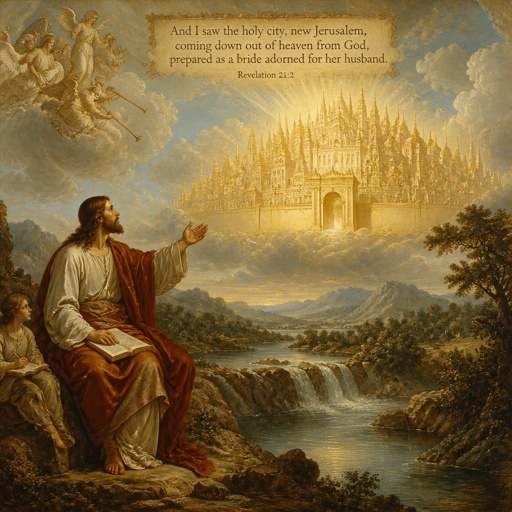
Revelation 21:2

Revelation 21:2
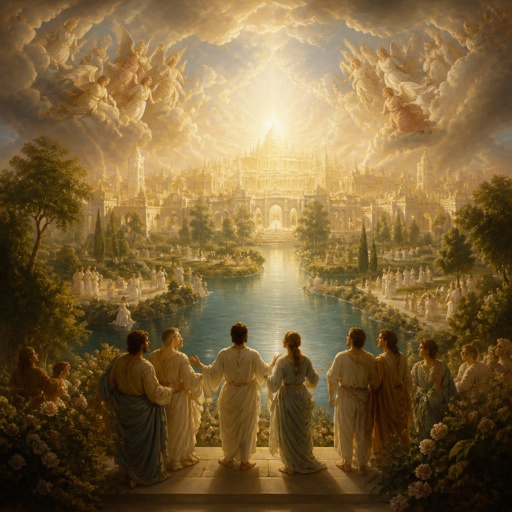
Revelation 21:2

Revelation 21:2

Revelation 21:11

Revelation 21:2

Revelation 21:12

Revelation 21:4

Revelation 21:11

Revelation 21:21 – "The twelve gates were twelve pearls, each gate made of a single pearl."

Revelation 22:18

Revelation 21:21 – "The twelve gates were twelve pearls, each gate made of a single pearl."

Revelation 21:21 – "The twelve gates were twelve pearls, each gate made of a single pearl."

Revelations 21:4