What does Revelation 19:5 mean?
“And a voice came out of the throne, saying, Praise our God, all ye his servants, and ye that fear him, both small and great.” — Revelation 19:5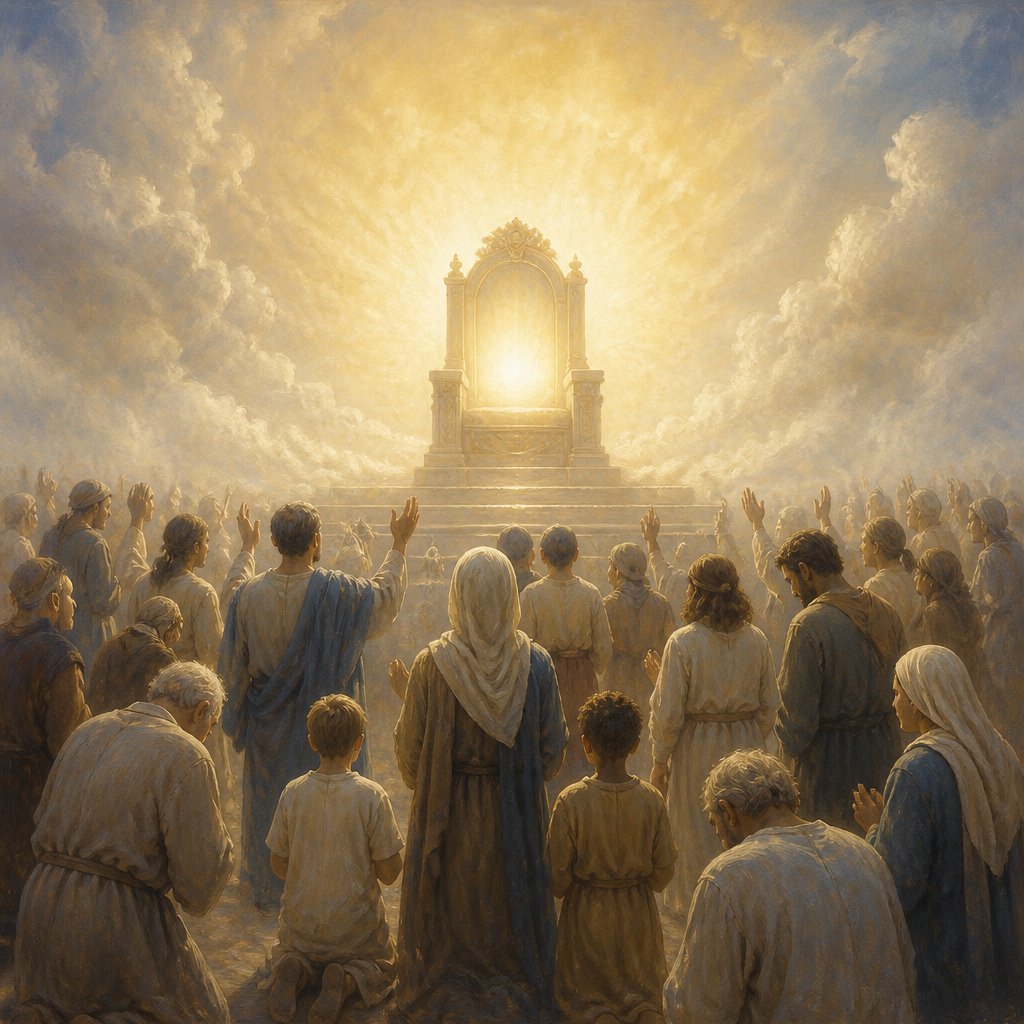
Revelation 19:5 in the King James Version (KJV) of the Bible reads: "And a voice came out of the throne, saying, Praise our God, all ye his servants, and ye that fear him, both small and great." This verse occurs within the larger context of the Book of Revelation, which is the final book of the New Testament and is traditionally attributed to the apostle John. The Book of Revelation is a complex and enigmatic text, filled with vivid symbolism, prophetic visions, and apocalyptic imagery. It is widely interpreted as depicting the end times and the ultimate victory of God over evil.
The verse in question comes from a passage in Revelation that describes a great multitude in heaven praising God and rejoicing over the downfall of Babylon, which is a symbol of the world's corrupt and idolatrous systems. The voice that speaks from the throne calls on all of God's servants, regardless of their station or status, to join in this chorus of praise. The mention of both "small and great" emphasizes that this call to worship is inclusive and extends to all who fear and serve God.
One of the central themes of this verse is the universal praise and worship of God. The image of all of God's servants, from the humblest to the greatest, joining together in adoration and gratitude reflects the idea of unity and harmony within the community of believers. It also underscores the idea that in the presence of God, all earthly distinctions and hierarchies are dissolved, and all are equal in their devotion to Him.
The emphasis on "fearing" God is significant as well. In the Bible, "fear of the Lord" does not necessarily denote a sense of terror or dread, but rather a deep reverence and awe in the face of God's majesty and holiness. It signifies a recognition of God's supreme authority and a willingness to submit to His will. Therefore, this verse is calling on all who have this reverence for God to come together in worship and praise.
The exhortation to praise God is also a recurring theme in the Book of Revelation. Throughout the book, there are numerous scenes of celestial worship, in which the heavenly hosts and the redeemed saints offer up songs of adoration and thanksgiving to God. This culminates in the depiction of the "new song" that is sung in Revelation 5:9, which celebrates the Lamb who was slain and has redeemed God's people.
Furthermore, the context of Revelation 19:5 is important to consider. This verse occurs in the midst of a series of visions that depict the final defeat of evil and the triumph of Christ. The verse immediately follows the description of the great multitude in heaven rejoicing over the judgment of the "great harlot" (Babylon), which symbolizes the world's spiritual adultery and corruption. Therefore, the call to praise God in this verse is intimately connected to the outpouring of joy and celebration that accompanies the downfall of evil and the establishment of God's righteous kingdom.
In terms of symbolism, the "voice" that comes out of the throne can be interpreted as the voice of God Himself or as a heavenly mediator speaking on His behalf. The image of the throne evokes the majesty and sovereignty of God, as well as His role as the supreme ruler of the universe. The act of praising God is highly significant in this context, as it represents the acknowledgement of His authority and the willingness to ascribe glory and honor to Him.
In conclusion, Revelation 19:5 is a powerful and evocative verse that encapsulates some of the central themes of the Book of Revelation. It emphasizes the universal praise and worship of God, the unity and inclusivity of the community of believers, and the exultation over the ultimate victory of Christ. The verse also carries rich symbolic and contextual significance, highlighting the divine authority and majesty of God, as well as the joy and celebration that accompany the defeat of evil. It serves as a poignant reminder of the central role of worship in the lives of believers and the ultimate purpose of glorifying God.
Get our apps


Artwork for Revelation 19:5

Revelation 19:5 - "And a voice came out of the throne, saying, Praise our God, all ye his servants, and ye that fear him, both small and great."
"And a voice came out of the throne, saying, Praise our God, all ye his servants, and ye that fear him, both small and great." - Revelation 19:5

Revelation 19:19-21

Revelation 19:19-21

Revelation 19:19-21

Revelation 5:5

Revelation 19:4

Revelation 21:5

Revelation 5:6

Revelation 8:5

Revelation 5:6

Revelation 5:8

Revelation 5:6

Revelation 5:1-10

Revelation 15:5-8

Revelation 15:5-8

Revelation 15:5-8

Revelation 22: 1-5

Revelation 19:19 - "And I saw the beast, and the kings of the earth, and their armies, gathered together to make war against him that sat on the horse, and against his army."

Revelation 3:19 - "As many as I love, I rebuke and chasten: be zealous therefore, and repent."

Revelation 19:3 - "And again they said, Alleluia. And her smoke rose up for ever and ever."

lake of fire from the Bible at Revelation 19:20

Revelation 19:13 - "And he was clothed with a vesture dipped in blood: and his name is called The Word of God."

Revelations 8:3-5

Revelation 1:19 - "Write the things which thou hast seen, and the things which are, and the things which shall be hereafter;"

Revelation 19:16 - "And he hath on his vesture and on his thigh a name written, KING OF KINGS, AND LORD OF LORDS."

Revelation 14:5 - "And in their mouth was found no guile: for they are without fault before the throne of God."

Revelation 14:19 - "And the angel thrust in his sickle into the earth, and gathered the vine of the earth, and cast it into the great winepress of the wrath of God."

Revelation 19:11 – "I saw heaven standing open and there before me was a white horse, whose rider is called Faithful and True."

Revelation 19:8 - "And to her was granted that she should be arrayed in fine linen, clean and white: for the fine linen is the righteousness of saints."