What does Revelation 2:10 mean?
“Fear none of those things which thou shalt suffer: behold, the devil shall cast some of you into prison, that ye may be tried; and ye shall have tribulation ten days: be thou faithful unto death, and I will give thee a crown of life.” — Revelation 2:10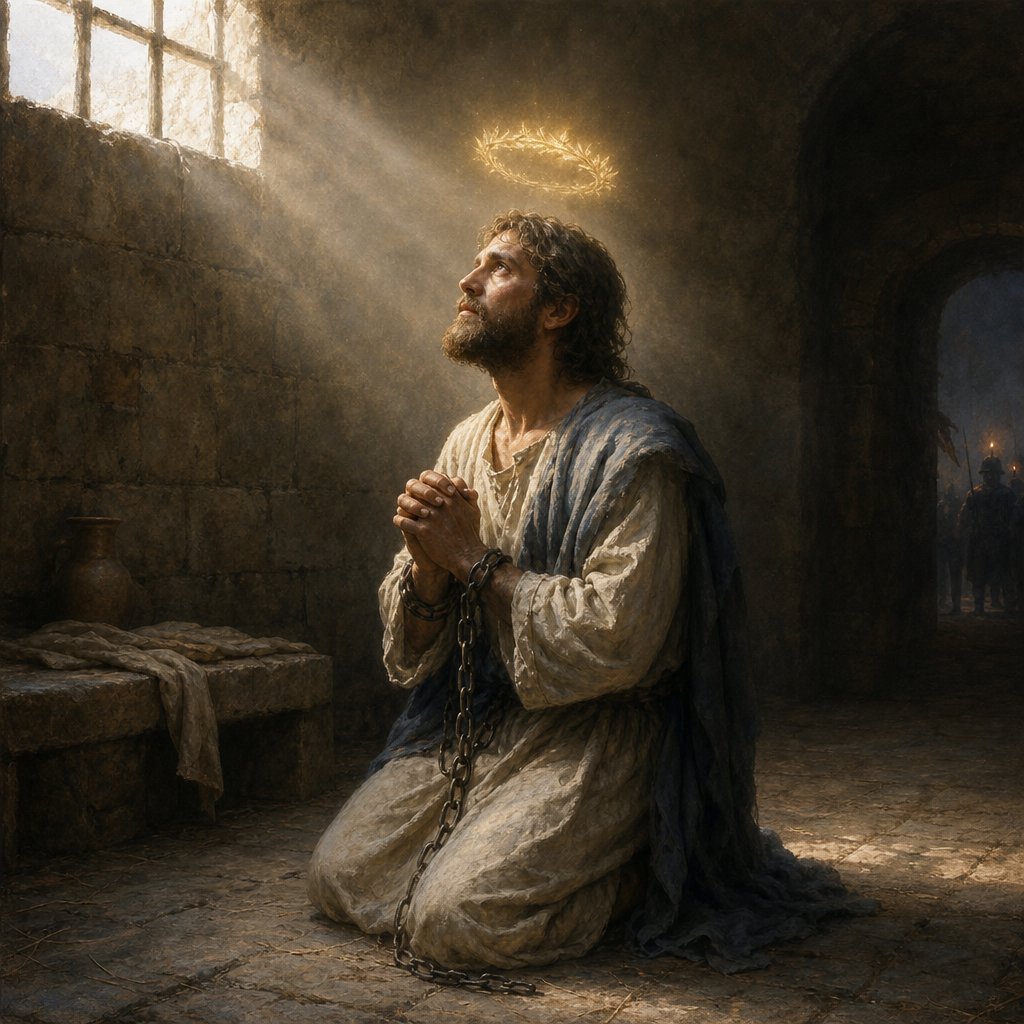
Revelation 2:10 in the King James Version sits inside Christ’s message “unto the angel of the church in Smyrna” (Revelation 2:8). Smyrna is addressed as a suffering, pressured church: they are afflicted, slandered, and materially poor yet spiritually rich, and the Lord speaks to them as “the first and the last, which was dead, and is alive” (Revelation 2:8–9). That opening description is already part of the meaning of verse 10: the One commanding them not to fear is the One who has gone through death and come out alive, so his word to a threatened church is grounded in his own victory over death.
The verse reads: “Fear none of those things which thou shalt suffer: behold, the devil shall cast some of you into prison, that ye may be tried; and ye shall have tribulation ten days: be thou faithful unto death, and I will give thee a crown of life.” The first note is that the suffering is not presented as hypothetical. “Thou shalt suffer” does not flatter them with an easy future; it prepares them for a real one. Yet the command is equally direct: “Fear none of those things.” In Revelation, fear is often the doorway to compromise, because fear of loss, pain, or death can tempt believers to deny Christ. Here Christ does not deny the pain; he denies fear its authority. The point is not that the suffering is small, but that it is bounded by Christ’s sovereignty and answered by his promise.
The verse is also frank about spiritual conflict. “The devil shall cast some of you into prison” uses earthly persecution language while naming the unseen mover behind it. Smyrna’s believers may be arrested by human authorities, opposed by hostile neighbors, or accused by adversaries, but the verse pulls back the veil and identifies a deeper enemy. This does not remove human responsibility; it reveals that persecution is not merely social friction but part of a war against faithful witness. In Revelation’s symbolism, “the devil” is the personal adversary of God’s people, and prison is not only a place of confinement but a tool: it isolates, intimidates, breaks normal life, and pressures the conscience. Yet even that dark line is framed by “behold,” as though Christ is saying, “I want you to see this clearly in advance, so you are not surprised into fear.”
The purpose clause is crucial: “that ye may be tried.” The trial is not described as God’s ignorance needing information, but as a proving, testing, and refining. The language echoes the biblical theme that faith is shown genuine under pressure. The trial exposes what is true and strengthens what is real. In that sense the prison is not only punishment; it becomes a furnace in which steadfastness is made visible. At the same time, the verse guards against despair by giving the trial limits.
Those limits appear in the phrase “and ye shall have tribulation ten days.” In the immediate sense, “ten days” communicates a definite, measured period rather than endless torment. The persecution has a boundary; it does not run free. The number itself carries symbolic weight in Scripture as a complete set or a full measure in certain contexts, and here it can suggest that the suffering will be real and sufficient to test them, but not infinite, not unrestrained, and not beyond what God permits. The point is not to satisfy curiosity about a calendar so much as to assure the church that the season of tribulation is under divine governance. Their enemies are not writing the final chapter.
Then comes the central call: “be thou faithful unto death.” Faithfulness here is not mere inward belief; it is steadfast allegiance to Christ under threat, the refusal to deny him when the cost becomes extreme. “Unto death” can mean as far as death, even if it results in martyrdom. Revelation repeatedly honors “witness” that is maintained under lethal pressure, and Smyrna is being told that the measure of success is not escape but fidelity. This is not a celebration of suffering for its own sake; it is a declaration that obedience and loyalty to Christ are worth more than life itself, because life itself is not the final possession.
The promise answers the command: “and I will give thee a crown of life.” The “crown” in the KJV language evokes victory and honor, the reward given to one who has finished the contest. It is not a crown of political power but “of life,” meaning the reward is life itself in its fullness, secured beyond death. In a message to people facing imprisonment and possible execution, the promise is perfectly matched to the threat. The persecutor can take earthly freedom and even earthly breath, but Christ gives life that death cannot hold. The crown imagery also restores dignity to the suffering believer: what looks like defeat in the eyes of the world is presented as victory in the eyes of Christ.
Taken together, Revelation 2:10 teaches that Christian suffering is neither random nor ultimate. It names the reality of coming pain, identifies the spiritual hostility behind it, and declares that God uses trial to prove faith while setting boundaries on the tribulation. It calls for courage that is not denial but trust, and it anchors that courage in the character and promise of Christ, who has already passed through death and lives. The verse’s significance is that it redefines the situation for the church in Smyrna: their story is not mainly about what the devil can do to them, but about what Christ will give them if they hold fast—faithfulness “unto death,” and, beyond death, “a crown of life.”
Get our apps


Artwork for Revelation 2:10

Revelation 2:10 - "Fear none of those things which thou shalt suffer: behold, the devil shall cast some of you into prison, that ye may be tried; and ye shall have tribulation ten days: be thou faithful unto death, and I will give thee a crown of life."
"Fear none of those things which thou shalt suffer: behold, the devil shall cast some of you into prison, that ye may be tried; and ye shall have tribulation ten days: be thou faithful unto death, and I will give thee a crown of life." - Revelation 2:10

Revelation 10:2 - "And he had in his hand a little book open: and he set his right foot upon the sea, and his left foot on the earth,"

Revelation 20:10

Revelation 13:10

Revelation 21: 10

Revelation 9:7-10

Revelation 5:1-10

Revelation 1:10 - "I was in the Spirit on the Lord's day, and heard behind me a great voice, as of a trumpet,"
Revelation 21:2

Revelation 21:2
Revelation 21:2

Revelation 21:2

Revelation 21:2

Revelation 16:2

Revelation 16:2

Revelation 21:2

Revelation 2:1

Revelation 21:2

Revelation 22:10 - "And he saith unto me, Seal not the sayings of the prophecy of this book: for the time is at hand."

Revelation 10:10 - "And I took the little book out of the angel's hand, and ate it up; and it was in my mouth sweet as honey: and as soon as I had eaten it, my belly was bitter."

Revelation 5:10 - "And hast made us unto our God kings and priests: and we shall reign on the earth."

Show the Beastly Rule faced in Revelation 13:1-10.

Revelation 9:10 - "And they had tails like unto scorpions, and there were stings in their tails: and their power was to hurt men five months."

Revelation 7:10 - "And cried with a loud voice, saying, Salvation to our God which sitteth upon the throne, and unto the Lamb."

Revelation 10:3 - "And cried with a loud voice, as when a lion roareth: and when he had cried, seven thunders uttered their voices."

Revelation 10:11 - "And he said unto me, Thou must prophesy again before many peoples, and nations, and tongues, and kings."

Revelation 10:5 - "And the angel which I saw stand upon the sea and upon the earth lifted up his hand to heaven,"

Revelation 2:28 - "And I will give him the morning star."

Revelation 16:10 - "And the fifth angel poured out his vial upon the seat of the beast; and his kingdom was full of darkness; and they gnawed their tongues for pain,"