What does Revelation 3:5 mean?
“He that overcometh, the same shall be clothed in white raiment; and I will not blot out his name out of the book of life, but I will confess his name before my Father, and before his angels.” — Revelation 3:5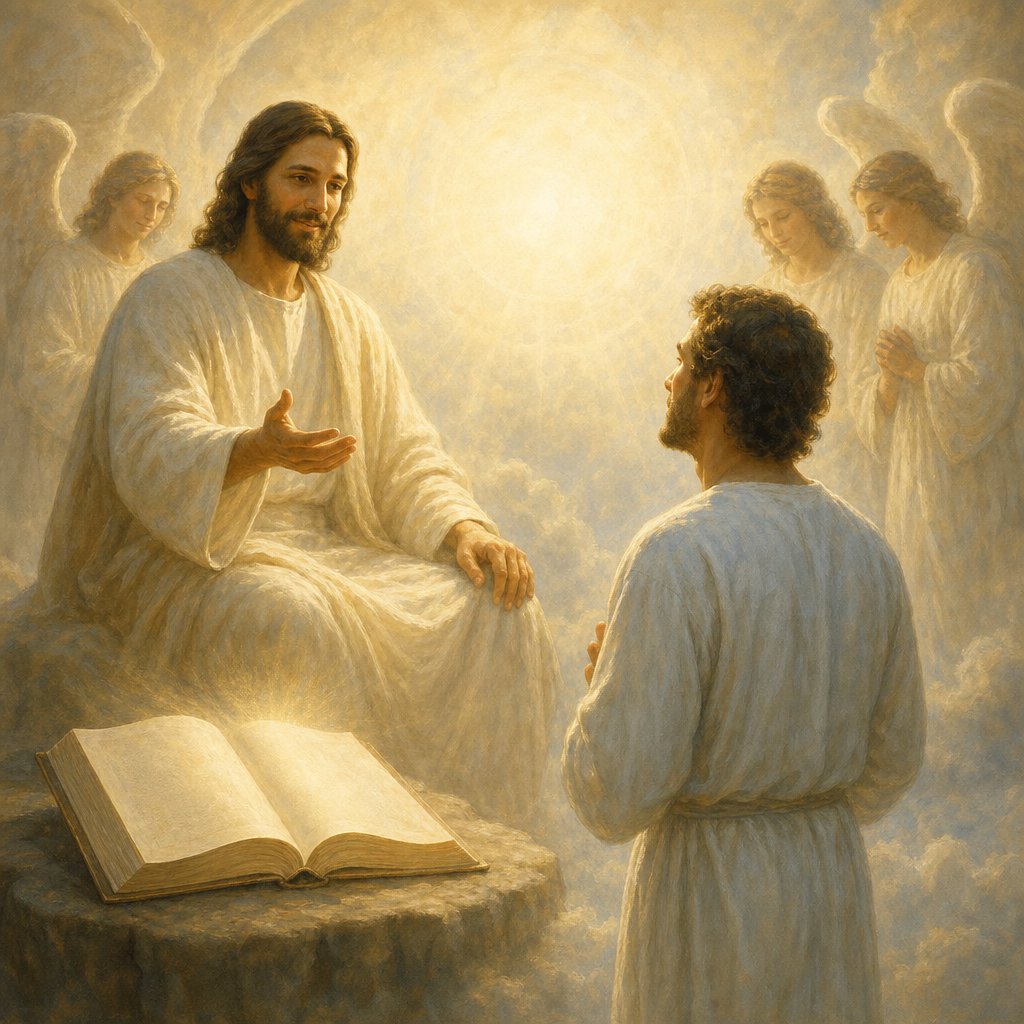
Revelation 3:5 in the King James Version reads, “He that overcometh, the same shall be clothed in white raiment; and I will not blot out his name out of the book of life, but I will confess his name before my Father, and before his angels.” This sentence belongs to Christ’s message to the church in Sardis (Revelation 3:1–6), a congregation described as having “a name that thou livest, and art dead.” In that setting the verse is not an isolated promise but the climax of a warning and a call: “Be watchful, and strengthen the things which remain,” “remember… hold fast, and repent.” The meaning of the promise in verse 5 becomes clear when it is heard against that background of spiritual decline and the danger of complacent religion—outward reputation without inward life. Christ is addressing people who may look alive to others yet stand in peril unless they wake, repent, and endure in faithful obedience.
The first key phrase is “He that overcometh.” In Revelation, to “overcome” is the language of persevering faithfulness to Christ in the face of sin, spiritual sleep, temptation, pressure, and compromise. In Sardis specifically, overcoming stands opposite to defilement and deadness. A few in Sardis are said to have “not defiled their garments” and they “shall walk with me in white: for they are worthy” (Revelation 3:4). Verse 5 then broadens that assurance: the overcomer shares that same outcome. The emphasis is not on mere beginnings, or a past profession, or a reputation, but on enduring reality—remaining true to Christ rather than drifting into lifeless form.
When Christ says the overcomer “shall be clothed in white raiment,” the imagery draws on Revelation’s repeated symbolism of white garments as purity, victory, and acceptance in the presence of God. Clothing in Scripture often represents a person’s standing and condition. In Sardis, where some have “defiled their garments,” the promise of “white raiment” answers the problem directly: the overcomer will not be found spiritually stained. White in Revelation is associated with holiness and triumph, and it also carries the sense of being fit to stand and walk with Christ. The picture is not merely of being given a garment but of being publicly arrayed in it, a visible sign that Christ has made the person clean and has honored that person as his own. In a church known for a hollow name, Christ promises a real, God-given identity that matches heaven’s verdict.
The next line, “and I will not blot out his name out of the book of life,” introduces the solemn courtroom and registry imagery of a divine record. A “book” in biblical language evokes official enrollment, citizenship, and acknowledged belonging. “The book of life” especially speaks of those counted among the living before God, those who truly belong to him. The phrase “not blot out” is significant because it implies the real danger of being erased from recognized standing—an image that fits the warning tone of the message to Sardis. Christ has just said, “If therefore thou shalt not watch, I will come on thee as a thief, and thou shalt not know what hour I will come upon thee” (Revelation 3:3). Verse 5 therefore functions as a comfort and an assurance: the one who overcomes will not be treated as a false professor whose name is removed; rather, Christ commits himself to that person’s enduring recognition in God’s register. It is a promise of security for the faithful, spoken in the hearing of those tempted to spiritual carelessness.
At the same time, the wording keeps the moral urgency of the passage intact. The church at Sardis had people whose spiritual condition did not match their reputation, and the entire message presses the need for repentance and vigilance. In that context, “I will not blot out his name” is not meant to encourage presumption, as though a mere claim guarantees the outcome; instead it strengthens the resolve of the repentant and watchful by setting before them what is at stake and what Christ will certainly do for the faithful. The verse holds together warning and promise: the danger of being found dead and unready, and the assurance that true overcoming will be met by Christ’s preserving acknowledgment.
Finally, Christ adds, “but I will confess his name before my Father, and before his angels.” This is the most personal and public element of the promise. The overcomer is not only inwardly cleansed and officially enrolled; he is openly owned by Christ in the highest court of heaven. To have one’s name “confessed” by Christ implies recognition, endorsement, and advocacy—Christ speaking for the believer, identifying him as belonging to him, in the presence of “my Father” and “his angels.” The setting is not private devotion but heavenly witness. This directly answers the problem of Sardis’s “name.” They had “a name” among men, but Christ offers something immeasurably greater: a name confessed by the Son of God before the Father. Earthly reputation may be hollow; heavenly acknowledgment is decisive.
Taken together, Revelation 3:5 weaves themes of perseverance, holiness, true life, and final vindication. In symbolism drawn from garments and heavenly books, it teaches that authentic Christianity is not mere appearance but overcoming faith that refuses spiritual defilement and endures in watchfulness and repentance. The white raiment signifies purity and acceptance with Christ; the unblotted name signifies secure belonging in God’s register for the faithful; and the confessed name signifies Christ’s public owning of the believer before the Father and the angels. In the larger movement of the letter to Sardis, this verse is meant to awaken the sleepy, steady the repentant, and hold out a concrete, majestic hope: that the end of overcoming is not simply survival, but being openly recognized, cleansed, and honored by Christ himself in the presence of heaven.
Get our apps


Artwork for Revelation 3:5

Revelation 3:5 - "He that overcometh, the same shall be clothed in white raiment; and I will not blot out his name out of the book of life, but I will confess his name before my Father, and before his angels."
"He that overcometh, the same shall be clothed in white raiment; and I will not blot out his name out of the book of life, but I will confess his name before my Father, and before his angels." - Revelation 3:5

Revelations 8:3-5

Revelation 5:3 - "And no man in heaven, nor in earth, neither under the earth, was able to open the book, neither to look thereon."

Revelation 5:5

Revelation 21:5

Revelation 5:6

Revelation 8:5

Revelation 5:6

Revelation 5:8

Revelation 5:6

Revelation 3:20

Revelation 3:7

Revelation 12:3

Revelation 3:16

Revelation 3:20

Revelation 21:3

Revelation 14:3

Revelation 3:20

Revelation 21:3

revelation study 3

Revelation 5:1-10

Revelation 15:5-8

Revelation 15:5-8
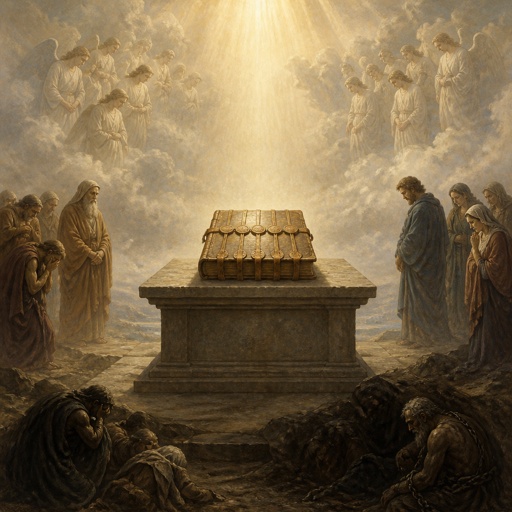
"And no man in heaven, nor in earth, neither under the earth, was able to open the book, neither to look thereon." - Revelation 5:3

Revelation 15:5-8

Revelation 22: 1-5

Revelation 17:3-4

Revelation 17:3-6

revelation 12:1-3