What does Romans 11:16 mean?
“For if the firstfruit be holy, the lump is also holy: and if the root be holy, so are the branches.” — Romans 11:16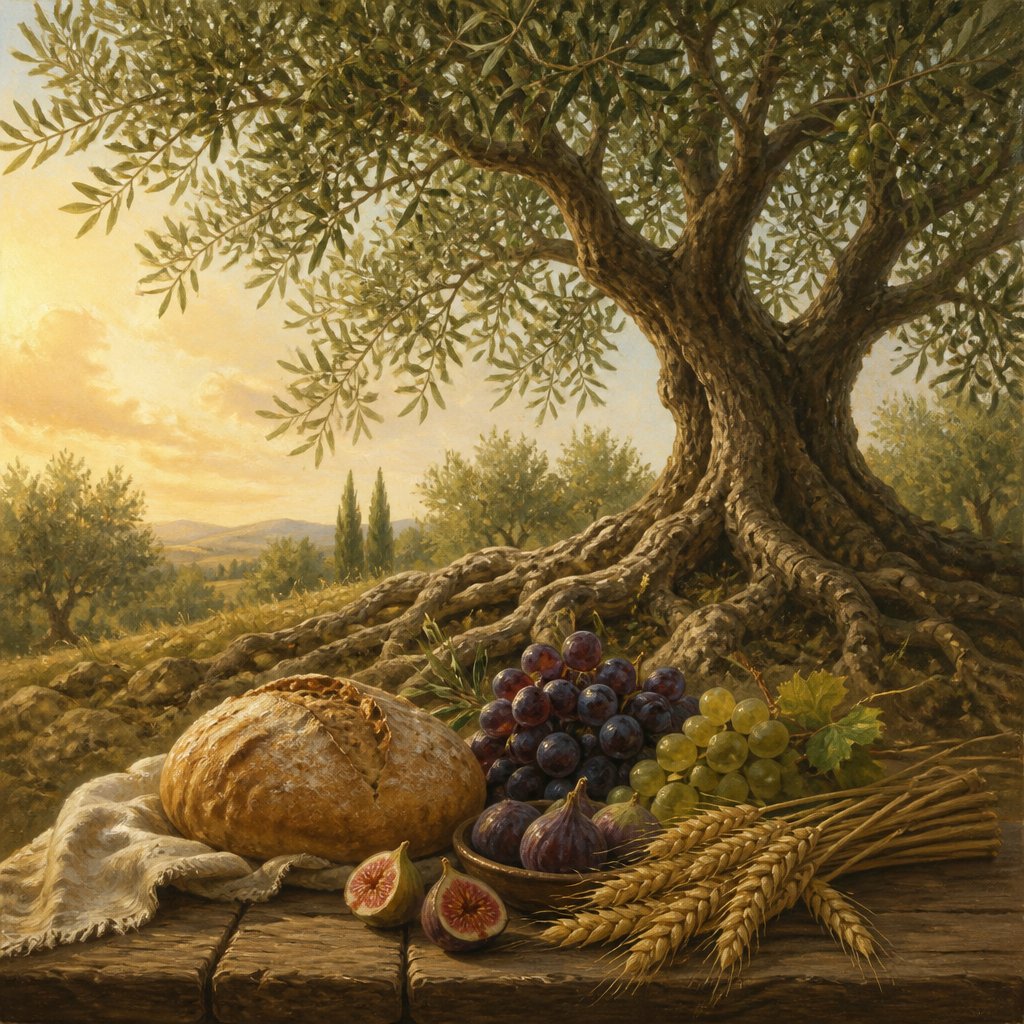
Romans 11:16 (KJV) states, "For if the firstfruit be holy, the lump is also holy: and if the root be holy, so are the branches." This verse is part of a larger passage in the book of Romans, which was written by the apostle Paul. In this section of Romans, Paul is addressing the relationship between the Jewish people and the Gentiles in the context of salvation and the plan of God for all people.
The metaphor used in this verse is agricultural in nature, drawing on the imagery of a vine and its branches. The "firstfruit" refers to the first part of the harvest, which was traditionally offered to God as a sacrifice. In the Old Testament, the concept of the firstfruit was closely tied to the idea of consecration and the setting apart of a portion of the harvest for God. Paul is using this metaphor to illustrate the idea that if the firstfruit is holy, then the entire harvest is also considered holy or set apart for God.
In this context, the "firstfruit" can be understood as referring to the Jewish people, who were chosen by God to be his people and set apart for his purposes. The "lump" or the "root" refers to the collective body of believers, including both Jews and Gentiles, who are connected to the firstfruit through their faith in God. Paul is making the point that the holiness of the Jewish people as God's chosen ones also extends to the wider body of believers, symbolized by the branches that are connected to the holy root.
This verse touches on several important themes in the book of Romans, including the relationship between the Jewish and Gentile believers, the concept of holiness and consecration, and the overarching plan of God for all people. Throughout the book, Paul emphasizes the unity of believers, regardless of their ethnic or cultural background, under the banner of faith in Jesus Christ.
One of the primary themes in this passage is the idea of continuity and connection between the Old and New Testaments. Paul is making the case that the faith of the Jewish people and their status as God's chosen ones is not nullified by the arrival of Jesus Christ, but rather, it is fulfilled and expanded to include all who believe in him. The holiness and consecration of the Jewish people are not exclusive, but rather serve as the foundation for the wider body of believers who are grafted onto the same spiritual heritage.
Another important theme in this verse is the concept of holiness and consecration. The language of the "firstfruit" and the "root" conveys the idea that God's work in the world is progressive and interconnected, with each stage building upon the previous one. The holiness of the Jewish people as the firstfruit is not something to be disregarded or discarded, but rather, it is an essential part of God's plan for the salvation of all people.
The imagery of the vine and the branches also carries symbolic significance. In the Gospel of John, Jesus describes himself as the true vine, and his followers as the branches that are connected to him. This image conveys the idea of intimacy and dependence between believers and Jesus, as well as the need for continuous growth and nourishment from the vine. In the context of Romans 11:16, this imagery reinforces the idea that the holiness and spiritual heritage of the Jewish people are essential for the growth and flourishing of the wider body of believers.
In conclusion, Romans 11:16 (KJV) is a rich and evocative verse that conveys important theological themes related to the relationship between the Jewish and Gentile believers, the concept of holiness and consecration, and the overarching plan of God for all people. Through the metaphor of the firstfruit, the lump, and the root, Paul emphasizes the continuity and connection between the Old and New Testaments, as well as the intimate and dependent relationship between all believers and Jesus Christ. This verse serves as a powerful reminder of the unity and common spiritual heritage that binds all followers of Christ together, regardless of their background or ethnicity.
Get our apps


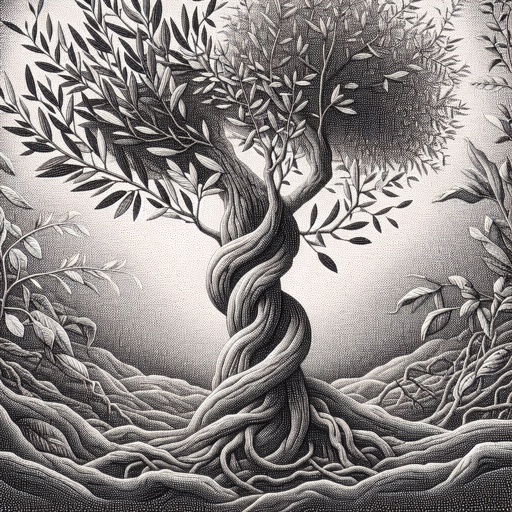
Artwork for Romans 11:16

Romans 11:16 - "For if the firstfruit be holy, the lump is also holy: and if the root be holy, so are the branches."
"For if the firstfruit be holy, the lump is also holy: and if the root be holy, so are the branches." - Romans 11:16

Romans 16:11 - "Salute Herodion my kinsman. Greet them that be of the household of Narcissus, which are in the Lord."
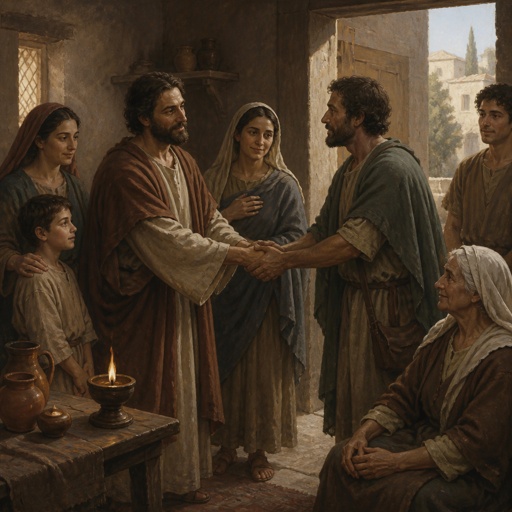
"Salute Herodion my kinsman. Greet them that be of the household of Narcissus, which are in the Lord." - Romans 16:11

Romans 11:11

Romans 8:16

Romans 16:17

Romans 16:17

Romans 16:17

Romans 16:16 - "Salute one another with an holy kiss. The churches of Christ salute you."

Romans 11:18
Romans 11:18

Romans 11:18

Zechariah 1:1-6

Romans 11:18

Romans 11:18

Romans 11:18
Romans 11:18

Romans 8:11

Romans 8:15-16

Romans 3:16 - "Destruction and misery are in their ways:"

Romans 5: 1-11

Romans 11:25-32

Romans 16:8 - "Greet Amplias my beloved in the Lord."

Romans 14:16 - "Let not then your good be evil spoken of:"

Romans 2:11 - "For there is no respect of persons with God."

Romans 5: 1-11

Romans 1:16 to the Jew first

Romans 11:29 - "For the gifts and calling of God are without repentance."

Romans 16:6 - "Greet Mary, who bestowed much labour on us."