What does Romans 14:9 mean?
“For to this end Christ both died, and rose, and revived, that he might be Lord both of the dead and living.” — Romans 14:9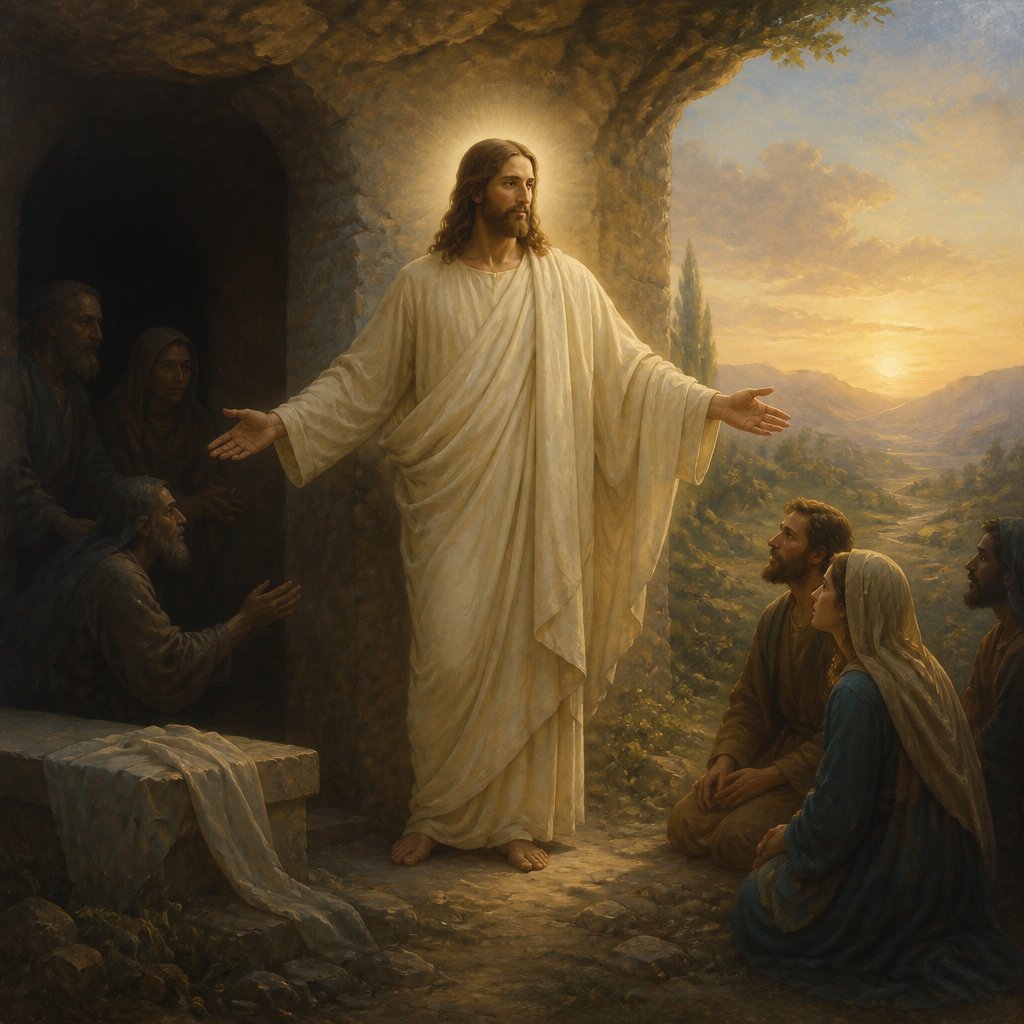
Romans 14:9 in the King James Version states, "For to this end Christ both died, and rose, and revived, that he might be Lord both of the dead and living." This verse encapsulates the core of Christian belief in the death and resurrection of Jesus Christ, and the implications of this event for all of humanity. In this verse, the apostle Paul is addressing the believers in Rome, explaining the significance of Christ's sacrifice and triumph over death.
The verse begins with the phrase, "For to this end," which indicates that Paul is about to reveal the purpose or outcome of a specific action. In this case, the action in question is the death and resurrection of Christ. The verse then states, "Christ both died, and rose, and revived." This concise statement summarizes the central events of the Christian faith – the crucifixion and subsequent resurrection of Jesus Christ. These events are the climax of the gospel narrative, representing the ultimate act of sacrifice and victory over sin and death.
The verse goes on to explain the purpose of Christ's death and resurrection, stating, "that he might be Lord both of the dead and living." This phrase emphasizes the sovereignty and authority of Jesus Christ over all creation. As Lord, Christ holds power and dominion over both the living and the dead, demonstrating his universal and eternal significance.
One of the key themes in this verse is the redemptive work of Jesus Christ. The death and resurrection of Christ are central to the Christian belief in salvation. Through his death, Jesus atoned for the sins of humanity, offering reconciliation and forgiveness to all who believe in him. His resurrection, in turn, symbolizes victory over sin and death, providing the hope of eternal life to believers. This theme of redemption and salvation underscores the transformative power of Christ's sacrifice, offering a message of hope and renewal to all who accept him as Lord and Savior.
Another theme present in this verse is the lordship of Christ. By rising from the dead, Christ demonstrated his authority over death and the grave, establishing himself as the ultimate ruler and sovereign over all creation. This theme emphasizes the divinity and supremacy of Jesus Christ, presenting him as the rightful Lord and Master of every aspect of existence.
The context of Romans 14:9 is important for understanding its significance. In the broader passage of Romans 14, Paul addresses issues of personal conviction and judgment within the Christian community. He encourages believers to show grace and understanding towards one another, avoiding judgment and division over matters of secondary importance. In this context, Romans 14:9 serves as a foundational reminder of the ultimate authority of Christ, offering a unifying focus for believers amidst their differences.
The symbolism in this verse is rich and profound. The death and resurrection of Christ are symbolically represented as the ultimate expression of love, sacrifice, and triumph over evil. The image of Christ as Lord over the living and the dead symbolizes his universal and eternal reign, demonstrating his power to bring life and hope to all who believe in him.
In conclusion, Romans 14:9 in the King James Version provides a powerful declaration of the transformative and universal significance of Christ's death and resurrection. This verse underscores the themes of redemption, lordship, and unity within the Christian faith, offering a message of hope and assurance to all who embrace the gospel. As believers reflect on this verse, they are reminded of the profound and enduring impact of Christ's redemptive work, and the eternal lordship of the risen Savior.
Get our apps


Artwork for Romans 14:9

Romans 14:9 - "For to this end Christ both died, and rose, and revived, that he might be Lord both of the dead and living."
"For to this end Christ both died, and rose, and revived, that he might be Lord both of the dead and living." - Romans 14:9

Romans 9:14 - "What shall we say then? Is there unrighteousness with God? God forbid."
"What shall we say then? Is there unrighteousness with God? God forbid." - Romans 9:14

Romans 14:12

Romans 8:14

Romans 10:14

Romans 10:9

Romans 10:9

Romans 9:9 - "For this is the word of promise, At this time will I come, and Sara shall have a son."

Romans 3:14 - "Whose mouth is full of cursing and bitterness:"

Romans 14:16 - "Let not then your good be evil spoken of:"

Romans 8:14 - "For as many as are led by the Spirit of God, they are the sons of God."

Romans 14:7 - "For none of us liveth to himself, and no man dieth to himself."

depict the theme of Romans 13:8-14

Romans 14:1 - "Him that is weak in the faith receive ye, but not to doubtful disputations."

Romans 12:14 - "Bless them which persecute you: bless, and curse not."

Romans 14:18 - "For he that in these things serveth Christ is acceptable to God, and approved of men."

Romans 14:14 - "I know, and am persuaded by the Lord Jesus, that there is nothing unclean of itself: but to him that esteemeth any thing to be unclean, to him it is unclean."

Romans 9:12 - "It was said unto her, The elder shall serve the younger."

Romans 14:12 - "So then every one of us shall give account of himself to God."

Romans 1:14 - "I am debtor both to the Greeks, and to the Barbarians; both to the wise, and to the unwise."

Romans 14:17 - "For the kingdom of God is not meat and drink; but righteousness, and peace, and joy in the Holy Ghost."

Romans 16:14 - "Salute Asyncritus, Phlegon, Hermas, Patrobas, Hermes, and the brethren which are with them."

Romans 7:14 - "For we know that the law is spiritual: but I am carnal, sold under sin."

Romans 4:14 - "For if they which are of the law be heirs, faith is made void, and the promise made of none effect:"

Romans 16:9 - "Salute Urbane, our helper in Christ, and Stachys my beloved."

Romans 9:2 - "That I have great heaviness and continual sorrow in my heart."

Romans 9:8 - "That is, They which are the children of the flesh, these are not the children of God: but the children of the promise are counted for the seed."

Romans 6:14 - "For sin shall not have dominion over you: for ye are not under the law, but under grace."