What does Romans 7:1 mean?
“Know ye not, brethren, ( for I speak to them that know the law,) how that the law hath dominion over a man as long as he liveth?” — Romans 7:1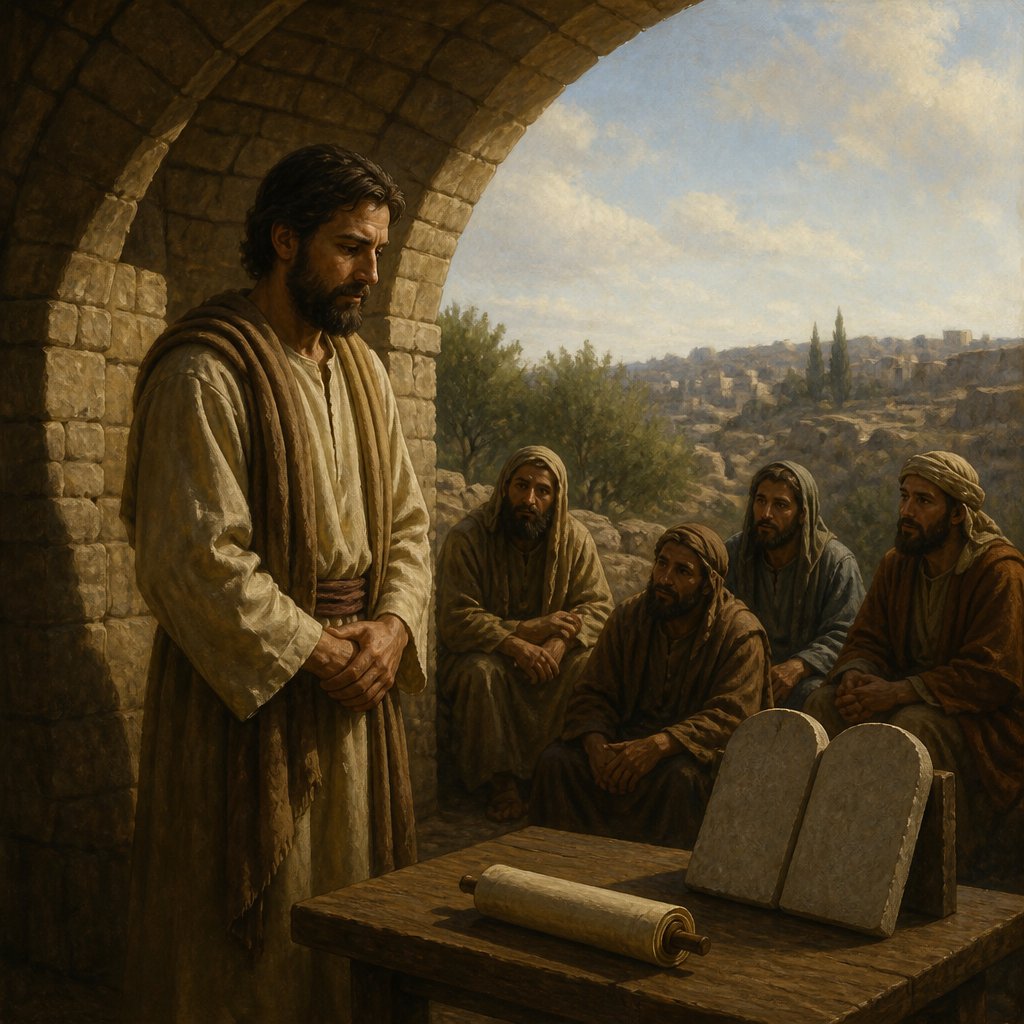
Romans 7:1 in the King James Version of the Bible reads, "Know ye not, brethren, (for I speak to them that know the law,) how that the law hath dominion over a man as long as he liveth?"
This verse is part of the larger context of Romans 7, in which the apostle Paul explores the relationship between the law and sin. In this chapter, he uses the analogy of a marriage to illustrate the believer's relationship to the law. In verse 1, Paul addresses the Roman Christians as "brethren" and acknowledges that he is speaking to those who are familiar with Jewish law. He then goes on to explain that the law has authority over a person for as long as they are alive.
The theme of the law in Romans 7 is a significant one in the larger context of the book of Romans. Paul discusses the purpose of the Mosaic law and its relationship to sin and salvation. In the previous chapters of Romans, Paul explains that the law was given to reveal God's righteous standards and to show humanity's inability to meet those standards on their own. The law, while holy and good, cannot save a person from sin; rather, it serves to highlight their need for a Savior.
The verse also holds particular relevance in its historical and cultural context. In Paul's time, the Jewish people placed great emphasis on the Mosaic law and its role in defining their religious and cultural identity. For Jewish Christians, the question of how the law related to their new faith in Christ was a significant one. Paul addresses this tension throughout his letters, including in Romans 7:1.
The symbolism of the law having dominion over a person as long as they live speaks to the idea of the law as a timeless and unchanging standard. Just as a marriage covenant is binding for as long as both parties are alive, so too does the law have authority over a person for the duration of their life. This underscores the seriousness and permanence of the law's demands. It also underscores the need for a Savior to free believers from the bondage and condemnation of the law.
In a broader theological sense, this verse speaks to the universal human condition of being under the dominion of sin and the law. Paul's use of the term "brethren" emphasizes that this is a common experience for all believers. By acknowledging the law's authority, Paul sets the stage for his discussion of the believer's release from the law through identification with Christ's death and resurrection in the following verses.
In conclusion, Romans 7:1 offers a deep and thought-provoking exploration of the relationship between the law and the believer. Through its historical context, thematic significance, and symbolic language, this verse forms a crucial part of Paul's larger argument in Romans and continues to hold relevance for believers today. It reminds us of the enduring authority of God's law and the need for a Savior to liberate us from its dominion.
Get our apps


Artwork for Romans 7:1

Romans 7:1 - "Know ye not, brethren, (for I speak to them that know the law,) how that the law hath dominion over a man as long as he liveth?"
"Know ye not, brethren, (for I speak to them that know the law,) how that the law hath dominion over a man as long as he liveth?" - Romans 7:1

Combine the authority theme described in Romans 13:1-7 and Revelation 13:1-10.

Romans 1:7 - "To all that be in Rome, beloved of God, called to be saints: Grace to you and peace from God our Father, and the Lord Jesus Christ."

Romans 7:19

Romans 7:12

Show the Divine Order seen in Romans 131:7 with the Beastly Rule seen in Revelation 13:1-10.

Show the Divine Order seen in Romans 131:7 with the Beastly Rule seen in Revelation 13:1-10.

Show the Divine Order seen in Romans 131:7 with the Beastly Rule seen in Revelation 13:1-10.

Show the Divine Order seen in Romans 131:7 with the Beastly Rule seen in Revelation 13:1-10.

Romans 6:7 - "For he that is dead is freed from sin."

Show the Divine Order of government authority seen in Romans 131:7 contrasted with the Beastly Rule faced in Revelation 13:1-10.

Romans 7:12 - "Wherefore the law is holy, and the commandment holy, and just, and good."

Romans 14:7 - "For none of us liveth to himself, and no man dieth to himself."

Romans 7:17 - "Now then it is no more I that do it, but sin that dwelleth in me."

Romans 7:22 - "For I delight in the law of God after the inward man:"

Romans 7:10 - "And the commandment, which was ordained to life, I found to be unto death."

Romans 4:7 - "Saying, Blessed are they whose iniquities are forgiven, and whose sins are covered."

Romans 7:11 - "For sin, taking occasion by the commandment, deceived me, and by it slew me."

Romans 1

Romans 12:7 - "Or ministry, let us wait on our ministering: or he that teacheth, on teaching;"

Romans 8:1

Romans 10:7 - "Or, Who shall descend into the deep? (that is, to bring up Christ again from the dead.)"

Romans 7:14 - "For we know that the law is spiritual: but I am carnal, sold under sin."

Romans 7:16 - "If then I do that which I would not, I consent unto the law that it is good."

Romans 5:1

Romans 15:7 - "Wherefore receive ye one another, as Christ also received us to the glory of God."

Romans 7:20 - "Now if I do that I would not, it is no more I that do it, but sin that dwelleth in me."

Romans 9:7 - "Neither, because they are the seed of Abraham, are they all children: but, In Isaac shall thy seed be called."

Romans 2:4