What does Romans 9:21 mean?
“Hath not the potter power over the clay, of the same lump to make one vessel unto honour, and another unto dishonour?” — Romans 9:21
Romans 9:21 (KJV) states, "Hath not the potter power over the clay, of the same lump to make one vessel unto honour, and another unto dishonour?"
This verse from the Book of Romans is part of a larger passage in which the Apostle Paul is addressing the sovereignty of God and the concept of predestination. In this particular verse, Paul uses the analogy of a potter and the clay to illustrate God's authority and power over humanity.
The imagery of a potter shaping and molding clay is a common metaphor used throughout the Bible to illustrate God's creative and redemptive work in the lives of His people. In this verse, the potter represents God, and the clay represents humanity. The potter has complete authority over the clay, and can choose to make vessels for honorable or dishonorable use.
The concept of God's sovereignty and predestination is a complex and often controversial topic within Christian theology. Some interpret this verse as supporting the idea that God has predetermined the destinies of individuals, choosing some for salvation and others for condemnation. However, it's important to note that this verse should be understood in the broader context of the entire passage and the overall message of the Bible.
One way to understand this verse is to consider the broader themes of God's sovereignty and human responsibility. While God is indeed sovereign and has the power to shape and mold His creation as He sees fit, He also gives humanity free will and holds them accountable for their actions. In other words, while God has the ultimate authority, He also allows humans to make choices and participate in His redemptive plan.
Another important aspect of this verse is the idea of God's mercy and grace. While the passage speaks to the concept of vessels being made for honorable or dishonorable use, it also emphasizes God's sovereignty in choosing to show mercy and grace to those whom He has called. This highlights the unconditional love and compassion of God, who has the power to transform even the most dishonorable vessels into vessels of honor.
The broader context of the Book of Romans also sheds light on the meaning of this verse. Throughout the book, Paul is addressing the tension between God's chosen people, the Jews, and the Gentiles. He emphasizes that both groups have the opportunity to receive salvation through faith in Christ, and that God's mercy is available to all who believe. This verse serves as a reminder that God's redemptive plan is not limited by human distinctions or categories, but is based on His sovereign will and purpose.
Symbolically, the potter and clay imagery in this verse also points to the idea of God's transformative power. Just as a potter shapes and molds the clay to create something new and beautiful, God has the power to transform the lives of His people, bringing healing, redemption, and restoration.
In conclusion, Romans 9:21 (KJV) is a thought-provoking verse that invites reflection on the sovereignty of God, the concept of predestination, and the transformative power of His grace. It's a reminder that God has the authority to shape and mold His creation according to His will, but also extends mercy and grace to all who seek Him. Ultimately, this verse challenges us to trust in God's sovereignty and participate in His redemptive plan with humility and faith.
Get our apps


Artwork for Romans 9:21

Romans 9:21 - "Hath not the potter power over the clay, of the same lump to make one vessel unto honour, and another unto dishonour?"

"Hath not the potter power over the clay, of the same lump to make one vessel unto honour, and another unto dishonour?" - Romans 9:21

Romans 12:21 - "Be not overcome of evil, but overcome evil with good."

Romans 10:9

Romans 10:9

Romans 9:9 - "For this is the word of promise, At this time will I come, and Sara shall have a son."

Romans 16:21 - "Timotheus my workfellow, and Lucius, and Jason, and Sosipater, my kinsmen, salute you."

Romans 3:21 - "But now the righteousness of God without the law is manifested, being witnessed by the law and the prophets;"

Romans 15:21 - "But as it is written, To whom he was not spoken of, they shall see: and they that have not heard shall understand."

Acts 16:21 - "And teach customs, which are not lawful for us to receive, neither to observe, being Romans."

Romans 9:12 - "It was said unto her, The elder shall serve the younger."

Romans 4:21 - "And being fully persuaded that, what he had promised, he was able also to perform."

Romans 11:21 - "For if God spared not the natural branches, take heed lest he also spare not thee."

Romans 7:21 - "I find then a law, that, when I would do good, evil is present with me."

"Be not overcome of evil, but overcome evil with good." - Romans 12:21
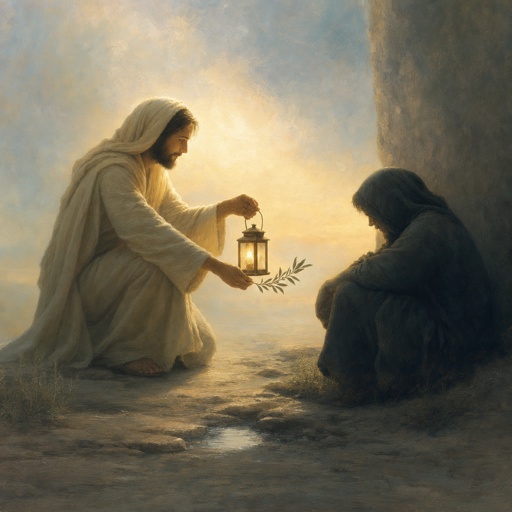
"Be not overcome of evil, but overcome evil with good." - Romans 12:21

"Be not overcome of evil, but overcome evil with good." - Romans 12:21

"Be not overcome of evil, but overcome evil with good." - Romans 12:21

Romans 9:14 - "What shall we say then? Is there unrighteousness with God? God forbid."

Romans 16:9 - "Salute Urbane, our helper in Christ, and Stachys my beloved."

Romans 9:2 - "That I have great heaviness and continual sorrow in my heart."

Romans 8:21 - "Because the creature itself also shall be delivered from the bondage of corruption into the glorious liberty of the children of God."

Romans 9:8 - "That is, They which are the children of the flesh, these are not the children of God: but the children of the promise are counted for the seed."

Romans 9:32 - "Wherefore? Because they sought it not by faith, but as it were by the works of the law. For they stumbled at that stumblingstone;"

Romans 9:13 - "As it is written, Jacob have I loved, but Esau have I hated."

Romans 9:16 - "So then it is not of him that willeth, nor of him that runneth, but of God that sheweth mercy."

Matthew 9:21

Romans 6:21 - "What fruit had ye then in those things whereof ye are now ashamed? for the end of those things is death."

Romans 12:9 - "Let love be without dissimulation. Abhor that which is evil; cleave to that which is good."

Romans 9:31 - "But Israel, which followed after the law of righteousness, hath not attained to the law of righteousness."