What does Romans 9:22 mean?
“What if God, willing to shew his wrath, and to make his power known, endured with much longsuffering the vessels of wrath fitted to destruction:” — Romans 9:22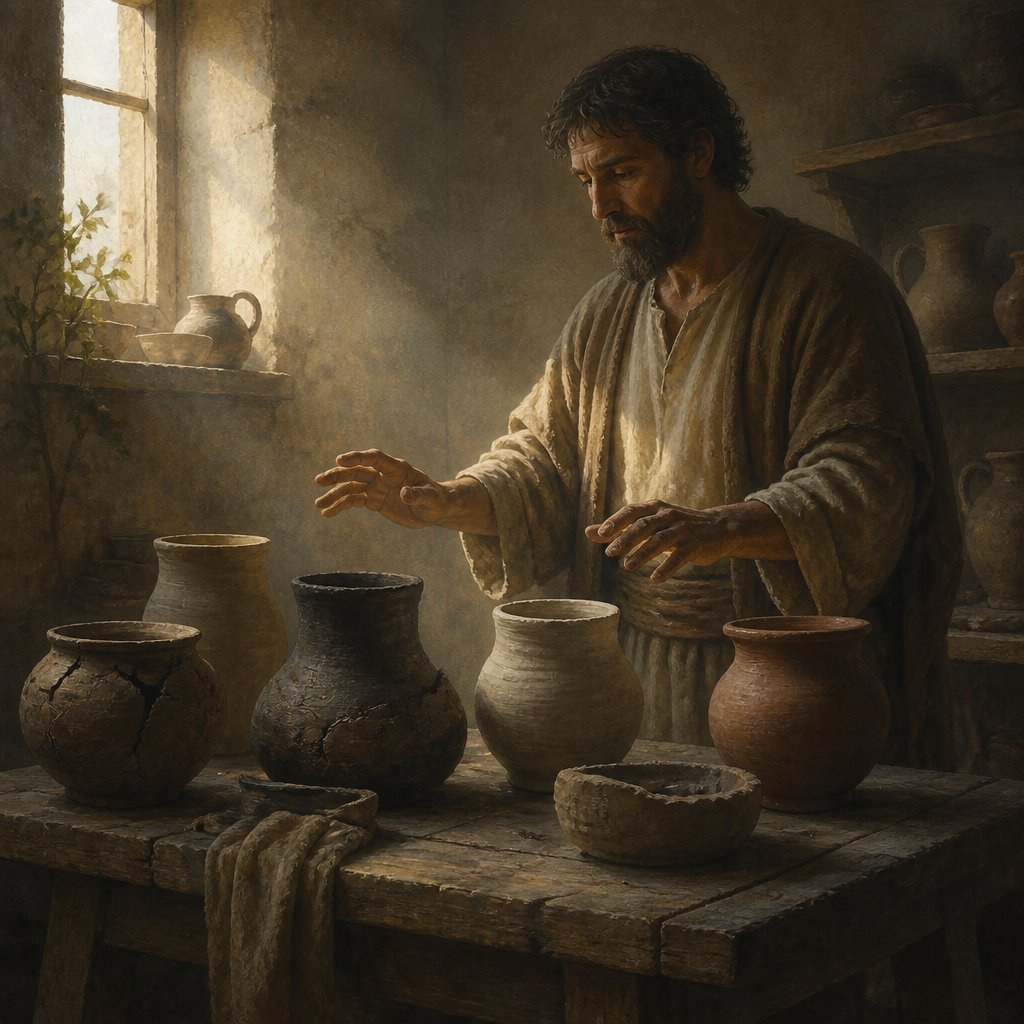
Romans 9:22 in the King James Version reads, "What if God, willing to shew his wrath, and to make his power known, endured with much longsuffering the vessels of wrath fitted to destruction." This verse comes in the context of a larger passage in which the apostle Paul is discussing God's sovereignty and his choosing of Jacob over Esau. In this verse, Paul is wrestling with the idea of God's justice and mercy, particularly in relation to those whom he has chosen for destruction.
To fully understand the meaning and significance of this verse, it's important to consider the broader themes of the book of Romans and the context in which Paul is writing. Romans as a whole is a theological treatise that addresses fundamental questions about the nature of God, the human condition, and the means of salvation. In the earlier chapters of the book, Paul lays out the universal sinfulness of humanity and the necessity of faith in Jesus Christ for salvation.
In Romans 9, Paul turns his attention to the issue of God's sovereignty and the role of Israel in God's plan for redemption. He addresses the question of why some people, particularly Israelites, have not accepted the gospel, despite being God's chosen people. In the earlier part of the chapter, Paul asserts that it is not simply a matter of biological descent or adherence to the Law that determines a person's status before God. Rather, it is God's sovereign choice that determines who will receive his mercy and who will experience his wrath.
The verse in question, Romans 9:22, is part of Paul's argument about the vessels of mercy and vessels of wrath. Paul uses the metaphor of vessels to illustrate God's sovereignty in choosing some for salvation and others for destruction. The vessels of wrath are those who have rejected God and are fitted for destruction, while the vessels of mercy are those whom God has chosen to receive his grace and salvation.
In this verse, Paul is grappling with the tension between God's justice and mercy. He ponders the possibility that God, in his sovereignty, has chosen to display his wrath and power by enduring with patience those who are destined for destruction. This idea may be difficult for some to reconcile with the notion of a loving and merciful God, but it reflects Paul's understanding of God's sovereignty and the mysterious ways in which he works out his plan of redemption.
The verse also highlights the concept of longsuffering, or patience, on God's part. Despite the rebellion and rejection of the vessels of wrath, God endures with them, demonstrating his patience and longsuffering. This echoes themes found elsewhere in the New Testament, such as 2 Peter 3:9, which speaks of God's patience and desire for all to come to repentance.
From a broader theological perspective, this verse raises profound questions about the nature of God's justice and mercy, the extent of his sovereignty, and the mysterious workings of his providence. It speaks to the tension between divine sovereignty and human responsibility, and the complex interplay between God's will and human choices.
The verse also carries important practical implications for believers. It reminds us of the seriousness of sin and the reality of God's judgment. It prompts us to consider the urgency of proclaiming the gospel and the importance of responding to God's offer of mercy and salvation. It also challenges us to trust in God's wisdom and sovereignty, even when we cannot fully understand his ways.
In summary, Romans 9:22 in the King James Version is a thought-provoking and challenging verse that speaks to the profound mysteries of God's justice and mercy, his sovereignty, and the human condition. It invites us to wrestle with important theological and practical questions and to humbly submit to the wisdom and providence of God.
Get our apps


Artwork for Romans 9:22

Romans 9:22 - "What if God, willing to shew his wrath, and to make his power known, endured with much longsuffering the vessels of wrath fitted to destruction:"
"What if God, willing to shew his wrath, and to make his power known, endured with much longsuffering the vessels of wrath fitted to destruction:" - Romans 9:22

Romans 4:22 - "And therefore it was imputed to him for righteousness."

Romans 1:22 - "Professing themselves to be wise, they became fools,"

Romans 10:9

Romans 10:9

Romans 9:9 - "For this is the word of promise, At this time will I come, and Sara shall have a son."

Romans 7:22 - "For I delight in the law of God after the inward man:"

Romans 16:22 - "I Tertius, who wrote this epistle, salute you in the Lord."

"And therefore it was imputed to him for righteousness." - Romans 4:22

Romans 8:22 - "For we know that the whole creation groaneth and travaileth in pain together until now."

Romans 9:12 - "It was said unto her, The elder shall serve the younger."

Romans 15:22 - "For which cause also I have been much hindered from coming to you."

"Professing themselves to be wise, they became fools," - Romans 1:22

Romans 9:14 - "What shall we say then? Is there unrighteousness with God? God forbid."

Romans 16:9 - "Salute Urbane, our helper in Christ, and Stachys my beloved."

Romans 9:2 - "That I have great heaviness and continual sorrow in my heart."

Romans 9:8 - "That is, They which are the children of the flesh, these are not the children of God: but the children of the promise are counted for the seed."

Romans 3:22 - "Even the righteousness of God which is by faith of Jesus Christ unto all and upon all them that believe: for there is no difference:"

Romans 9:32 - "Wherefore? Because they sought it not by faith, but as it were by the works of the law. For they stumbled at that stumblingstone;"

Romans 9:13 - "As it is written, Jacob have I loved, but Esau have I hated."

Romans 9:16 - "So then it is not of him that willeth, nor of him that runneth, but of God that sheweth mercy."

Romans 12:9 - "Let love be without dissimulation. Abhor that which is evil; cleave to that which is good."

Romans 9:31 - "But Israel, which followed after the law of righteousness, hath not attained to the law of righteousness."

Romans 9:24 - "Even us, whom he hath called, not of the Jews only, but also of the Gentiles?"

Matthew 9:21-22

Matthew 9:21-22

Matthew 9:21-22

Matthew 9:21-22

Matthew 9:21-22