What does Song of Solomon 6:7 mean?
“As a piece of a pomegranate are thy temples within thy locks.” — Song of Solomon 6:7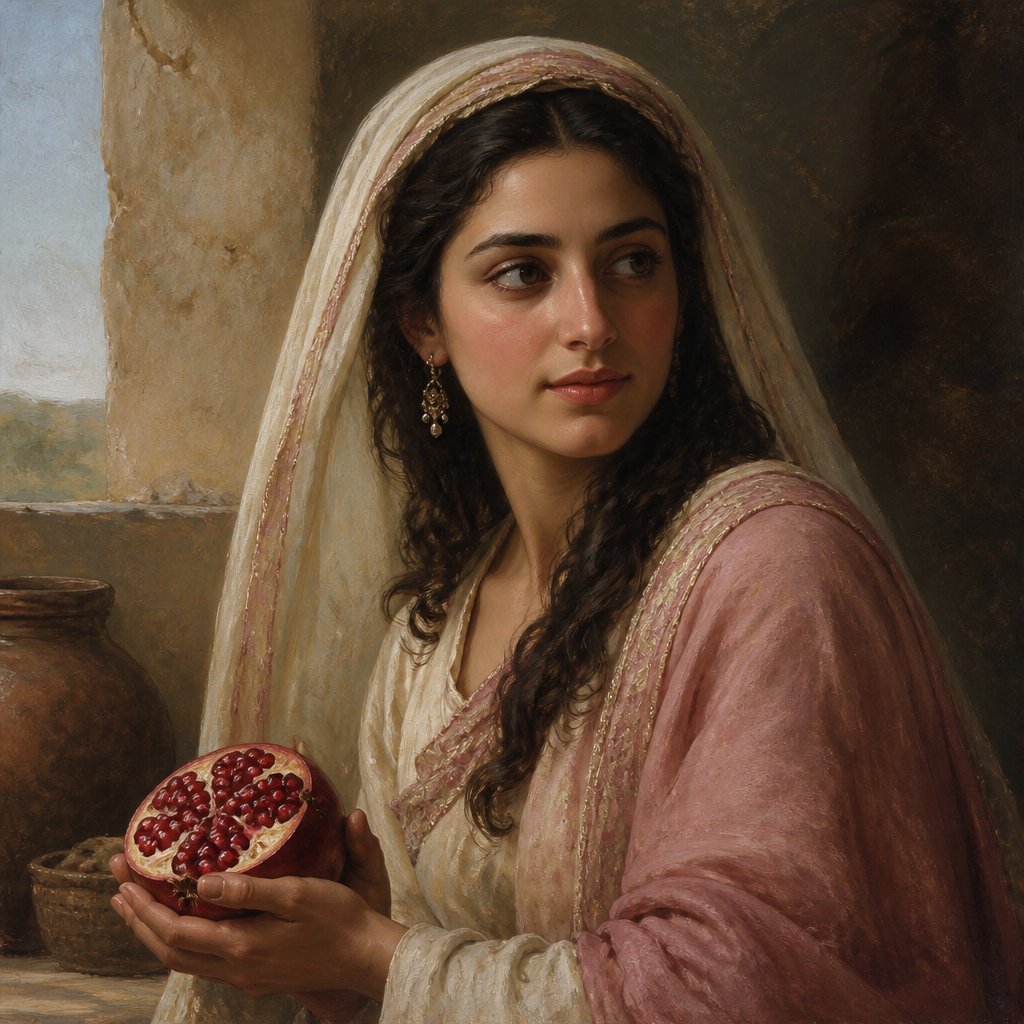
The verse Song of Solomon 6:7 from the King James Version of the Bible reads: "As a piece of a pomegranate are thy temples within thy locks." This verse is part of a collection of poetic and lyrical verses found in the Song of Solomon, also known as the Song of Songs. The Song of Solomon is a unique book in the Bible, as it is a celebration of love and desire between a man and a woman. It is a series of love poems that explore the beauty, intensity, and depth of romantic love.
In the context of the entire book, Song of Solomon 6:7 is part of a larger passage where the woman is describing the beauty of her lover. The metaphor used in this verse is both delicate and sensual, comparing the woman's temples to a piece of a pomegranate within her locks. The imagery is rich and evocative, inviting the reader to contemplate the beauty of the beloved.
One of the key themes in the Song of Solomon is the celebration and affirmation of physical love within the context of a committed, monogamous relationship. The book portrays the joy and intimacy of sexual desire, within the boundaries of marriage. Throughout the Song of Solomon, the lovers express a deep emotional and physical connection, celebrating their love for each other in a way that honors and uplifts the beauty of their relationship.
The use of the pomegranate in this verse is rich with symbolism. In the Bible, the pomegranate is often associated with fertility, abundance, and blessings. It is a fruit with many seeds, symbolic of life and the continuation of generations. In the context of this verse, the comparison of the woman's temples to a piece of a pomegranate within her locks carries layers of meaning. The pomegranate not only underscores the woman's physical beauty but also alludes to the fecundity of love and the potential for the growth and continuation of their relationship.
Furthermore, the use of the pomegranate as a metaphor for the woman's temples within her locks also suggests the idea of hidden or enclosed beauty. Just as the seeds of a pomegranate are nestled within the fruit, the woman's temples are depicted as concealed within her locks. This imagery speaks to the idea of hidden treasures and the beauty that is not immediately visible. It invites the reader to contemplate the depth and complexity of the woman's beauty, which is not only outward but also lies within her.
In addition to the symbolism of the pomegranate, the reference to the woman's locks (hair) carries significant meaning as well. Throughout history and in various cultures, hair has been seen as a symbol of beauty, strength, and sensuality. In this verse, the imagery of the woman's locks further accentuates her allure and the physical expression of her femininity.
Overall, Song of Solomon 6:7 is a verse that captures the essence of the book's celebration of love and desire. The use of rich and evocative imagery, such as the comparison of the woman's temples to a piece of a pomegranate within her locks, invites the reader to contemplate the beauty, intimacy, and fertility of love. It highlights the depth and complexity of the woman's beauty, both outward and within, and underscores the profound connection and delight that the lovers find in each other. This verse is a testament to the power and beauty of romantic love, celebrated within the context of commitment and faithfulness.
Get our apps


Artwork for Song of Solomon 6:7

Song of Solomon 6:7 - "As a piece of a pomegranate are thy temples within thy locks."
"As a piece of a pomegranate are thy temples within thy locks." - Song of Solomon 6:7

Song of Solomon 7:6 - "How fair and how pleasant art thou, O love, for delights!"

Song of Solomon 6:8 - "There are threescore queens, and fourscore concubines, and virgins without number."

Song of Solomon 6:12 - "Or ever I was aware, my soul made me like the chariots of Amminadib."

Song of Solomon 6:3 - "I am my beloved's, and my beloved is mine: he feedeth among the lilies."
!["Who [is] she [that] looketh forth as the morning, fair as the moon, clear as the sun, [and] terrible as [an army] with banners?" - Song of Solomon 6:10](https://media.bible.art/6b2ee690-5202-4c13-a4ad-2500f2f9b28c-thumbnail.jpg)
"Who [is] she [that] looketh forth as the morning, fair as the moon, clear as the sun, [and] terrible as [an army] with banners?" - Song of Solomon 6:10
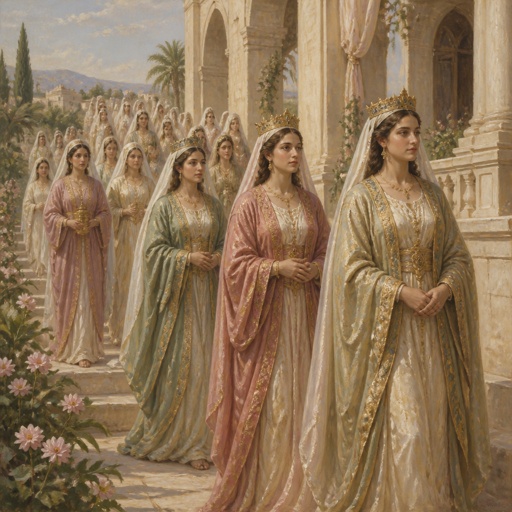
"There are threescore queens, and fourscore concubines, and virgins without number." - Song of Solomon 6:8
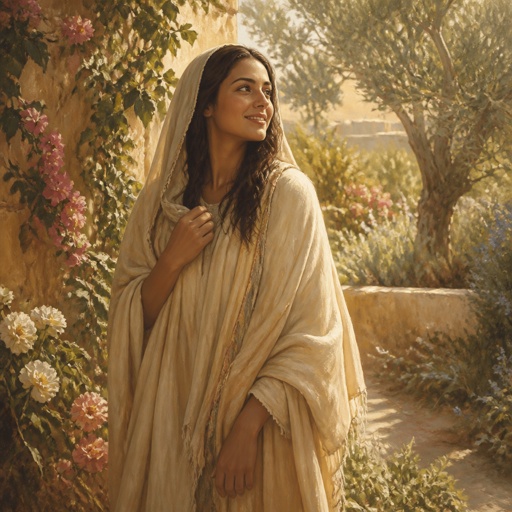
"How fair and how pleasant art thou, O love, for delights!" - Song of Solomon 7:6

Song of Solomon 7:7 - "This thy stature is like to a palm tree, and thy breasts to clusters of grapes."

Song of Solomon 6:4 - "¶ Thou art beautiful, O my love, as Tirzah, comely as Jerusalem, terrible as an army with banners."
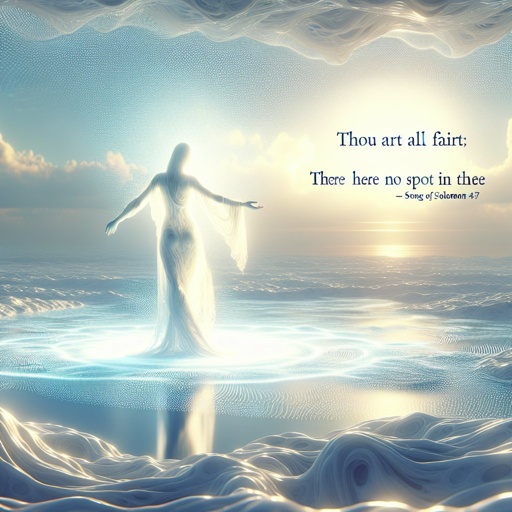
Song of Solomon 4:7 - "Thou art all fair, my love; there is no spot in thee."

Song of Solomon 7:3 - "Thy two breasts are like two young roes that are twins."

Song of Solomon 7:10 - "¶ I am my beloved's, and his desire is toward me."

Song of Solomon 6:5 - "Turn away thine eyes from me, for they have overcome me: thy hair is as a flock of goats that appear from Gilead."

Song of Solomon 6:10 - "¶ Who is she that looketh forth as the morning, fair as the moon, clear as the sun, and terrible as an army with banners?"

Song of Solomon 6:2 - "My beloved is gone down into his garden, to the beds of spices, to feed in the gardens, and to gather lilies."

Song of Solomon 3:7 - "Behold his bed, which is Solomon's; threescore valiant men are about it, of the valiant of Israel."
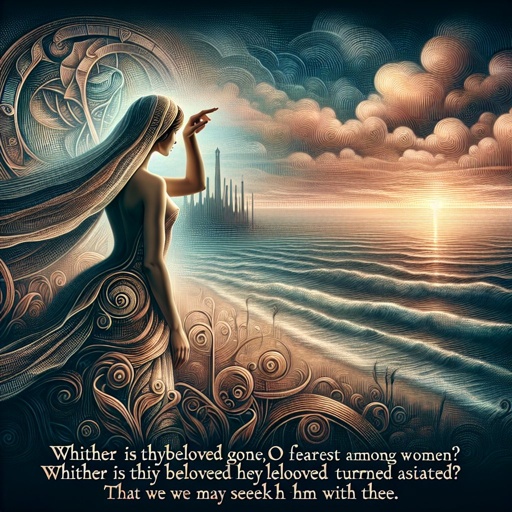
Song of Solomon 6:1 - "Whither is thy beloved gone, O thou fairest among women? whither is thy beloved turned aside? that we may seek him with thee."

Song of Solomon 6:11 - "I went down into the garden of nuts to see the fruits of the valley, and to see whether the vine flourished, and the pomegranates budded."
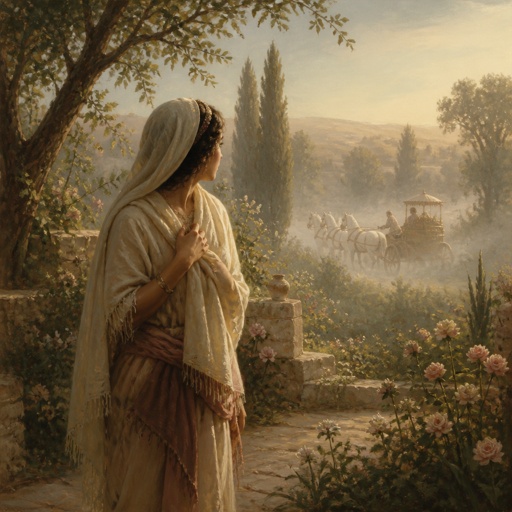
"Or ever I was aware, my soul made me like the chariots of Amminadib." - Song of Solomon 6:12

Song of Solomon 6:6 - "Thy teeth are as a flock of sheep which go up from the washing, whereof every one beareth twins, and there is not one barren among them."
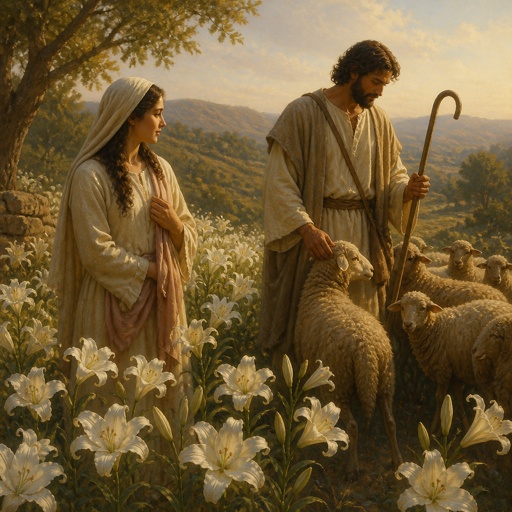
"I am my beloved's, and my beloved is mine: he feedeth among the lilies." - Song of Solomon 6:3

Song of Solomon 1:1 - "The song of songs, which is Solomon's."

Song of Solomon 2:6 - "His left hand is under my head, and his right hand doth embrace me."

Song of Solomon 7:11 - "Come, my beloved, let us go forth into the field; let us lodge in the villages."
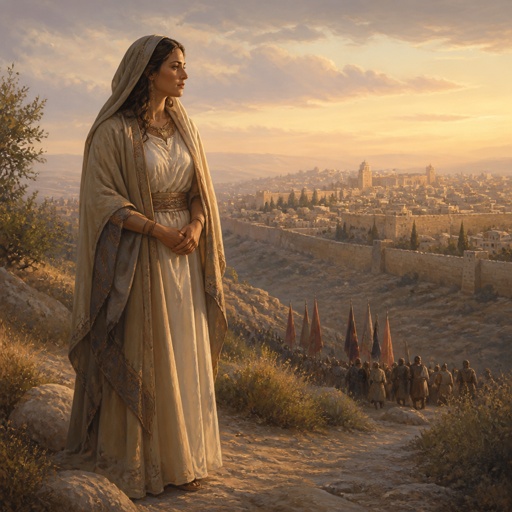
"¶ Thou art beautiful, O my love, as Tirzah, comely as Jerusalem, terrible as an army with banners." - Song of Solomon 6:4
!["Who [is] she [that] looketh forth as the morning, fair as the moon, clear as the sun, [and] terrible as [an army] with banners?" - Song of Solomon 6:10](https://media.bible.art/296e9601-26dc-4dc4-802a-4369580aa0ce-thumbnail.jpg)
"Who [is] she [that] looketh forth as the morning, fair as the moon, clear as the sun, [and] terrible as [an army] with banners?" - Song of Solomon 6:10

Song of Solomon 6:13 - "Return, return, O Shulamite; return, return, that we may look upon thee. What will ye see in the Shulamite? As it were the company of two armies."

Song of Solomon 4:6 - "Until the day break, and the shadows flee away, I will get me to the mountain of myrrh, and to the hill of frankincense."