What does Song of Solomon 6:13 mean?
“Return, return, O Shulamite; return, return, that we may look upon thee. What will ye see in the Shulamite? As it were the company of two armies.” — Song of Solomon 6:13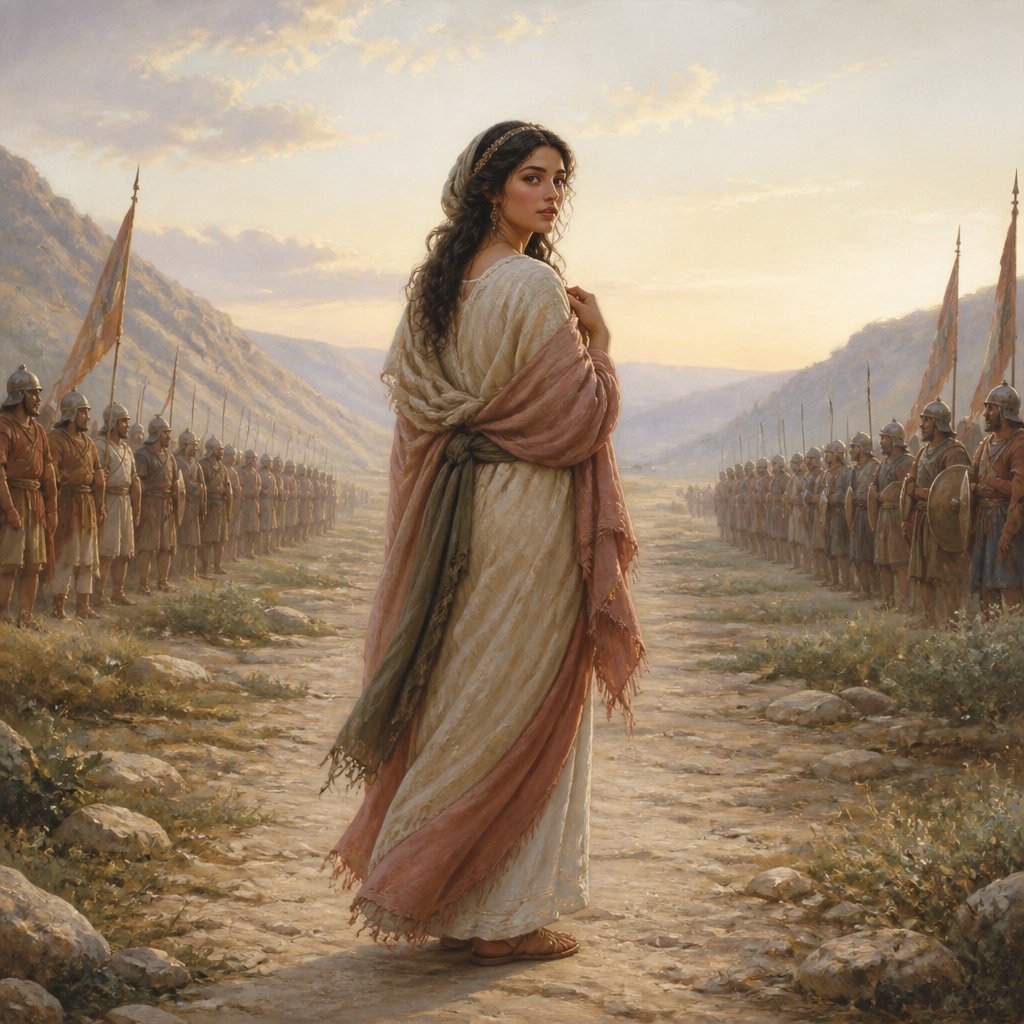
Song of Solomon 6:13 (KJV) - "Return, return, O Shulamite; return, return, that we may look upon thee. What will ye see in the Shulamite? As it were the company of two armies."
The Song of Solomon, also known as the Song of Songs, is a book in the Old Testament of the Bible that is attributed to King Solomon. It is a collection of lyrical poems that celebrate the beauty of love and the intimacy between a bride and groom. Many scholars interpret this text as an allegory of the love between God and his people, or Christ and his church. Song of Solomon 6:13 is the closing verse of chapter 6, and it serves as a conclusion to the dialogue between the bride and her groom.
The verse begins with a call for the Shulamite to return. The repetition of the word "return" emphasizes the urgency and longing for the Shulamite's presence. This can be seen as a metaphor for the believer's desire for the presence of God. Just as the groom yearns for his bride to return to him, so too does God long for his people to return to him in faith and devotion.
The verse continues with a question: "What will ye see in the Shulamite? As it were the company of two armies." This enigmatic statement has been interpreted in various ways by scholars and theologians. One interpretation is that the Shulamite is being compared to "the company of two armies" due to the contrast in her character. On one hand, she is gentle and peaceful like a single army, while on the other hand, she is strong and courageous like a second army. This duality in her nature reflects the complexity of love and the human experience. It also speaks to the multifaceted nature of the bride of Christ, who is at once meek and humble, yet also bold and fearless in her faith.
Another interpretation of this verse is that the "company of two armies" represents the conflict and struggle within the Shulamite herself. She is torn between her desires and her duties, her fears and her faith. This inner turmoil mirrors the spiritual battles that believers face as they strive to live a life that is pleasing to God. The call to "return, return" may then be seen as a plea for the Shulamite to come back to her true self, to find peace and unity within her own heart.
In the broader context of the Song of Solomon, this verse is situated within a narrative of love, longing, and union. It captures the essence of the bride and groom's relationship, and by extension, the relationship between God and his people. The verse speaks to the cyclical nature of love and desire, the yearning for reunion, and the joy of being in one another's presence. It also conveys the idea that love is not without its challenges, as symbolized by the metaphor of the "company of two armies."
Symbolically, the Shulamite can be seen as representative of the church, while the groom represents Christ. The longing for her return reflects the universal longing for the return of Christ and the fulfillment of his promises. The duality within the Shulamite speaks to the tension between the flesh and the spirit, and the ongoing struggle for holiness and righteousness.
In conclusion, Song of Solomon 6:13 is a rich and evocative verse that captures the complexities of love, faith, and the human experience. It offers a profound meditation on the nature of desire, the yearning for God's presence, and the inner conflicts that accompany the spiritual journey. As believers, we are invited to embrace the duality within ourselves, to seek unity and peace, and to yearn for the return of our bridegroom, Jesus Christ.
Get our apps


Artwork for Song of Solomon 6:13

Song of Solomon 6:13 - "Return, return, O Shulamite; return, return, that we may look upon thee. What will ye see in the Shulamite? As it were the company of two armies."
"Return, return, O Shulamite; return, return, that we may look upon thee. What will ye see in the Shulamite? As it were the company of two armies." - Song of Solomon 6:13

Song of Solomon 6:8 - "There are threescore queens, and fourscore concubines, and virgins without number."

Song of Solomon 6:7 - "As a piece of a pomegranate are thy temples within thy locks."

Song of Solomon 6:12 - "Or ever I was aware, my soul made me like the chariots of Amminadib."

Song of Solomon 6:3 - "I am my beloved's, and my beloved is mine: he feedeth among the lilies."
!["Who [is] she [that] looketh forth as the morning, fair as the moon, clear as the sun, [and] terrible as [an army] with banners?" - Song of Solomon 6:10](https://media.bible.art/6b2ee690-5202-4c13-a4ad-2500f2f9b28c-thumbnail.jpg)
"Who [is] she [that] looketh forth as the morning, fair as the moon, clear as the sun, [and] terrible as [an army] with banners?" - Song of Solomon 6:10
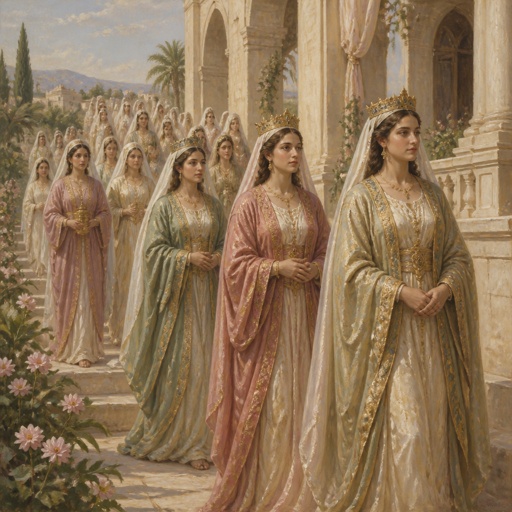
"There are threescore queens, and fourscore concubines, and virgins without number." - Song of Solomon 6:8

Song of Solomon 6:4 - "¶ Thou art beautiful, O my love, as Tirzah, comely as Jerusalem, terrible as an army with banners."
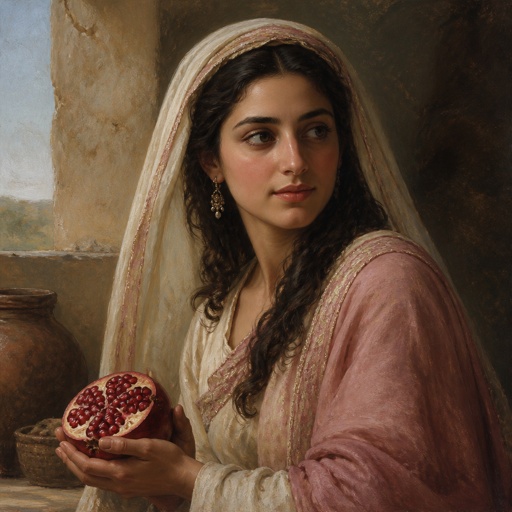
"As a piece of a pomegranate are thy temples within thy locks." - Song of Solomon 6:7

Song of Solomon 4:13 - "Thy plants are an orchard of pomegranates, with pleasant fruits; camphire, with spikenard,"

Song of Solomon 8:13 - "Thou that dwellest in the gardens, the companions hearken to thy voice: cause me to hear it."

Song of Solomon 6:5 - "Turn away thine eyes from me, for they have overcome me: thy hair is as a flock of goats that appear from Gilead."

Song of Solomon 7:6 - "How fair and how pleasant art thou, O love, for delights!"

Song of Solomon 6:10 - "¶ Who is she that looketh forth as the morning, fair as the moon, clear as the sun, and terrible as an army with banners?"

Song of Solomon 6:2 - "My beloved is gone down into his garden, to the beds of spices, to feed in the gardens, and to gather lilies."
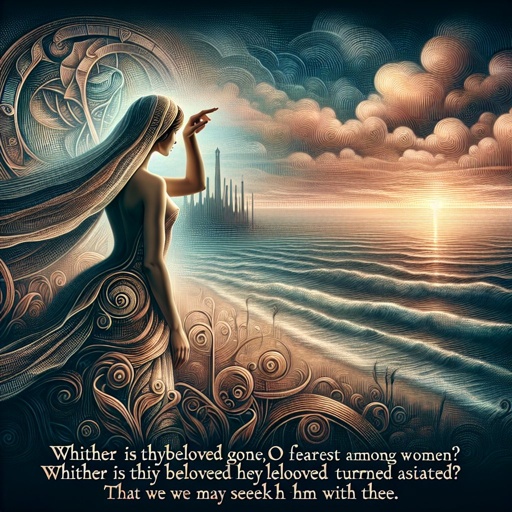
Song of Solomon 6:1 - "Whither is thy beloved gone, O thou fairest among women? whither is thy beloved turned aside? that we may seek him with thee."

Song of Solomon 6:11 - "I went down into the garden of nuts to see the fruits of the valley, and to see whether the vine flourished, and the pomegranates budded."
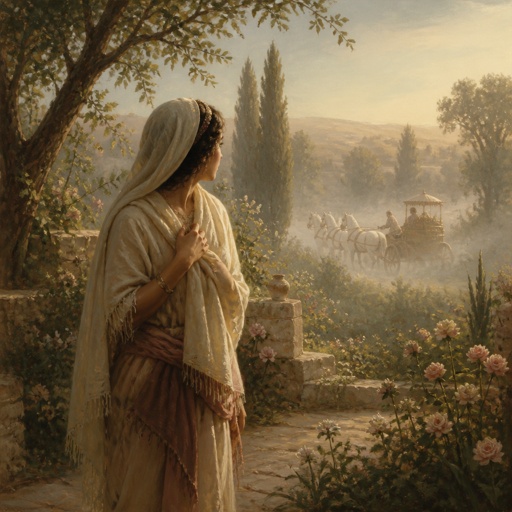
"Or ever I was aware, my soul made me like the chariots of Amminadib." - Song of Solomon 6:12

Song of Solomon 6:6 - "Thy teeth are as a flock of sheep which go up from the washing, whereof every one beareth twins, and there is not one barren among them."
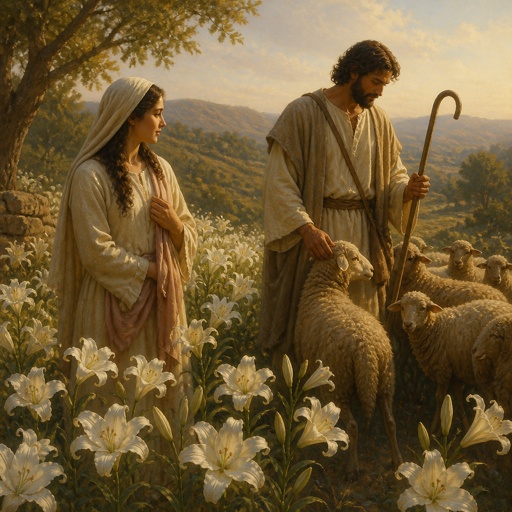
"I am my beloved's, and my beloved is mine: he feedeth among the lilies." - Song of Solomon 6:3

Song of Solomon 1:1 - "The song of songs, which is Solomon's."

Song of Solomon 2:6 - "His left hand is under my head, and his right hand doth embrace me."
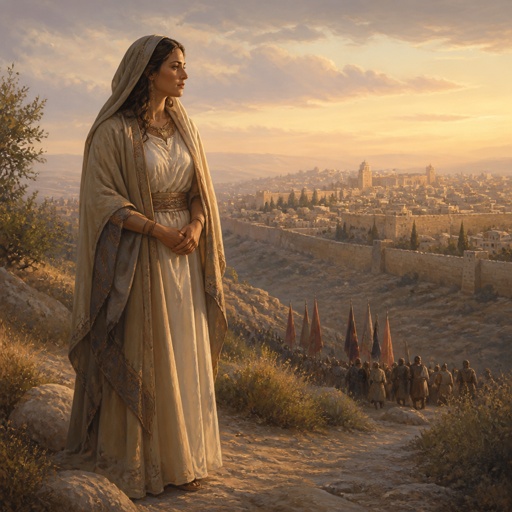
"¶ Thou art beautiful, O my love, as Tirzah, comely as Jerusalem, terrible as an army with banners." - Song of Solomon 6:4
!["Who [is] she [that] looketh forth as the morning, fair as the moon, clear as the sun, [and] terrible as [an army] with banners?" - Song of Solomon 6:10](https://media.bible.art/296e9601-26dc-4dc4-802a-4369580aa0ce-thumbnail.jpg)
"Who [is] she [that] looketh forth as the morning, fair as the moon, clear as the sun, [and] terrible as [an army] with banners?" - Song of Solomon 6:10

Song of Solomon 5:13 - "His cheeks are as a bed of spices, as sweet flowers: his lips like lilies, dropping sweet smelling myrrh."

Song of Solomon 1:13 - "A bundle of myrrh is my wellbeloved unto me; he shall lie all night betwixt my breasts."

Song of Solomon 4:6 - "Until the day break, and the shadows flee away, I will get me to the mountain of myrrh, and to the hill of frankincense."

Song of Solomon 3:6 - "¶ Who is this that cometh out of the wilderness like pillars of smoke, perfumed with myrrh and frankincense, with all powders of the merchant?"
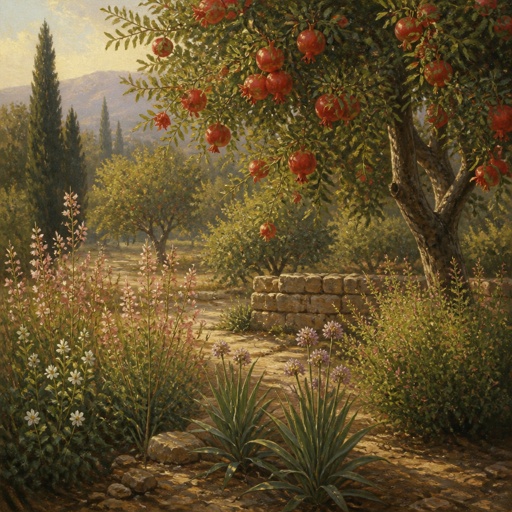
"Thy plants are an orchard of pomegranates, with pleasant fruits; camphire, with spikenard," - Song of Solomon 4:13