What does Song of Solomon 7:13 mean?
“The mandrakes give a smell, and at our gates are all manner of pleasant fruits, new and old, which I have laid up for thee, O my beloved.” — Song of Solomon 7:13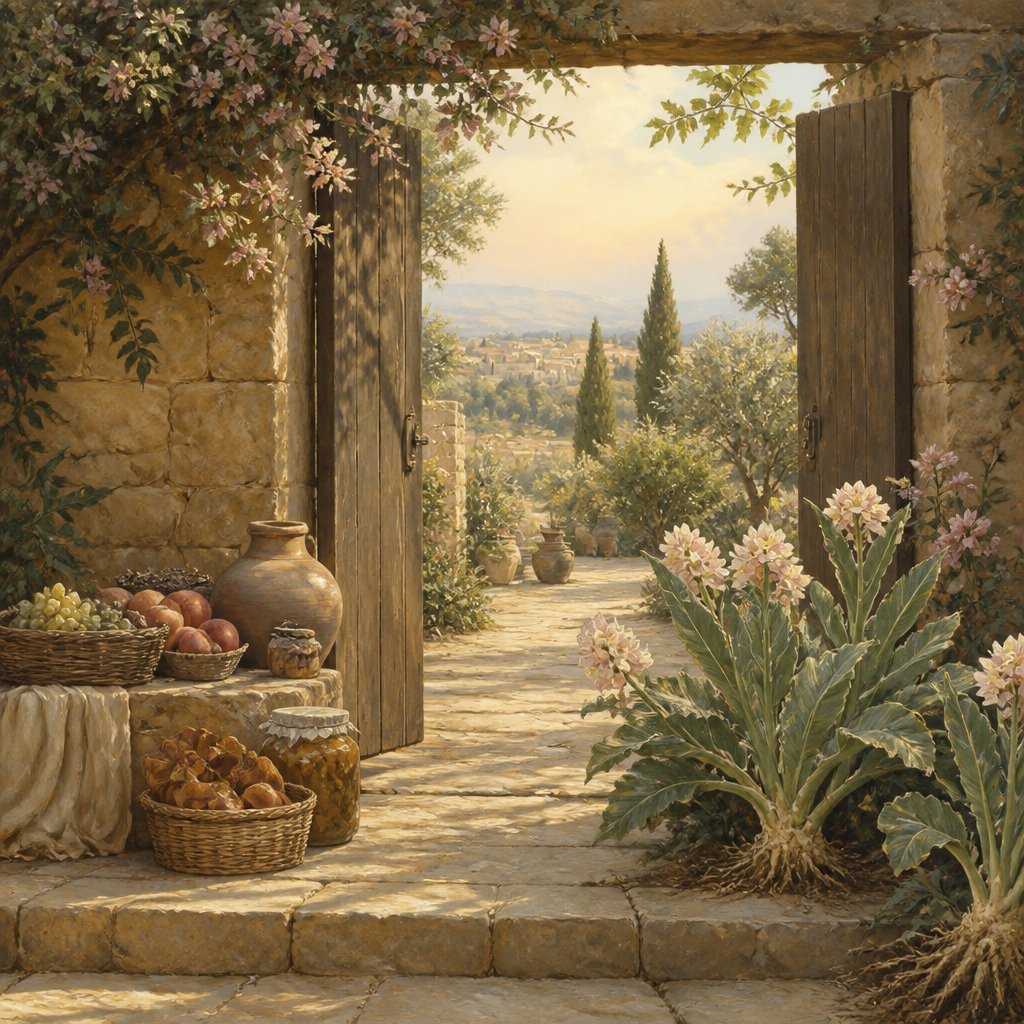
Song of Solomon 7:13 (KJV) - "The mandrakes give a smell, and at our gates are all manner of pleasant fruits, new and old, which I have laid up for thee, O my beloved."
The Song of Solomon, also known as the Song of Songs, is a unique piece of scripture found in the Old Testament. It is a collection of love poems between two young lovers, and it has been the subject of much debate and interpretation throughout the years. The imagery and language used in the Song of Solomon is often sensual and beautiful, and it has been interpreted in a variety of ways by scholars and theologians.
In Song of Solomon 7:13, the speaker is extolling the beauty and fecundity of the land. The mention of mandrakes, a type of plant with a strong, sweet smell, and the presence of all manner of pleasant fruits at the gates, speaks to the abundance and fertility of the land. The speaker then tells their beloved that they have gathered these fruits for them, expressing their love and devotion.
One of the central themes of the Song of Solomon is the nature of love and desire, particularly in the context of a romantic relationship. The book explores the intense emotions and physical longing that can accompany love, and it does so through vivid and evocative imagery. In this particular verse, the speaker's words convey a sense of longing and anticipation, as they eagerly anticipate sharing the fruits of the land with their beloved.
In addition to the themes of love and desire, the Song of Solomon also contains elements of allegory and symbolism. Many scholars interpret the book as an allegory for the love between God and his people, with the lovers representing God and the people of Israel. In this context, the imagery of the fertile land and abundant fruits can be seen as a metaphor for the blessings and abundance that God provides for his people.
The mention of mandrakes in this verse is also significant. In biblical times, mandrakes were believed to have aphrodisiac properties, and they were often associated with fertility and love. In this verse, the mention of mandrakes could be seen as a symbol of the couple's physical desire for each other, as well as a symbol of the fertility and abundance of the land.
The imagery of the "gates" in this verse is also worth noting. In biblical times, the gates of a city were a place of great significance, as they were the entrance and exit points of the city, and they were often the location for important social and legal gatherings. The mention of pleasant fruits being at the gates could be seen as a symbol of the abundance and blessings that are available to the people, and the act of laying them up for the beloved could be interpreted as an act of providing for and caring for the beloved.
Overall, Song of Solomon 7:13 is a beautiful and evocative verse that speaks to the themes of love, desire, and abundance. The imagery and language used in this verse convey a sense of longing and devotion, as well as a deep appreciation for the blessings and abundance of the land. Whether interpreted as a straightforward love poem or as an allegory for the love between God and his people, this verse is a powerful expression of the depth and beauty of love.
Get our apps


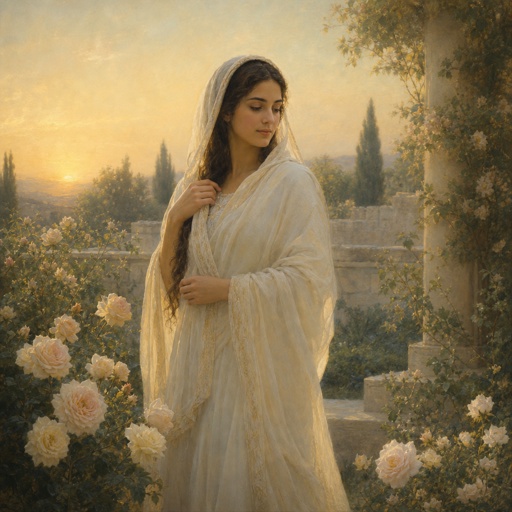
Artwork for Song of Solomon 7:13
Song of Solomon 7:13 - "The mandrakes give a smell, and at our gates are all manner of pleasant fruits, new and old, which I have laid up for thee, O my beloved."
"The mandrakes give a smell, and at our gates are all manner of pleasant fruits, new and old, which I have laid up for thee, O my beloved." - Song of Solomon 7:13

Song of Solomon 7:6 - "How fair and how pleasant art thou, O love, for delights!"

Song of Solomon 7:10 - "¶ I am my beloved's, and his desire is toward me."

Song of Solomon 7:3 - "Thy two breasts are like two young roes that are twins."

Song of Solomon 7:11 - "Come, my beloved, let us go forth into the field; let us lodge in the villages."
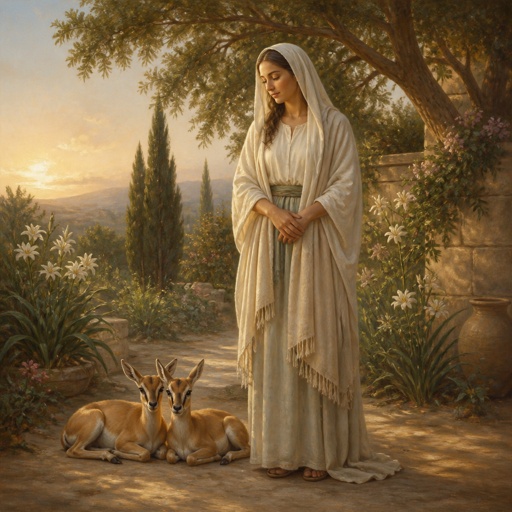
"Thy two breasts are like two young roes that are twins." - Song of Solomon 7:3

Song of Solomon 7:7 - "This thy stature is like to a palm tree, and thy breasts to clusters of grapes."
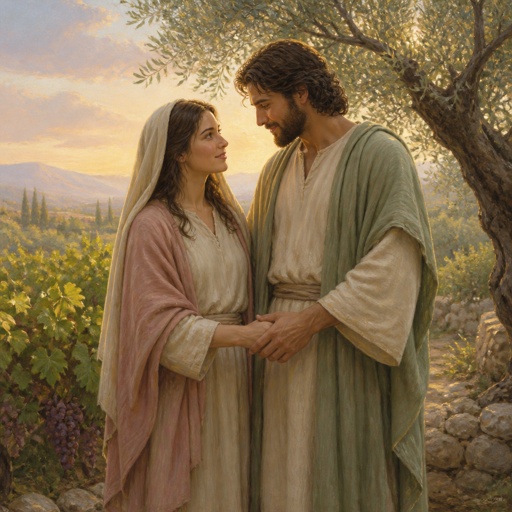
"¶ I am my beloved's, and his desire is toward me." - Song of Solomon 7:10

Song of Solomon 4:13 - "Thy plants are an orchard of pomegranates, with pleasant fruits; camphire, with spikenard,"

Song of Solomon 6:7 - "As a piece of a pomegranate are thy temples within thy locks."
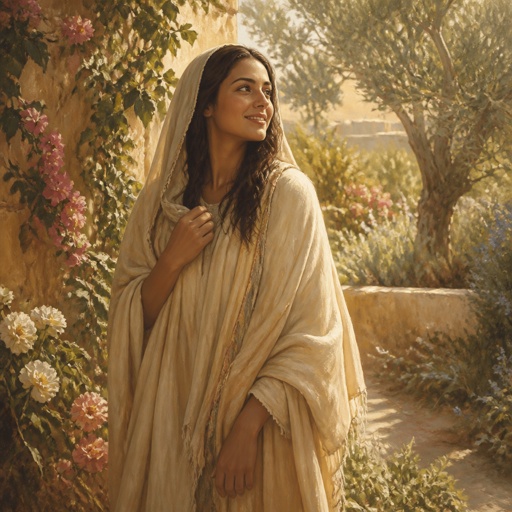
"How fair and how pleasant art thou, O love, for delights!" - Song of Solomon 7:6
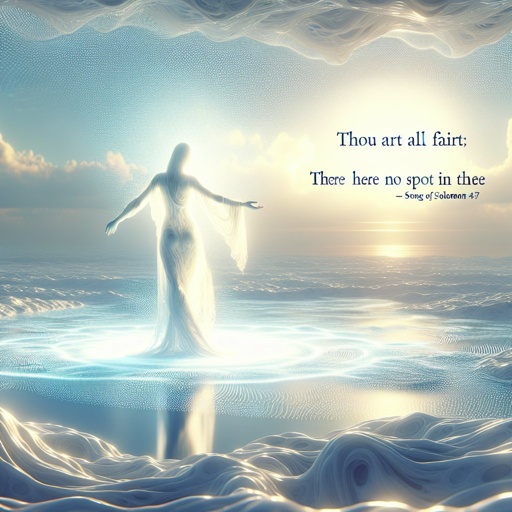
Song of Solomon 4:7 - "Thou art all fair, my love; there is no spot in thee."

Song of Solomon 8:13 - "Thou that dwellest in the gardens, the companions hearken to thy voice: cause me to hear it."

Song of Solomon 3:7 - "Behold his bed, which is Solomon's; threescore valiant men are about it, of the valiant of Israel."

Song of Solomon 7:5 - "Thine head upon thee is like Carmel, and the hair of thine head like purple; the king is held in the galleries."

Song of Solomon 7:2 - "Thy navel is like a round goblet, which wanteth not liquor: thy belly is like an heap of wheat set about with lilies."
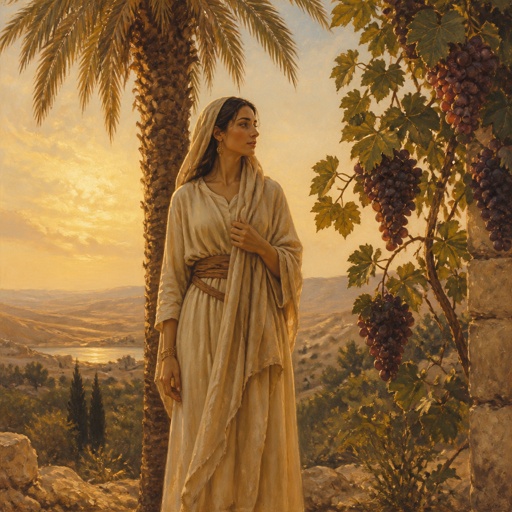
"This thy stature is like to a palm tree, and thy breasts to clusters of grapes." - Song of Solomon 7:7
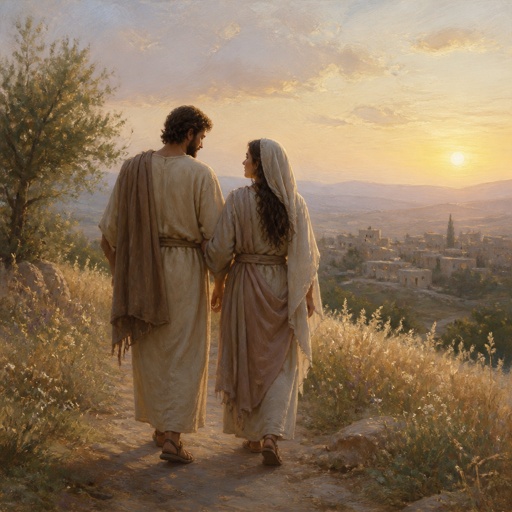
"Come, my beloved, let us go forth into the field; let us lodge in the villages." - Song of Solomon 7:11

Song of Solomon 1:1 - "The song of songs, which is Solomon's."

Song of Solomon 5:13 - "His cheeks are as a bed of spices, as sweet flowers: his lips like lilies, dropping sweet smelling myrrh."

Song of Solomon 1:13 - "A bundle of myrrh is my wellbeloved unto me; he shall lie all night betwixt my breasts."

Song of Solomon 7:1 - "How beautiful are thy feet with shoes, O prince's daughter! the joints of thy thighs are like jewels, the work of the hands of a cunning workman."

Song of Solomon 7:12 - "Let us get up early to the vineyards; let us see if the vine flourish, whether the tender grape appear, and the pomegranates bud forth: there will I give thee my loves."
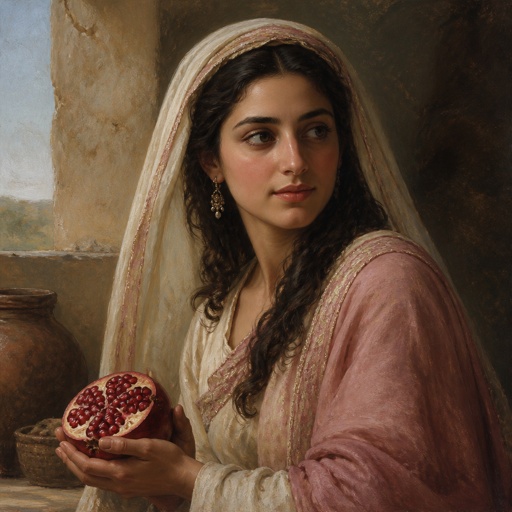
"As a piece of a pomegranate are thy temples within thy locks." - Song of Solomon 6:7
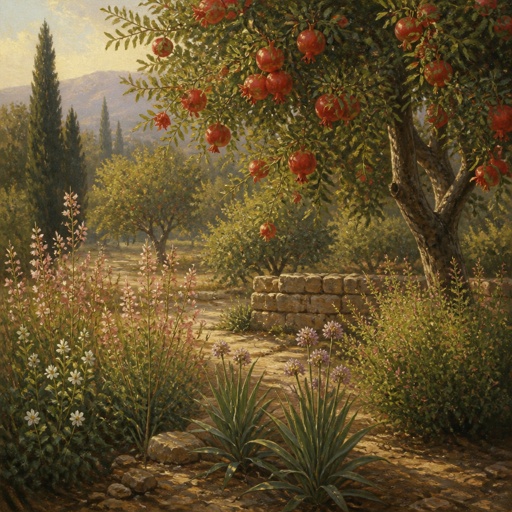
"Thy plants are an orchard of pomegranates, with pleasant fruits; camphire, with spikenard," - Song of Solomon 4:13

Song of Solomon 7:4 - "Thy neck is as a tower of ivory; thine eyes like the fishpools in Heshbon, by the gate of Bath-rabbim: thy nose is as the tower of Lebanon which looketh toward Damascus."
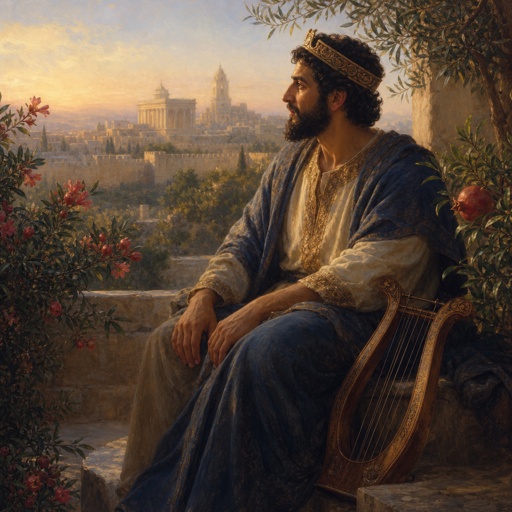
"The song of songs, which is Solomon's." - Song of Solomon 1:1

Song of Solomon 3:9 - "King Solomon made himself a chariot of the wood of Lebanon."
"Thou art all fair, my love; there is no spot in thee." - Song of Solomon 4:7