Free to use for non-commercial purposes with attribution. See Terms
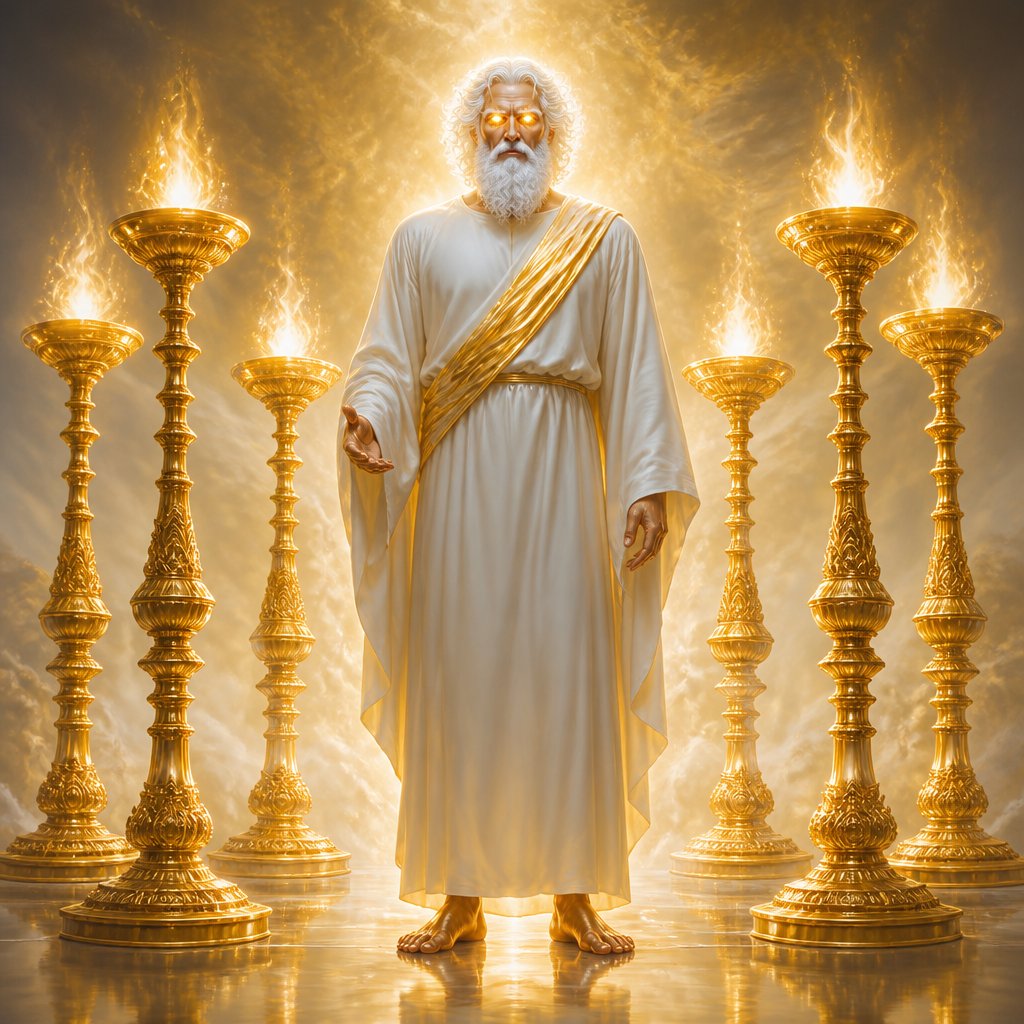
I saw seven golden lampstands and in the middle stood someone who looked like a man. He wore a long robe. There was a gold sash around his chest. His hair was white like wool, like snow. his eyes were fiery flames . his feet shone like polished bronze.
Digital Art


Explore more artwork

29 Take my yoke upon you and learn from me, for I am gentle and humble in heart, and you will find rest for your souls. 30 For my yoke is easy and my burden is light."
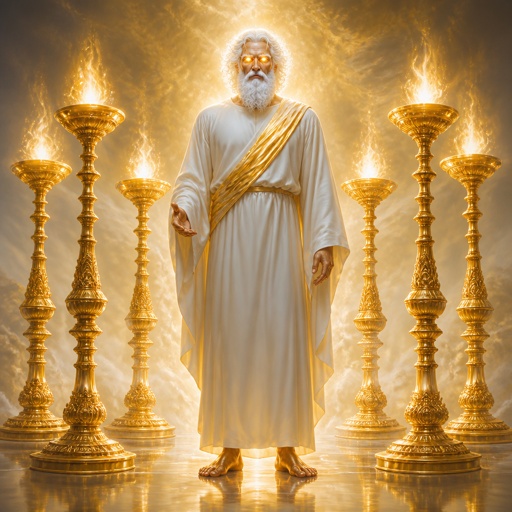
I saw seven golden lampstands and in the middle stood someone who looked like a man. He wore a long robe. There was a gold sash around his chest. His hair was white like wool, like snow. his eyes were fiery flames . his feet shone like polished bronze.
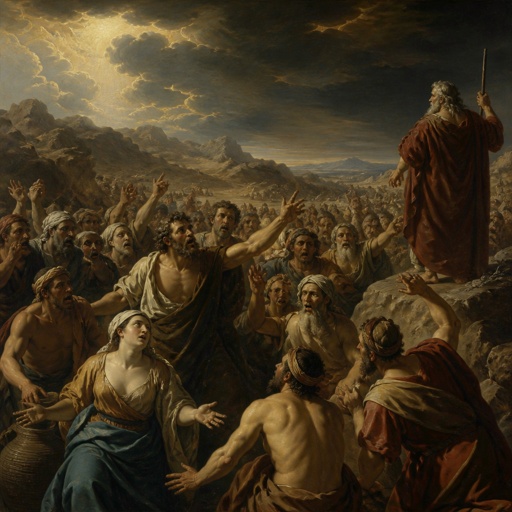
people started to get impatient, and they began to complain against God and against Moses.
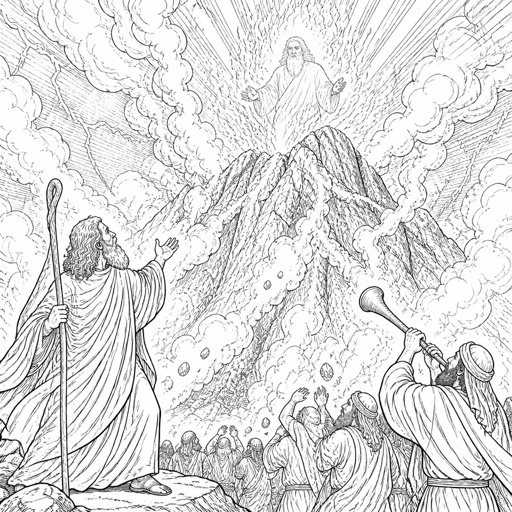
Mount Sinai is enveloped in smoke and shakes violently as God descends in fire. As the sound of a trumpet grows louder, Moses speaks and God answers him.
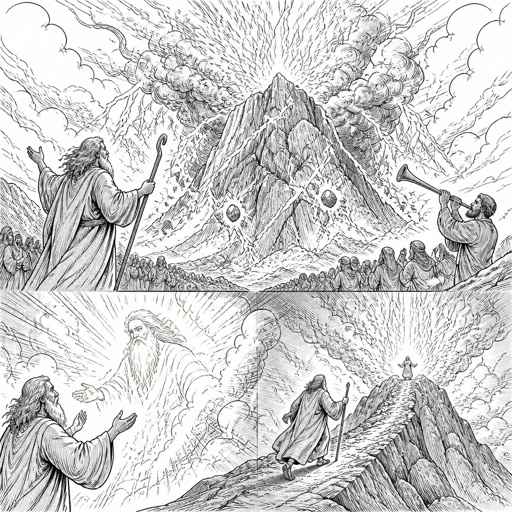
Mount Sinai is enveloped in smoke and shakes violently as God descends in fire. As the sound of a trumpet grows louder, Moses speaks and God answers him. God then descends to the peak and calls Moses up the mountain
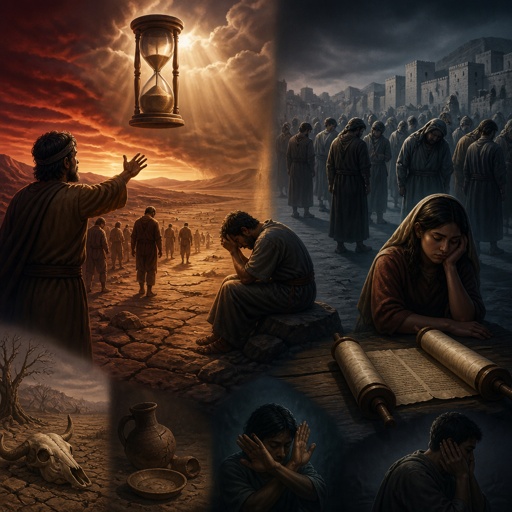
FIRST POINT: The Warning before It Is Too Late (v.11) A warning always comes before the danger fully happens! Throughout the Scripture this is how God Works: before judgment or destruction, God speaks. This is God’s mercy. This is exactly what is happening in verse 11. That’s why the first point of my sermon is: the warning before it’s too late based on the verse 11. Look at verse 11 : 11“The days are coming,” declares the Sovereign Lord, “when I will send a famine through the land, not a famine of food or a thirst for water, but a famine of hearing the words of the Lord. This is not only a prediction about the future, but a certain judgment from God given as a warning. This is really a frightening warning! To understand how serious this warning is we must look at it carefully! The verse 11 begins with these words, “the days are coming.”This is a serious expression of a warning. It points to a day that lies ahead, a day that God Himself has already appointed. But Amos does not tell us when that day will arrive? So the emphasis here is not when it will happened, but on the certainty that it will happen. Why? Because the next phrase says, “declares the Sovereign Lord.” This means that this warning comes from God Himself, not from the prophet Amos. And when God speaks His Word is certain. But what exactly is God warning them about? The answer is found in the next phase of the verse 11 in which God said, “I will send a famine on the land...” Notice carefully, God said “I will send”. This means the warning of famine that God is speaking is not accidental. It is not natural disaster. It is an act of divine judgment. But God also described the characteristics of this famine: this is “not a famine of bread or a thirst for water” which means this is not going to be a physical famine, but spiritual famine. What then makes this famine spiritual rather than physical? The answer is found in the last phrase of verse 11: a famine of hearing the Words of the Lord. This is the heart of the warning. During Amos’ time the “Word of the Lord” means God’s covenant given in his law and the prophetic words. The word “Hearing” in this verse means more than simply listening to sounds. In scripture the word “hearing” means: Receiving, Understanding and Responding to God’s Word. Therefore this famine describes a condition in which God’s word is no longer truly heard. This idea can be understood in two ways: firstly, it may mean when God would withdraw His Word, leaving the Israel during that time without clear guidance and corrections. Secondly, it may mean people had become so spiritually hard that even if God’s Word was spoken, they could no longer truly received it. In both ways, the result is same: God’s Word is no longer truly heard. And that is why verse 11 stands as the warning before it’s too late. And also therefore, this warning demands a serious response to God’s Word while the opportunity is still remains. dont show God because you cant draw God
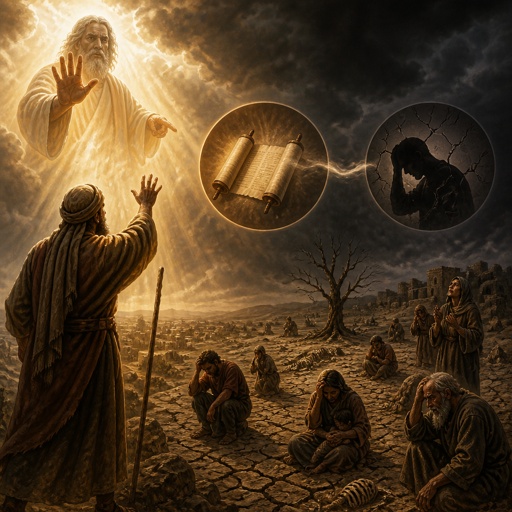
FIRST POINT: The Warning before It Is Too Late (v.11) A warning always comes before the danger fully happens! Throughout the Scripture this is how God Works: before judgment or destruction, God speaks. This is God’s mercy. This is exactly what is happening in verse 11. That’s why the first point of my sermon is: the warning before it’s too late based on the verse 11. Look at verse 11 : 11“The days are coming,” declares the Sovereign Lord, “when I will send a famine through the land, not a famine of food or a thirst for water, but a famine of hearing the words of the Lord. This is not only a prediction about the future, but a certain judgment from God given as a warning. This is really a frightening warning! To understand how serious this warning is we must look at it carefully! The verse 11 begins with these words, “the days are coming.”This is a serious expression of a warning. It points to a day that lies ahead, a day that God Himself has already appointed. But Amos does not tell us when that day will arrive? So the emphasis here is not when it will happened, but on the certainty that it will happen. Why? Because the next phrase says, “declares the Sovereign Lord.” This means that this warning comes from God Himself, not from the prophet Amos. And when God speaks His Word is certain. But what exactly is God warning them about? The answer is found in the next phase of the verse 11 in which God said, “I will send a famine on the land...” Notice carefully, God said “I will send”. This means the warning of famine that God is speaking is not accidental. It is not natural disaster. It is an act of divine judgment. But God also described the characteristics of this famine: this is “not a famine of bread or a thirst for water” which means this is not going to be a physical famine, but spiritual famine. What then makes this famine spiritual rather than physical? The answer is found in the last phrase of verse 11: a famine of hearing the Words of the Lord. This is the heart of the warning. During Amos’ time the “Word of the Lord” means God’s covenant given in his law and the prophetic words. The word “Hearing” in this verse means more than simply listening to sounds. In scripture the word “hearing” means: Receiving, Understanding and Responding to God’s Word. Therefore this famine describes a condition in which God’s word is no longer truly heard. This idea can be understood in two ways: firstly, it may mean when God would withdraw His Word, leaving the Israel during that time without clear guidance and corrections. Secondly, it may mean people had become so spiritually hard that even if God’s Word was spoken, they could no longer truly received it. In both ways, the result is same: God’s Word is no longer truly heard. And that is why verse 11 stands as the warning before it’s too late. And also therefore, this warning demands a serious response to God’s Word while the opportunity is still remains.
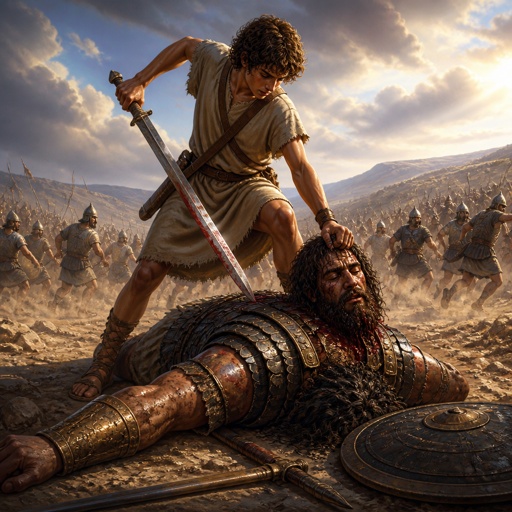
Therefore David ran, and stood upon the Philistine, and took his sword, and drew it out of the sheath thereof, and slew him, and cut off his head therewith. And when the Philistines saw their champion was dead, they fled. 1 Samuel 17:51
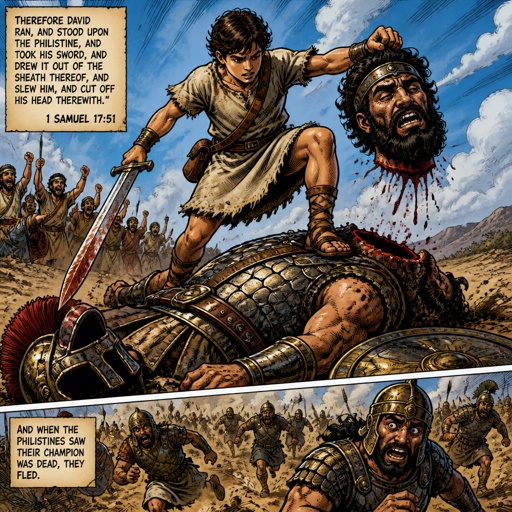
Therefore David ran, and stood upon the Philistine, and took his sword, and drew it out of the sheath thereof, and slew him, and cut off his head therewith. And when the Philistines saw their champion was dead, they fled. 1 Samuel 17:51
![And David put his hand in his bag, and took thence a stone, and slang [it], and smote the Philistine in his forehead, that the stone sunk into his forehead; and he fell upon his face to the earth.
1 Samuel 17:49](https://media.bible.art/0d8b48e2-4b6a-4abb-adb6-3e62bb7594c8-thumbnail.jpg)
And David put his hand in his bag, and took thence a stone, and slang [it], and smote the Philistine in his forehead, that the stone sunk into his forehead; and he fell upon his face to the earth. 1 Samuel 17:49
![And David spake to the men that stood by him, saying, What shall be done to the man that killeth this Philistine, and taketh away the reproach from Israel? for who [is] this uncircumcised Philistine, that he should defy the armies of the living God?
1 Samuel 17:26](https://media.bible.art/a931155a-6eb2-4332-aa08-8e154420e489-thumbnail.jpg)
And David spake to the men that stood by him, saying, What shall be done to the man that killeth this Philistine, and taketh away the reproach from Israel? for who [is] this uncircumcised Philistine, that he should defy the armies of the living God? 1 Samuel 17:26
![Trust ye in the LORD for ever: for in the LORD JEHOVAH [is] everlasting strength:
Isaiah 26:4](https://media.bible.art/87505436-5212-4025-b819-ad8ba3d7c3b9-thumbnail.jpg)
Trust ye in the LORD for ever: for in the LORD JEHOVAH [is] everlasting strength: Isaiah 26:4
![Trust ye in the LORD for ever: for in the LORD JEHOVAH [is] everlasting strength:
Isaiah 26:4](https://media.bible.art/5df9050f-b51f-4005-b24a-3180adaa91b6-thumbnail.jpg)
Trust ye in the LORD for ever: for in the LORD JEHOVAH [is] everlasting strength: Isaiah 26:4

Live deliberately
!["Whom having not seen, ye love; in whom, though now ye see [him] not, yet believing, ye rejoice with joy unspeakable and full of glory:
Receiving the end of your faith, [even] the salvation of [your] souls." - 1 Peter 1:8-9](https://media.bible.art/bb9795e1-589c-4af1-88c5-5b504764e4d9-thumbnail.jpg)
"Whom having not seen, ye love; in whom, though now ye see [him] not, yet believing, ye rejoice with joy unspeakable and full of glory: Receiving the end of your faith, [even] the salvation of [your] souls." - 1 Peter 1:8-9
!["[It is] God that girdeth me with strength, and maketh my way perfect.
He maketh my feet like hinds’ [feet], and setteth me upon my high places." - Psalms 18:32-33](https://media.bible.art/039b65c6-b9e4-49e6-afb8-c614dad719ad-thumbnail.jpg)
"[It is] God that girdeth me with strength, and maketh my way perfect. He maketh my feet like hinds’ [feet], and setteth me upon my high places." - Psalms 18:32-33
!["[It is] God that girdeth me with strength, and maketh my way perfect.
He maketh my feet like hinds’ [feet], and setteth me upon my high places." - Psalm 18:32-33](https://media.bible.art/5c086dee-c7cc-4651-b9dd-0d35a2822a27-thumbnail.jpg)
"[It is] God that girdeth me with strength, and maketh my way perfect. He maketh my feet like hinds’ [feet], and setteth me upon my high places." - Psalm 18:32-33
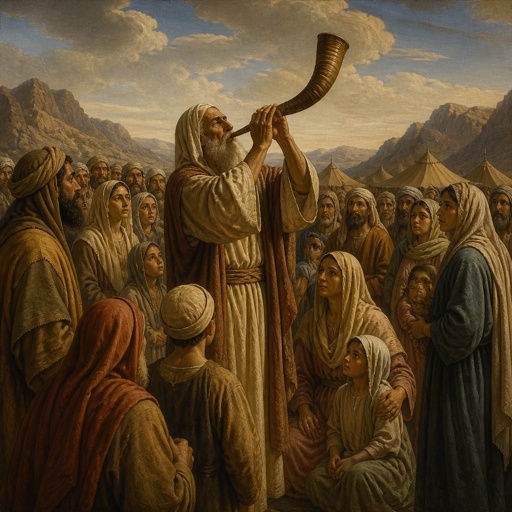
Numbers 29:1 The Israelites are congregating and in the middle of the assembly an elderly man is sounding the long ibex horn. please include women and children in the assembly. please provide head coverings for all
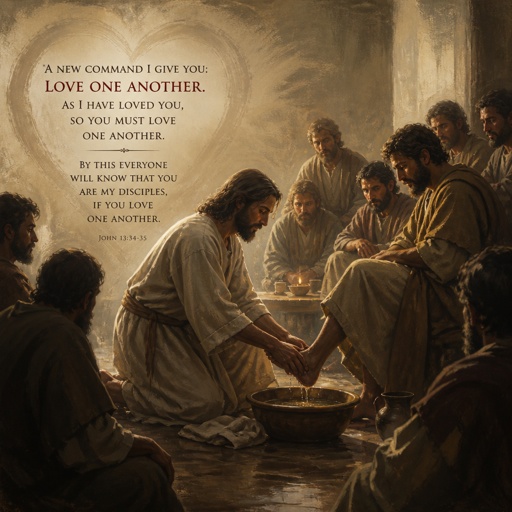
John 13: 34-35
![Ye [are] my witnesses, saith the LORD, and my servant whom I have chosen: that ye may know and believe me, and understand that I [am] he: before me there was no God formed, neither shall there be after me.
Isaiah 43:10](https://media.bible.art/8e37dad9-b9f2-43ea-8fe8-160f7437db7a-thumbnail.jpg)
Ye [are] my witnesses, saith the LORD, and my servant whom I have chosen: that ye may know and believe me, and understand that I [am] he: before me there was no God formed, neither shall there be after me. Isaiah 43:10
![Ye [are] my witnesses, saith the LORD, and my servant whom I have chosen: that ye may know and believe me, and understand that I [am] he: before me there was no God formed, neither shall there be after me.
Isaiah 43:10](https://media.bible.art/ea6d0349-76cd-487b-86f0-25e48310c6a8-thumbnail.jpg)
Ye [are] my witnesses, saith the LORD, and my servant whom I have chosen: that ye may know and believe me, and understand that I [am] he: before me there was no God formed, neither shall there be after me. Isaiah 43:10
![Ye [are] my witnesses, saith the LORD, and my servant whom I have chosen: that ye may know and believe me, and understand that I [am] he: before me there was no God formed, neither shall there be after me.
Isaiah 43:10](https://media.bible.art/7d7b53cf-92df-4f35-8ed5-897f946b6a73-thumbnail.jpg)
Ye [are] my witnesses, saith the LORD, and my servant whom I have chosen: that ye may know and believe me, and understand that I [am] he: before me there was no God formed, neither shall there be after me. Isaiah 43:10
![Ye [are] my witnesses, saith the LORD, and my servant whom I have chosen: that ye may know and believe me, and understand that I [am] he: before me there was no God formed, neither shall there be after me.
Isaiah 43:10](https://media.bible.art/af17a683-b179-4b86-a32c-667b318ce834-thumbnail.jpg)
Ye [are] my witnesses, saith the LORD, and my servant whom I have chosen: that ye may know and believe me, and understand that I [am] he: before me there was no God formed, neither shall there be after me. Isaiah 43:10
![Ye [are] my witnesses, saith the LORD, and my servant whom I have chosen: that ye may know and believe me, and understand that I [am] he: before me there was no God formed, neither shall there be after me.
Isaiah 43:10](https://media.bible.art/909ce7e5-7208-4f49-b067-d0f4417771bc-thumbnail.jpg)
Ye [are] my witnesses, saith the LORD, and my servant whom I have chosen: that ye may know and believe me, and understand that I [am] he: before me there was no God formed, neither shall there be after me. Isaiah 43:10

Songs of solomon 8:10

Philippians 4:7

I feel happy and enthusiastic.

I feel happy and enthusiastic.

I feel happy and enthusiastic.

I feel happy and enthusiastic.