Luke 6:39-42
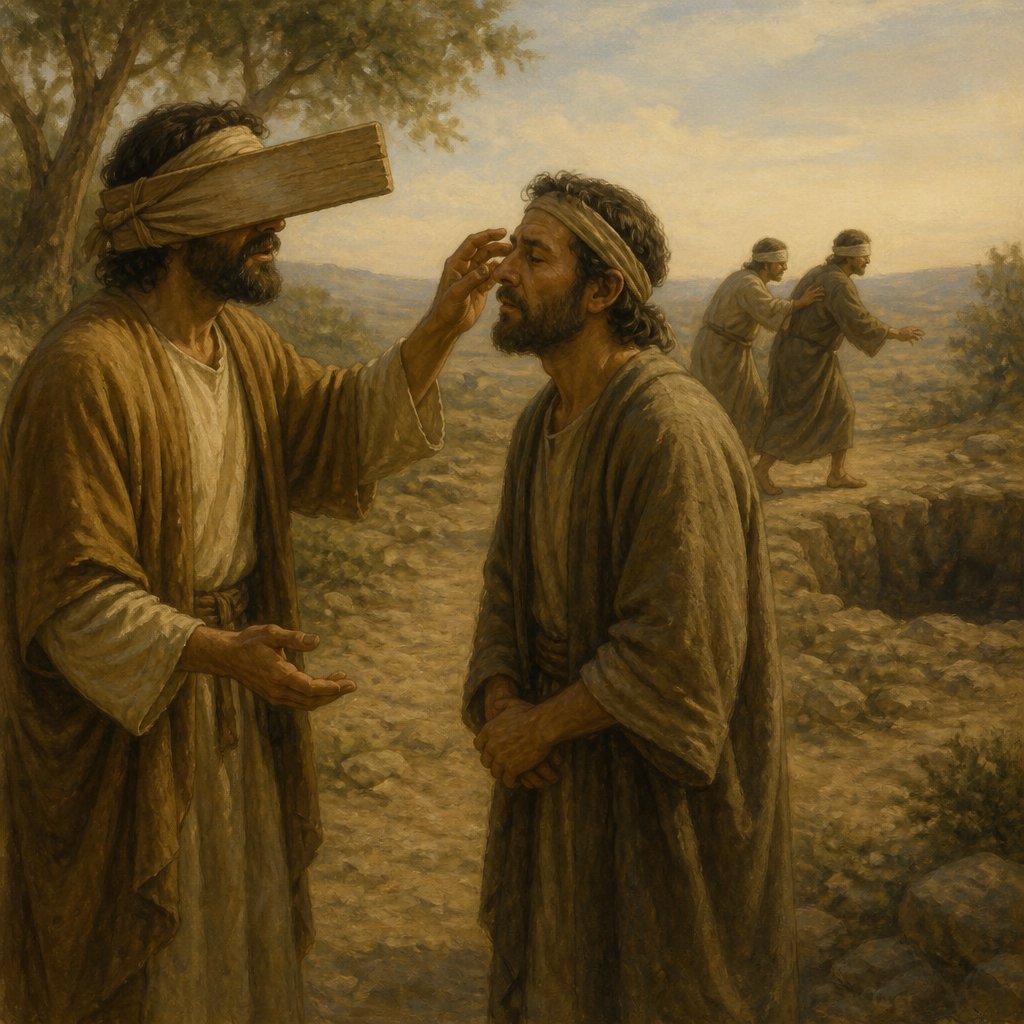
“And he spake a parable unto them, Can the blind lead the blind? shall they not both fall into the ditch? The disciple is not above his master: but every one that is perfect shall be as his master. And why beholdest thou the mote that is in thy brother’s eye, but perceivest not the beam that is in thine own eye? Either how canst thou say to thy brother, Brother, let me pull out the mote that is in thine eye, when thou thyself beholdest not the beam that is in thine own eye? Thou hypocrite, cast out first the beam out of thine own eye, and then shalt thou see clearly to pull out the mote that is in thy brother’s eye.”
What does Luke 6:39-42 mean?
In Luke 6:39-42, Jesus speaks to his disciples about the importance of self-reflection and the consequences of being hypocritical and judgmental towards others. The passage reads: "And he spake a parable unto them, Can the blind lead the blind? shall they not both fall into the…
Read full commentaryDevotionalSeeing Clearly: The Call to Self-Examination
In Luke 6:39-42, we encounter a profound parable spoken by Jesus that reveals the need for self-examination before attempting to correct others. The familiar words of the King James Version say, "And he spake a parable unto them, Can the blind lead the blind? shall they not both…
Read devotionalPrayerA Prayer for True Sight and Compassion
Heavenly Father, We come before You today with hearts humbly seeking Your wisdom and guidance as we reflect on the profound message contained in Your words in Luke 6:39-42. Lord, we acknowledge the truth within the parable that our Lord and Savior Jesus Christ shared: "Can the…
Read prayerArtwork for Luke 6:39-42
See all →