From Legacy to Leadership: A Reflection on Judgments of Time
“And when Husham was dead, Hadad the son of Bedad, which smote Midian in the field of Moab, reigned in his stead: and the name of his city was Avith.” — 1 Chronicles 1:46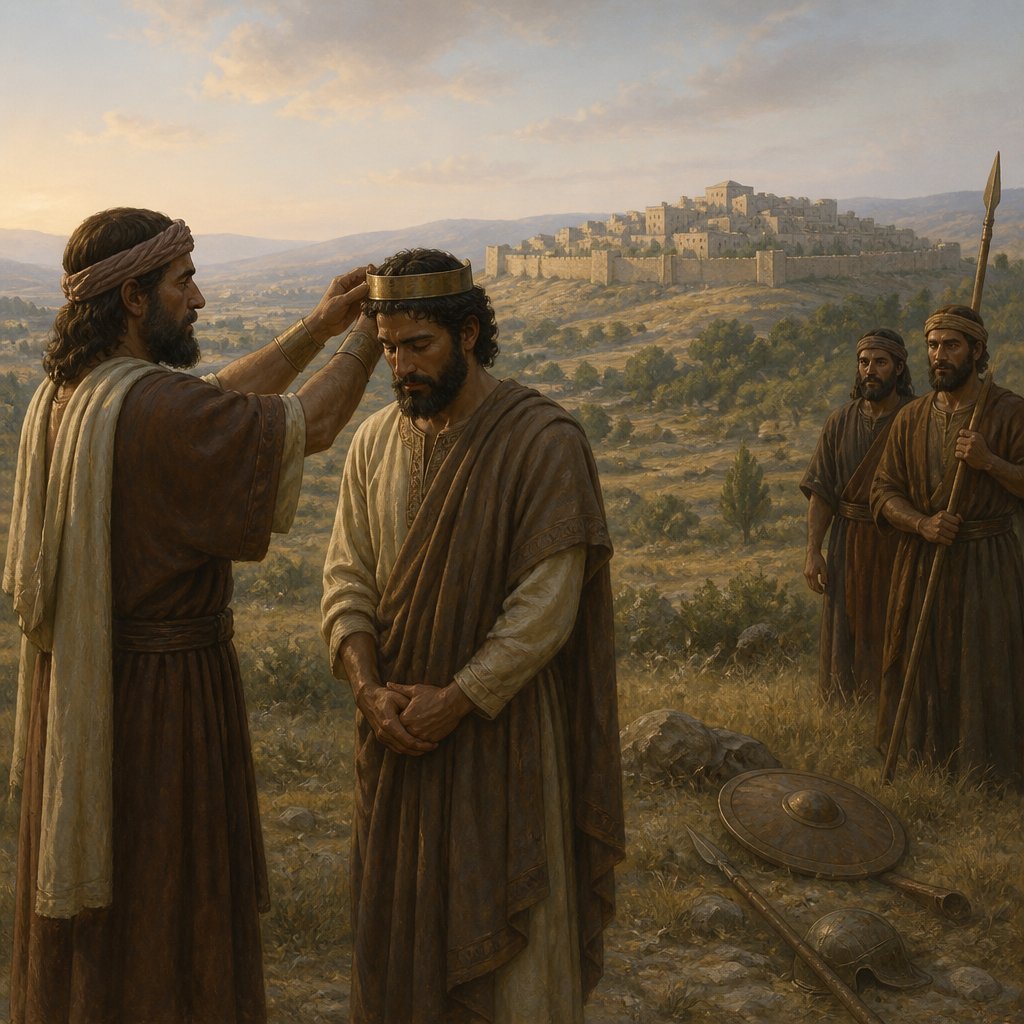
As we contemplate the reign of Hadad the son of Bedad as recorded in 1 Chronicles 1:46, we are faced with the concept of leadership, succession, and the inevitability of change in our lives. The King James Version of the verse reads, "And when Husham was dead, Hadad the son of Bedad, which smote Midian in the field of Moab, reigned in his stead: and the name of his city was Avith." Though this passage may seem brief and merely historical, it opens a window into deeper spiritual reflections about legacy, God's hand in leadership, and the challenges that arise with transition.
### The Weight of Legacy
Husham’s death signifies the end of an era, which inevitably leads us to ponder the legacies we inherit and the ones we leave behind. Every leader contributes to a larger narrative, whether within families, communities, or larger organizations. Husham, whose reign ended, likely had an influence that shaped the lives around him. Such transitions prompt us to evaluate how we contribute to the stories of those we lead: spiritual, communal, or familial.
With Husham's passing, Hadad emerges, armed with a notable distinction—he smote Midian in the field of Moab. This act demonstrates not only his capability as a leader but also raises questions about the actions of leaders in the midst of conflict. In times of conflict and challenge, how do we uphold our spiritual foundations? Leaders like Hadad impact history through both their successes and their failures. As we reevaluate our leadership roles, whether in the marketplace, our churches, or within our homes, we must consider how Christ would have us lead, serve, and bear influence. Are we leaving a legacy of courage and righteous action?
### God's Sovereignty in Leadership
In examining the reign of Hadad, it is essential to recognize that God is sovereign over leadership. The transition from Husham to Hadad demonstrates that though earthly leaders may pass away, God's will and purpose remain. Every leadership change serves divine purposes that often extend beyond our immediate understanding. This truth offers solace and maintains our faith in God's providential guidance.
God often places individuals in leadership for particular seasons, tailored to His design. Hadad's appointment was no accident. It reflects a structured plan: the battles fought in the field of Moab were not only physical but also spiritual. Leaders, regardless of their background or skills, are orchestrated by God’s hand to achieve His objectives.
As followers of Christ, we are called to understand that even in transitions, God is at work. When confronted with change, whether it be in our personal lives or in the leadership of those around us, let us maintain our focus on God. We must remind ourselves that He is ultimately in control, orchestrating every step toward His divine purposes.
### Reigning in Our ‘Avith’
Finally, we see reference to Avith, Hadad's city. Each of us has an ‘Avith’—a space where we exercise influence and reign, even in our humble circles of life. In our personal spheres of influence, we must reflect on how we reign as leaders, filled with grace and wisdom. Do we cultivate peace and understanding in our homes? Are we champions of God's love in our workplaces? As we work and connect with others, may we create an environment reminiscent of Avith, marked by justice, mercy, and a guide towards spiritual flourishing.
### Conclusion
As we meditate on this verse, let it remind us of the significance of legacies and the transitions we witness. May we actively seek to be leaders in our right, following the example of faithfulness demonstrated in the Scriptures. The leadership may change like the passing of the baton, but the ultimate authority remains in God. Let us honor the legacy of those who came before us, for we too are in the race to leave an imprint for those who will come after. Engage with this divine process, understanding that, like Hadad, we are each called to lead well in our ‘fields of Moab,’ fostering environments that glorify God and serve humanity.
Get our apps


Artwork for 1 Chronicles 1:46

1 Chronicles 1:46 - "And when Husham was dead, Hadad the son of Bedad, which smote Midian in the field of Moab, reigned in his stead: and the name of his city was Avith."
"And when Husham was dead, Hadad the son of Bedad, which smote Midian in the field of Moab, reigned in his stead: and the name of his city was Avith." - 1 Chronicles 1:46

1 Chronicles 6:46 - "The son of Amzi, the son of Bani, the son of Shamer,"

1 Chronicles 11:46 - "Eliel the Mahavite, and Jeribai, and Joshaviah, the sons of Elnaam, and Ithmah the Moabite,"

1 Chronicles 2:46 - "And Ephah, Caleb's concubine, bare Haran, and Moza, and Gazez: and Haran begat Gazez."
"The son of Amzi, the son of Bani, the son of Shamer," - 1 Chronicles 6:46
"Eliel the Mahavite, and Jeribai, and Joshaviah, the sons of Elnaam, and Ithmah the Moabite," - 1 Chronicles 11:46
"And Ephah, Caleb's concubine, bare Haran, and Moza, and Gazez: and Haran begat Gazez." - 1 Chronicles 2:46

1 Kings 1:46 - "And also Solomon sitteth on the throne of the kingdom."

acts 10:44-46

Jeremiah 46:1 - "The word of the LORD which came to Jeremiah the prophet against the Gentiles;"

God is within her she will not fall Psalm 46:5

"And also Solomon sitteth on the throne of the kingdom." - 1 Kings 1:46

Luke 1:46 - "And Mary said, My soul doth magnify the Lord,"

1 Chronicles 1:15

1 Chronicles 1:15

1 Corinthians 15:46 - "Howbeit that was not first which is spiritual, but that which is natural; and afterward that which is spiritual."

Psalms 46:1 - "God is our refuge and strength, a very present help in trouble."

Deuteronomy 1:46 - "So ye abode in Kadesh many days, according unto the days that ye abode there."

1 Kings 7:46 - "In the plain of Jordan did the king cast them, in the clay ground between Succoth and Zarthan."

1 Chronicles 1:1 - "Adam, Sheth, Enosh,"

Numbers 1:46 - "Even all they that were numbered were six hundred thousand and three thousand and five hundred and fifty."

1 Chronicles 1:24 - "¶ Shem, Arphaxad, Shelah,"

1 Chronicles 1:3 - "Henoch, Methuselah, Lamech,"

1 Chronicles 1:2 - "Kenan, Mahalaleel, Jered,"

1 Samuel 14:46 - "Then Saul went up from following the Philistines: and the Philistines went to their own place."

1 Chronicles 14:6 - "And Nogah, and Nepheg, and Japhia,"

1 Chronicles 1:25 - "Eber, Peleg, Reu,"

1 Chronicles 1:26 - "Serug, Nahor, Terah,"

1 Kings 18:46 - "And the hand of the LORD was on Elijah; and he girded up his loins, and ran before Ahab to the entrance of Jezreel."