The Legacy of Faithfulness: Lessons from Eliel and His Companions
“Eliel the Mahavite, and Jeribai, and Joshaviah, the sons of Elnaam, and Ithmah the Moabite,” — 1 Chronicles 11:46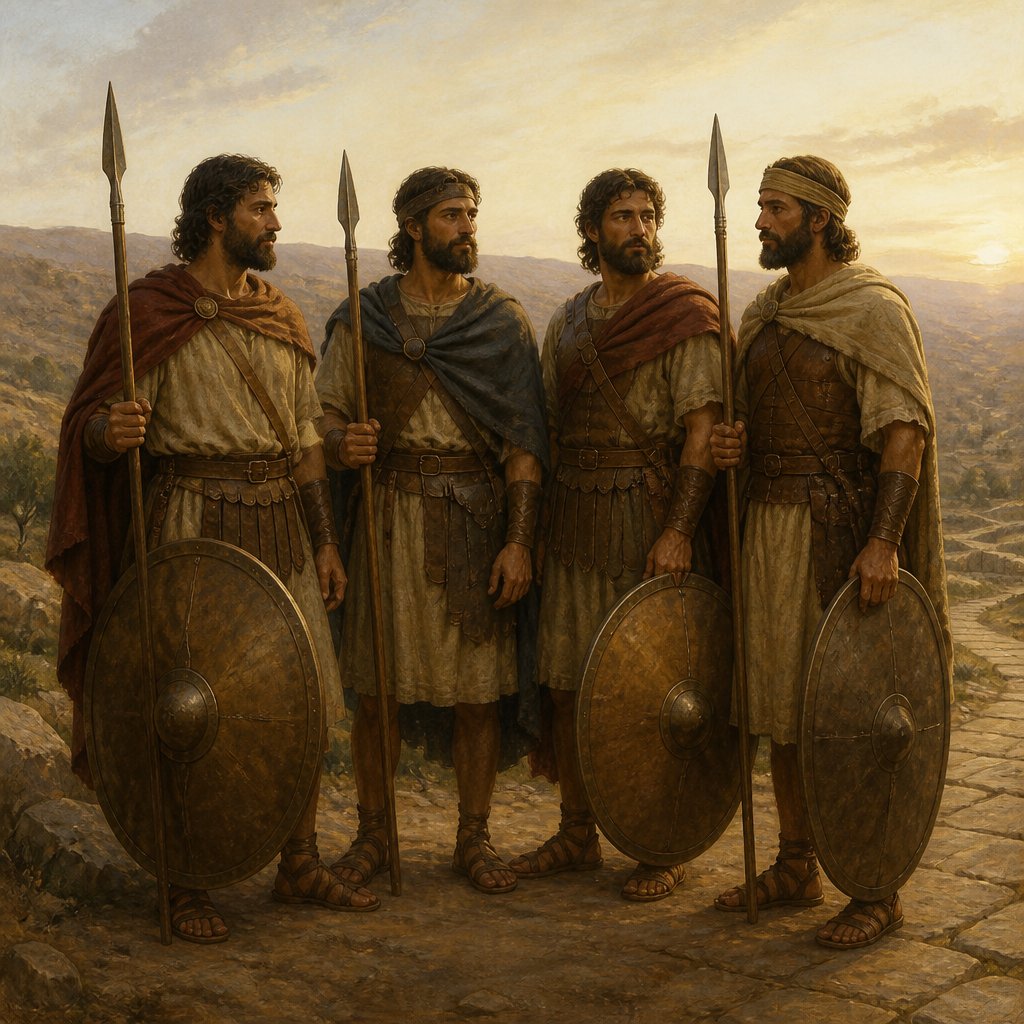
In the grand tapestry of Scripture, some verses seem obscure and detached from the overarching narrative of God’s story. Such is the case with 1 Chronicles 11:46, which introduces us to Eliel the Mahavite, Jeribai, Joshaviah the sons of Elnaam, and Ithmah the Moabite. At first glance, this assembly of names might appear to contribute little to our understanding of faith or devotion. However, upon closer examination, we can glean profound truths from the lives of these individuals that resonate deeply with our walk as believers.
1 Chronicles 11 is a chapter that delineates the exploits of David’s mighty men, a group of warriors distinguished by their courage and loyalty. These men were not merely soldiers; they were emblematic of a faithful service to a king whose heart was after God’s own heart (1 Samuel 13:14). Eliel, Jeribai, Joshaviah, and Ithmah are mentioned alongside these mighty men of valor, suggesting that their contributions, though not as conspicuous as others, were nonetheless vital to the advancement of God’s purposes in Israel.
The historical context of 1 Chronicles emphasizes the importance of unity within the body of believers and the significance of each role in the Kingdom of God. Paul echoes this sentiment in 1 Corinthians 12, where he describes the Church as a body with many parts, each fulfilling a unique purpose. The mention of Eliel and his companions might encourage us to reflect on our own lives—whether our contributions are seen and celebrated or subtle and quiet, they matter in the grand design of God.
What can we learn from Eliel and his companions? First, we are reminded of the importance of faithfulness in our service to God. Eliel is labeled as the Mahavite, indicating a specific heritage and identity. His commitment to stand with David reflects an unwavering faith. In our journey as followers of Christ, we are called to be faithful in our assigned tasks, no matter how mundane they may seem. Faithfulness in little things leads to greater responsibilities (Luke 16:10). God measures our success not by accolades from men but by our obedience to His call.
Furthermore, the inclusion of names like Ithmah the Moabite, adds depth to our understanding of God’s grace. Ithmah, a Moabite, represents the breaking of barriers that often divide us. Moabites were traditionally enemies of Israel, yet God’s call extends beyond cultural and ethnic boundaries. This exemplifies that God can use anyone who surrenders to Him, regardless of their past. As believers, we are called to embrace the diversity of God’s Kingdom and recognize that our commonality as children of God supersedes all societal labels.
Additionally, the narrative of these mighty men demonstrates the power of camaraderie in faith. As each warrior stood with David, they not only fought for him but also for one another. In our individual journeys, it is crucial to foster relationships within the body of Christ that encourage, uplift, and protect one another. Ecclesiastes 4:9-10 teaches us the strength of companionship and the importance of standing together against the trials of life.
Lastly, let us ponder the legacy we wish to leave behind. When our names are mentioned in the annals of heaven, what will they signify? Eliel and his companions are remembered for their dedication amidst giants, both literally and metaphorically. Their lives continue to inspire generations that we, too, must find our significance in serving together in God’s mission.
As we close this reflection, let us pray for God to instill in us a heart akin to that of Eliel, Jeribai, Joshaviah, and Ithmah—a heart that seeks to honor God, a mind willing to serve, and a spirit that embraces unity in diversity. May we understand that in God’s economy, no act of faithfulness is too small. Rather, each moment of obedience and every act of love contributes to the mission of His Kingdom. Let us go forth as modern-day mighty men and women, marked by faithfulness, camaraderie, and the relentless pursuit of God’s glory.
Get our apps


Artwork for 1 Chronicles 11:46

1 Chronicles 11:46 - "Eliel the Mahavite, and Jeribai, and Joshaviah, the sons of Elnaam, and Ithmah the Moabite,"
"Eliel the Mahavite, and Jeribai, and Joshaviah, the sons of Elnaam, and Ithmah the Moabite," - 1 Chronicles 11:46

1 Chronicles 6:46 - "The son of Amzi, the son of Bani, the son of Shamer,"

1 Chronicles 2:46 - "And Ephah, Caleb's concubine, bare Haran, and Moza, and Gazez: and Haran begat Gazez."

1 Chronicles 1:46 - "And when Husham was dead, Hadad the son of Bedad, which smote Midian in the field of Moab, reigned in his stead: and the name of his city was Avith."
"The son of Amzi, the son of Bani, the son of Shamer," - 1 Chronicles 6:46
"And Ephah, Caleb's concubine, bare Haran, and Moza, and Gazez: and Haran begat Gazez." - 1 Chronicles 2:46

1 Chronicles 1:11 - "And Mizraim begat Ludim, and Anamim, and Lehabim, and Naphtuhim,"

Genesis 46:11 - "¶ And the sons of Levi; Gershon, Kohath, and Merari."

1 Chronicles 11:29 - "Sibbecai the Hushathite, Ilai the Ahohite,"

1 Chronicles 12:11 - "Attai the sixth, Eliel the seventh,"

1 Chronicles 24:11 - "The ninth to Jeshua, the tenth to Shecaniah,"

1 Chronicles 11:40 - "Ira the Ithrite, Gareb the Ithrite,"

1 Chronicles 11:27 - "Shammoth the Harorite, Helez the Pelonite,"

1 Chronicles 11:36 - "Hepher the Mecherathite, Ahijah the Pelonite,"

Psalms 46:11 - "The LORD of hosts is with us; the God of Jacob is our refuge. Selah."

1 Chronicles 11:47 - "Eliel, and Obed, and Jasiel the Mesobaite."

1 Chronicles 11:33 - "Azmaveth the Baharumite, Eliahba the Shaalbonite,"

1 Chronicles 8:11 - "And of Hushim he begat Abitub, and Elpaal."

1 Chronicles 11:43 - "Hanan the son of Maachah, and Joshaphat the Mithnite,"

1 Chronicles 11:32 - "Hurai of the brooks of Gaash, Abiel the Arbathite,"

1 Chronicles 11:41 - "Uriah the Hittite, Zabad the son of Ahlai,"

1 Chronicles 11:37 - "Hezro the Carmelite, Naarai the son of Ezbai,"

1 Chronicles 6:11 - "And Azariah begat Amariah, and Amariah begat Ahitub,"

1 Chronicles 11:30 - "Maharai the Netophathite, Heled the son of Baanah the Netophathite,"

1 Chronicles 2:11 - "And Nahshon begat Salma, and Salma begat Boaz,"

1 Chronicles 11:38 - "Joel the brother of Nathan, Mibhar the son of Haggeri,"

1 Chronicles 11:28 - "Ira the son of Ikkesh the Tekoite, Abiezer the Antothite,"

1 Chronicles 11:16 - "And David was then in the hold, and the Philistines' garrison was then at Beth-lehem."

1 Chronicles 11:45 - "Jediael the son of Shimri, and Joha his brother, the Tizite,"