The Reverence of Carrying the Ark: Lessons from Uzza and Ahio
“And they carried the ark of God in a new cart out of the house of Abinadab: and Uzza and Ahio drave the cart.” — 1 Chronicles 13:7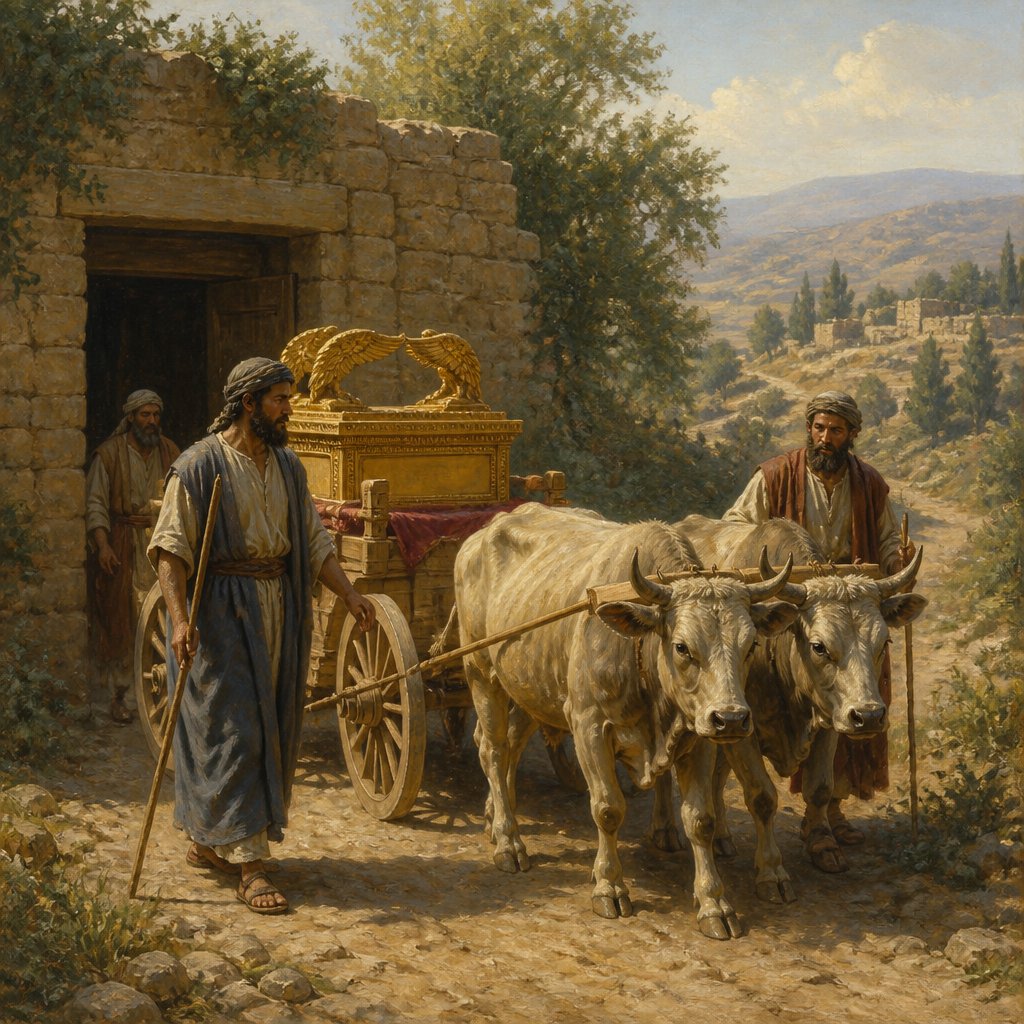
The narrative of carrying the Ark of the Covenant in 1 Chronicles 13:7 provides profound insights not only into the history of Israel but also into the principles of reverence, obedience, and the holiness of God. KJV states, "And they carried the ark of God in a new cart out of the house of Abinadab: and Uzza and Ahio drave the cart."
The background of this event is crucial to understanding its significance. The Ark of the Covenant represented the very presence of God among His people. It contained the tablets of the Law, the mercy seat, and was a constant reminder of God’s covenant with Israel. Given this immense symbolism, it was of utmost importance how it was to be handled and transported.
As we look at the unfolding of this moment, we realize that carrying the Ark on a cart, however new and appealing it may seem, was in direct disobedience to the instructions God had provided in the Law. According to the Law, the Ark was to be carried by Levites on poles, without being touched by human hands (Exodus 25:14-15, Numbers 4:15). The decision to use a new cart may have been born out of a desire to make things easier or to put on a grand display. However, the ease of the method does not justify disobeying the prescribed way set forth by God.
Uzza and Ahio, the sons of Abinadab, were tasked with driving this cart. One can imagine their excitement – after years of the Ark being in obscurity, they were now part of a grand procession to bring it back to its rightful place in Jerusalem. But herein lies a warning for us; zeal without knowledge or proper reverence can lead to dire consequences. Uzza was struck dead for reaching out to steady the Ark when the oxen stumbled (1 Chronicles 13:10). This scene is jarring, reflective of the seriousness of God’s holiness and the respect we must have for His commands.
What can we learn from this moment of tragedy?
First, we are reminded of the absolute sovereignty of God. He is not just a friend or a companion; He is holy and just. His instructions are not arbitrary but intended to teach us about His nature and the deeply sacred relationship He seeks to have with us. When we approach God, our attitude matters tremendously. Complacency or casualness can be detrimental. In every act of worship, we ought to reflect deeply on our approach to God, realizing that while He is loving and merciful, He is also the Creator of the universe worth of utmost reverence and fear.
Secondly, as we go about our lives – engaging in church activities, community service, or personal devotion – we should ask ourselves if we are adhering to God’s principles as revealed in His Word. Are we pursuing a new path that may seem suitable to us, yet neglects Biblical commands? Uzza’s tragic fate serves as a sobering reminder that our sincerity does not replace obedience. God desires our hearts, not just our zeal.
Finally, it's essential to note that the incident does not end on a sour note. It leads to a deeper understanding of how to honor God. After the incident with Uzza, David took a moment, reflected, and ultimately sought to learn the proper way to carry the Ark. This was a turning point in his leadership and a lesson in humility – recognizing the need for divine guidance in everything we do.
Let us strive to take this lesson to heart. As we seek to live out our faith, let us ensure that we are following God’s ways, not just our own. In every aspect of our lives, let’s carry the presence of God in a manner worthy of Him, ensuring that our worship, service, and love reflect the holiness of the One we follow. In this way, we can honor God and experience the fullness of His presence in our lives.
Get our apps


Artwork for 1 Chronicles 13:7

1 Chronicles 13:7 - "And they carried the ark of God in a new cart out of the house of Abinadab: and Uzza and Ahio drave the cart."
"And they carried the ark of God in a new cart out of the house of Abinadab: and Uzza and Ahio drave the cart." - 1 Chronicles 13:7

1 Chronicles 7:13 - "¶ The sons of Naphtali; Jahziel, and Guni, and Jezer, and Shallum, the sons of Bilhah."
"¶ The sons of Naphtali; Jahziel, and Guni, and Jezer, and Shallum, the sons of Bilhah." - 1 Chronicles 7:13

1 Chronicles 1:13 - "And Canaan begat Zidon his firstborn, and Heth,"

1 Chronicles 13:1 - "And David consulted with the captains of thousands and hundreds, and with every leader."

1 Chronicles 24:13 - "The thirteenth to Huppah, the fourteenth to Jeshebeab,"

1 Chronicles 12:13 - "Jeremiah the tenth, Machbanai the eleventh."

1 Chronicles 1:7 - "And the sons of Javan; Elishah, and Tarshish, Kittim, and Dodanim."

1 Chronicles 14:7 - "And Elishama, and Beeliada, and Eliphalet."

1 Chronicles 3:7 - "And Nogah, and Nepheg, and Japhia,"

1 Chronicles 23:7 - "¶ Of the Gershonites were, Laadan, and Shimei."

1 Chronicles 6:13 - "And Shallum begat Hilkiah, and Hilkiah begat Azariah,"

1 Chronicles 13:13 - "So David brought not the ark home to himself to the city of David, but carried it aside into the house of Obed-edom the Gittite."

1 Chronicles 7:39 - "And the sons of Ulla; Arah, and Haniel, and Rezia."

1 Chronicles 7:38 - "And the sons of Jether; Jephunneh, and Pispah, and Ara."

1 Chronicles 12:7 - "And Joelah, and Zebadiah, the sons of Jeroham of Gedor."

1 Chronicles 7:1 - "Now the sons of Issachar were, Tola, and Puah, Jashub, and Shimron, four."

1 Chronicles 4:13 - "And the sons of Kenaz; Othniel, and Seraiah: and the sons of Othniel; Hathath."

1 Chronicles 14:13 - "And the Philistines yet again spread themselves abroad in the valley."

2 Chronicles 7:13 - "If I shut up heaven that there be no rain, or if I command the locusts to devour the land, or if I send pestilence among my people;"

1 Chronicles 7:6 - "¶ The sons of Benjamin; Bela, and Becher, and Jediael, three."

1 Chronicles 7:34 - "And the sons of Shamer; Ahi, and Rohgah, Jehubbah, and Aram."

1 Chronicles 4:7 - "And the sons of Helah were, Zereth, and Jezoar, and Ethnan."

1 Chronicles 6:7 - "Meraioth begat Amariah, and Amariah begat Ahitub,"

1 Chronicles 7:37 - "Bezer, and Hod, and Shamma, and Shilshah, and Ithran, and Beera."

1 Chronicles 7:27 - "Non his son, Jehoshua his son."

2 Chronicles 13:7 - "And there are gathered unto him vain men, the children of Belial, and have strengthened themselves against Rehoboam the son of Solomon, when Rehoboam was young and tenderhearted, and could not withstand them."

1 Chronicles 7:33 - "And the sons of Japhlet; Pasach, and Bimhal, and Ashvath. These are the children of Japhlet."

1 Chronicles 7:32 - "And Heber begat Japhlet, and Shomer, and Hotham, and Shua their sister."