Unity in Christ: A Call to Unity in Diversity
“Is Christ divided? was Paul crucified for you? or were ye baptized in the name of Paul?” — 1 Corinthians 1:13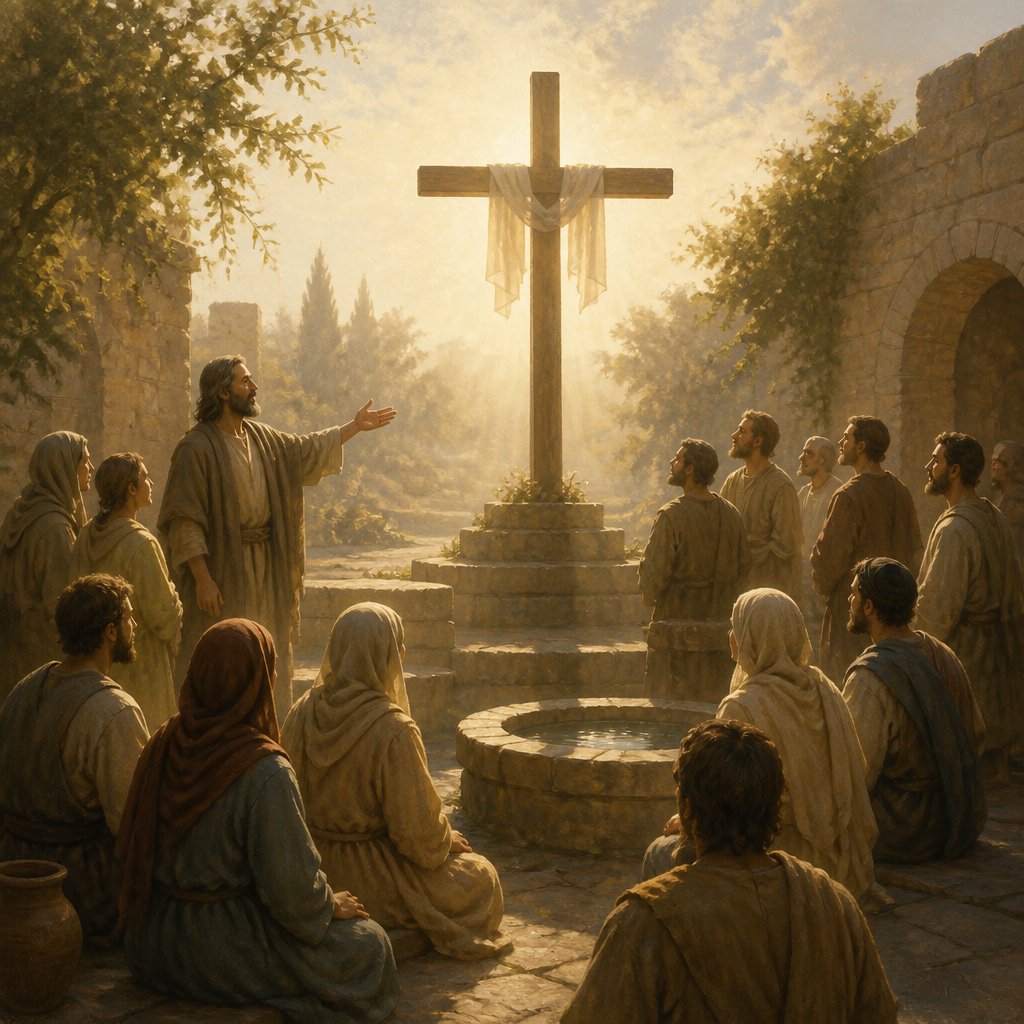
In the bustling heart of ancient Corinth, a city riddled with challenges similar to those we face today, the Apostle Paul sought to address a serious issue—the fractured nature of the Christian community. Through the words of 1 Corinthians 1:13, we find a poignant plea that resonates through the ages: "Is Christ divided? was Paul crucified for you? or were ye baptized in the name of Paul?" This question strikes at the core of our faith and our identity as followers of Jesus Christ.
To fully appreciate this verse, we must consider the context in which Paul wrote. The Corinthian church was struggling with divisions and factions. Some Christians claimed allegiance to Paul, others to Apollos, and still others to Cephas (Peter), while others professed to be followers of Christ alone. These divisions stemmed from loyalty to different leaders rather than unity in the Gospel. Paul addresses this issue not merely because he desires that the church be united, but because he knows that disunity threatens the very essence of the message of Christ.
First, when Paul asks, "Is Christ divided?" he prompts us to reflect on the very nature of our Savior and His mission. Christ is not a figure of rivalry or discord; He embodies unity. His death on the cross was not for the glory of one leader over another but was an act of supreme love intended for all humanity. In John 17:21, Jesus prayed for His followers to be one, just as He is one with the Father. The fragmentation we see within the Body of Christ today challenges us to examine whether our actions reflect the unity that He so deeply desires.
Next, Paul's rhetorical questions—"was Paul crucified for you? or were ye baptized in the name of Paul?"—remind us of the origins of our faith. Our faith is rooted in Christ and His sacrificial act upon the cross, not in the personalities or teachings of mere mortals. Each of us, regardless of our denominational affiliation or spiritual leaders, is called into one body united by one Spirit (Ephesians 4:4). Our baptism signifies our identification with Christ and our commitment to His Church, not to individual leaders. We must always remember that it is Christ alone who redeems us, and it is to Him alone we owe our allegiance.
Furthermore, Paul's message implores us to resist the temptation of creating factions based on preference, style, or interpretation of doctrines. While diversity within the Church is beautiful and enriching—mirroring the manifold creativity of God—our differing perspectives should never lead to division. Instead, they should prompt us to engage in dialogue with humility, love, and grace. In the words of Paul, we are not merely members of different factions; we are family in Christ, each contributing to the greater body with our unique gifts and insights. Unity does not mean uniformity, but rather a harmonious collaboration where our differences serve to strengthen and complement one another.
Finally, Paul’s words invite us to look inward and consider our motivations. Are we aligning ourselves with Christ in our interactions with others in the faith community? Are we promoting unity, or are we engaging in behavior that fosters division? Each of us must take a moment to reflect on whether our words, actions, and attitudes contribute to the body of Christ as a place of love and acceptance or whether they create a spirit of contention and separation.
In conclusion, 1 Corinthians 1:13 confronts us with a pivotal question: Are we living in the truth of our faith that Christ is our foundation? He is the head of the Church, and we are called to represent Him accurately in all we do. As we wrestle with the complexities of today’s world, let us strive for unity, reflecting the heart of Christ in a divided world, celebrating our diversity while resting firmly in the truth of our faith in Him. Remember, it is not about who we follow; it is about whom we serve—Christ alone.
Get our apps


Artwork for 1 Corinthians 1:13

1 Corinthians 1:13 - "Is Christ divided? was Paul crucified for you? or were ye baptized in the name of Paul?"
"Is Christ divided? was Paul crucified for you? or were ye baptized in the name of Paul?" - 1 Corinthians 1:13
![1 Corinthians 13:13
1 Corinthians 13:13
[13] So now faith, hope, and love abide, these three; but the greatest of these is love. (ESV)](https://media.bible.art/3da57222-9f49-4158-a2a3-7a49b5dc4437-thumbnail.jpg)
1 Corinthians 13:13 1 Corinthians 13:13 [13] So now faith, hope, and love abide, these three; but the greatest of these is love. (ESV)

1 Corinthians 13:13

1 Corinthians 13 :13

1 Corinthians 13:4-6

1 Corinthians 13:4-6

1 Corinthians 13:4-6

1 Corinthians 13:4-6

1 Corinthians 13:4-6

1 Corinthians 13:4-6

1 Corinthians 13:4-6

1 Corinthians 13:4-6

1 Corinthians 13

1 Corinthians 1:3 - "Grace be unto you, and peace, from God our Father, and from the Lord Jesus Christ."

1 Corinthians 10:13

1 Corinthians 10:13

1 Corinthians 10:13

1 Corinthians 13:13 - "And now abideth faith, hope, charity, these three; but the greatest of these is charity."

1 Corinthians 15:13 - "But if there be no resurrection of the dead, then is Christ not risen:"

1 Corinthians 13:6 - "Rejoiceth not in iniquity, but rejoiceth in the truth;"

1 Corinthians 12:12-13

1 Corinthians 13:4-7

1 Corinthians 12:3-13

1 Corinthians 13:4-7

1 Corinthians 13:4-7

1 Corinthians 13:4-7

1 Corinthians 13:9 - "For we know in part, and we prophesy in part."

1 Corinthians 13:1 - "Though I speak with the tongues of men and of angels, and have not charity, I am become as sounding brass, or a tinkling cymbal."

1 Corinthians 11:13 - "Judge in yourselves: is it comely that a woman pray unto God uncovered?"