The Weight of Leadership: Lessons from the Rise of Omri
“And the people that were encamped heard say, Zimri hath conspired, and hath also slain the king: wherefore all Israel made Omri, the captain of the host, king over Israel that day in the camp.” — 1 Kings 16:16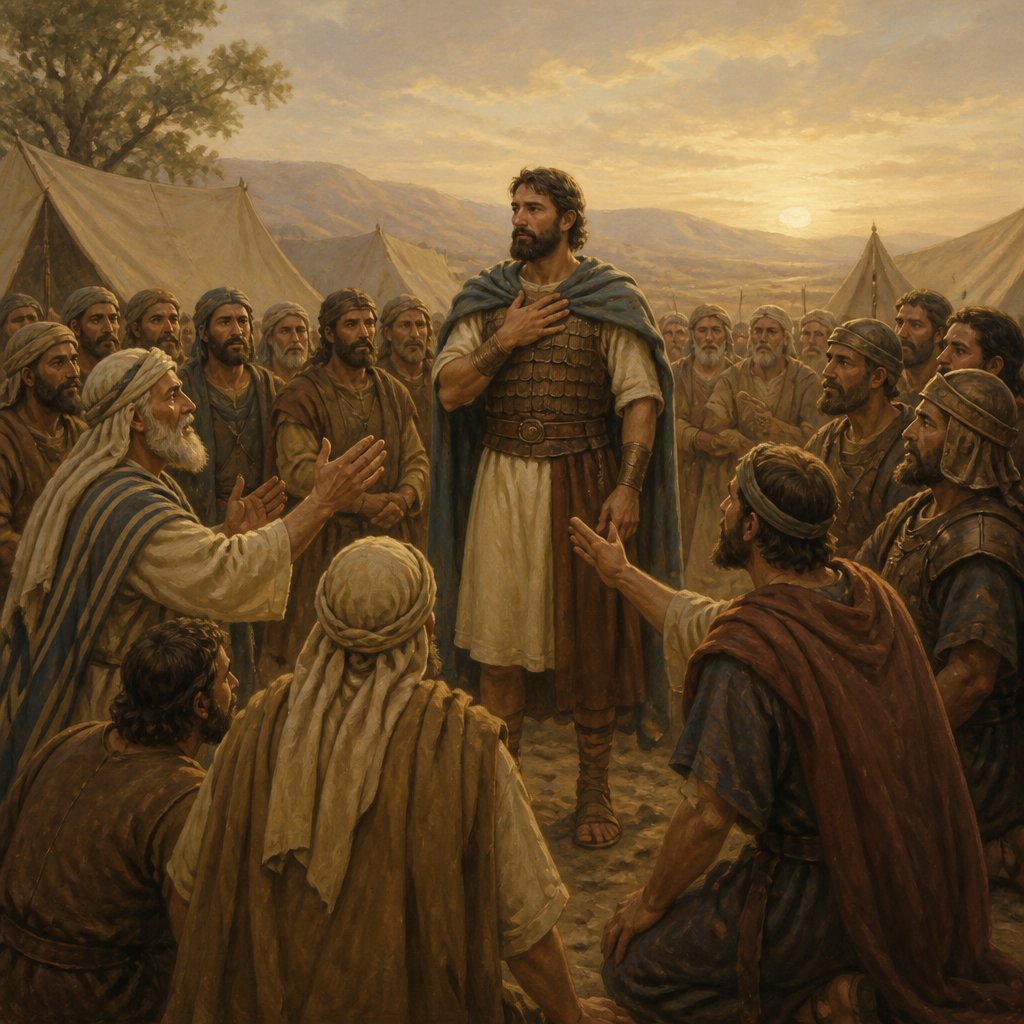
In the annals of the Old Testament, the narrative of leadership and its consequences is often laid bare in striking clarity. One such pivotal moment is captured in 1 Kings 16:16, where we read, "And the people that were encamped heard say, Zimri hath conspired, and hath also slain the king: wherefore all Israel made Omri, the captain of the host, king over Israel that day in the camp." This verse unfolds a dramatic scene of a nation grappling with betrayal and the tumult of transition in leadership.
To understand the significance of this moment, it is essential to delve into the larger context of Israel’s monarchy during this tumultuous period. Zimri, a military officer, had succeeded in overthrowing King Elah, yet his reign was short-lived, lasting only seven days due to his own treachery, which plunged the nation into chaos. The people were left reeling, seeking stability amid the turmoil resultant from such betrayal.
In contrast, we see Omri, the commander of the Israelite forces, stepping forward. Selected by the people to replace Zimri, Omri’s ascension is not merely a response to political upheaval but reflects a deeper longing for security and steadfast leadership. This transition raises critical questions about the nature of leadership and the responsibilities it entails.
The rapidity with which the Israelites accepted Omri reveals a profound truth about the human condition; we often crave decisive leadership in moments of crisis. Ironically, however, the swift elevation of Omri also teaches us about the fleeting nature of power obtained through conflict rather than divine selection. Throughout scripture, we see that true authority and respect come not from coercion or conspiracy but from faithfulness to God's will and purposes.
As we reflect on this passage today, we are invited to consider what leadership means within our personal and communal spheres. In a world rife with uncertainty and division, how do we respond when called to lead? Do we approach leadership as an opportunity for personal gain, or do we see it as a servant’s role? Omri's selection brings us face-to-face with a sobering reminder: leaders affect the destiny of their followers, intentionally or not.
Leading, whether in our families, workplaces, or communities, necessitates courage, integrity, and a commitment to righteousness. The chaos of receiving leadership through conspiracy leads us to ponder our motives and methods. Will our leadership reflect Christ’s example of sacrificial love, or will it succumb to the temptations of power and control? As we engage in our daily lives, we must recognize that our choices can build up or tear down the fabric of our shared existence.
Furthermore, the act of leadership encompasses more than just the public eye; it daily intersects with grace and humility in the private moments, especially when faced with adversity. Omri’s situation illustrates how the earliest choices in times of upheaval can set a direction for the future.
In closing, let us draw near to God’s word as we seek to align our hearts with His will. Leadership rooted in faith stands up against conspiracies and chaos and seeks the common good. May we model our leadership on the values of Christ—embracing humility, empathy, and strength of character. As we journey through life, may we always aspire to lead with integrity and wisdom, recognizing that our actions will echo through generations. Therefore, let each of us, in our situations, choose to be an Omri who leads not through coup but through the example of Christ’s unwavering faithfulness.
Get our apps


Artwork for 1 Kings 16:16

1 Kings 16:16 - "And the people that were encamped heard say, Zimri hath conspired, and hath also slain the king: wherefore all Israel made Omri, the captain of the host, king over Israel that day in the camp."
"And the people that were encamped heard say, Zimri hath conspired, and hath also slain the king: wherefore all Israel made Omri, the captain of the host, king over Israel that day in the camp." - 1 Kings 16:16

1 Kings 4:16 - "Baanah the son of Hushai was in Asher and in Aloth:"

1 Timothy 6:15-16 – "God, the blessed and only Ruler, the King of kings and Lord of lords."

1 Timothy 6:15-16 – "God, the blessed and only Ruler, the King of kings and Lord of lords."

1 Timothy 6:15-16 – "God, the blessed and only Ruler, the King of kings and Lord of lords."

1 Kings 16:1 - "Then the word of the LORD came to Jehu the son of Hanani against Baasha, saying,"

1 Kings 1:16 - "And Bath-sheba bowed, and did obeisance unto the king. And the king said, What wouldest thou?"

1 Kings 16:14 - "Now the rest of the acts of Elah, and all that he did, are they not written in the book of the chronicles of the kings of Israel?"

1 Timothy 6:15-16 – "God, the blessed and only Ruler, the King of kings and Lord of lords."

1 Kings 15:16 - "¶ And there was war between Asa and Baasha king of Israel all their days."

1 Timothy 6:15-16 – "God, the blessed and only Ruler, the King of kings and Lord of lords."

1 Kings 20:16 - "And they went out at noon. But Ben-hadad was drinking himself drunk in the pavilions, he and the kings, the thirty and two kings that helped him."

1 Kings 16:5 - "Now the rest of the acts of Baasha, and what he did, and his might, are they not written in the book of the chronicles of the kings of Israel?"

1 Kings 16:20 - "Now the rest of the acts of Zimri, and his treason that he wrought, are they not written in the book of the chronicles of the kings of Israel?"

1 Kings 3:16 - "¶ Then came there two women, that were harlots, unto the king, and stood before him."

2 Kings 16:1 - "In the seventeenth year of Pekah the son of Remaliah Ahaz the son of Jotham king of Judah began to reign."

1 Kings 16:27 - "Now the rest of the acts of Omri which he did, and his might that he shewed, are they not written in the book of the chronicles of the kings of Israel?"

2 Kings 16:16 - "Thus did Urijah the priest, according to all that king Ahaz commanded."

1 Kings 16:17 - "And Omri went up from Gibbethon, and all Israel with him, and they besieged Tirzah."

1 Chronicles 16:21 - "He suffered no man to do them wrong: yea, he reproved kings for their sakes,"

1 Kings 16:33 - "And Ahab made a grove; and Ahab did more to provoke the LORD God of Israel to anger than all the kings of Israel that were before him."

1 Kings 18:16 - "So Obadiah went to meet Ahab, and told him: and Ahab went to meet Elijah."

1 Kings 16:30 - "And Ahab the son of Omri did evil in the sight of the LORD above all that were before him."

1 Kings 16:25 - "¶ But Omri wrought evil in the eyes of the LORD, and did worse than all that were before him."

Kings 3:16

Kings 3:16

"Baanah the son of Hushai was in Asher and in Aloth:" - 1 Kings 4:16

1 Kings 16:32 - "And he reared up an altar for Baal in the house of Baal, which he had built in Samaria."

1 Kings 10:16 - "¶ And king Solomon made two hundred targets of beaten gold: six hundred shekels of gold went to one target."