The Divine Revelation of Heart Restoration
“Hear me, O LORD, hear me, that this people may know that thou art the LORD God, and that thou hast turned their heart back again.” — 1 Kings 18:37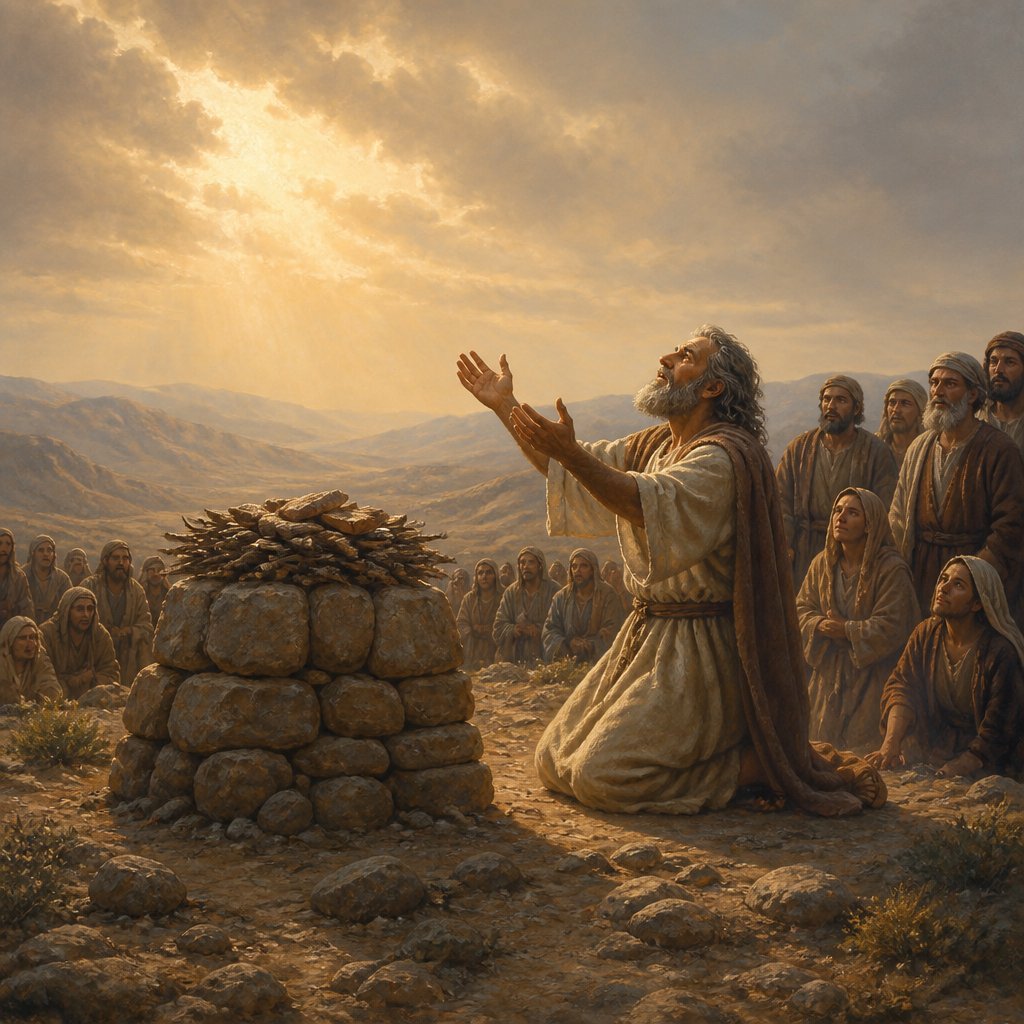
In 1 Kings 18:37, we find the prophet Elijah standing on Mount Carmel, his voice raised to the heavens as he cries out, "Hear me, O LORD, hear me, that this people may know that thou art the LORD God, and that thou hast turned their heart back again." This moment is not just a plea but a profound declaration of intent, illustrating the heart of God towards His people and their desperate need for divine revelation.
To fully appreciate the significance of this passage, we must first understand the context. Israel, the chosen nation of God, had wandered far from their covenant relationship with Him and was ensnared by the idolatry of Baal. The people had turned their backs on the true God, chasing after false idols and forsaking their faith. Elijah’s confrontation with the prophets of Baal was a divine setup, aimed at revealing God’s sovereignty and re-establishing the people’s belief in Him.
Elijah’s prayer reflects not only a cry for God to intervene dramatically but also an appeal for the people’s hearts to be restored. This brings us to the heart of the matter: the state of our hearts. Often, much like the Israelites, we find ourselves distracted by the allurements of the world. We may not worship Baal explicitly, but we can easily become enamored with things that take our focus off God—money, success, relationships, comfort. Our hearts may drift away, and before we know it, we are far from the center of His will.
Elijah’s cry, "Hear me, O LORD, hear me," is a reminder of our need for God's presence and acknowledgment of His lordship in our lives. This prayer resonates deeply as it signifies a yearning for God to make Himself known, not only to Elijah but also to the people witnessing this powerful encounter. In our own lives, we must regularly ask God to manifest His glory—to show us who He really is and what He can do. This revelation fuels our faith and shapes the landscape of our lives.
The dual aspects of his plea are essential: God’s revelation and the restoration of the people’s hearts. The phrase, "that this people may know that thou art the LORD God," taps into the desire for recognition of His sovereignty. It emphasizes that God is not a distant deity but a powerful, ever-present help in times of trouble, one who desires to be close to His people. When we understand that God is the LORD, our hearts align with the truth of His character, which is love, mercy, and unfailing faithfulness.
Moreover, the petition that God would “turn their heart back again” encapsulates the essence of repentance. The turning back of the hearts indicates a movement towards God—a return to the place of worship, trust, and obedience. It highlights a transformative process where the Holy Spirit works within us, drawing us away from our idols and back into the embrace of our Heavenly Father. This restoration signifies not just a change in mindset, but a metamorphosis of the heart—a revival of faith.
As we reflect on this passage, we must consider our own hearts. Have we, like the Israelites, become complacent and distracted? Are there areas in our lives where we need to turn back to God? The promise embedded in this verse is that God is always ready to hear our cries and to restore us. He invites us into genuine relationship, one that allows for clarity, renewed commitment, and vibrant faith.
Let us take up the mantle of Elijah and cry out to God today. Let us seek His face, ask for His mercy, and pray for clarity in His word. May we become vessels through which His glory is revealed, and may our hearts be turned once again towards Him. In doing so, we not only find restoration for ourselves but also become conduits of His grace for others. As we embrace His leadership, we can proclaim, just as the people did at Mount Carmel, that the LORD, He is God.
Get our apps


Artwork for 1 Kings 18:37

1 Kings 18:37 - "Hear me, O LORD, hear me, that this people may know that thou art the LORD God, and that thou hast turned their heart back again."
"Hear me, O LORD, hear me, that this people may know that thou art the LORD God, and that thou hast turned their heart back again." - 1 Kings 18:37

Isaiah 37:18 - "Of a truth, LORD, the kings of Assyria have laid waste all the nations, and their countries,"

1 Kings 22:37 - "¶ So the king died, and was brought to Samaria; and they buried the king in Samaria."

1 Kings 6:37 - "¶ In the fourth year was the foundation of the house of the LORD laid, in the month Zif:"

2 Kings 18:37 - "Then came Eliakim the son of Hilkiah, which was over the household, and Shebna the scribe, and Joah the son of Asaph the recorder, to Hezekiah with their clothes rent, and told him the words of Rabshakeh."

"Of a truth, LORD, the kings of Assyria have laid waste all the nations, and their countries," - Isaiah 37:18

1 Kings 19:1-18

1 Kings 11:37 - "And I will take thee, and thou shalt reign according to all that thy soul desireth, and shalt be king over Israel."

1 Kings 1:37 - "As the LORD hath been with my lord the king, even so be he with Solomon, and make his throne greater than the throne of my lord king David."

1 Kings 7:37 - "After this manner he made the ten bases: all of them had one casting, one measure, and one size."

1 Kings 4:18 - "Shimei the son of Elah, in Benjamin:"

1 Kings 9:18 - "And Baalath, and Tadmor in the wilderness, in the land,"

1 Kings 8:37 - "¶ If there be in the land famine, if there be pestilence, blasting, mildew, locust, or if there be caterpiller; if their enemy besiege them in the land of their cities; whatsoever plague, whatsoever sickness there be;"

2 Kings 1:18 - "Now the rest of the acts of Ahaziah which he did, are they not written in the book of the chronicles of the kings of Israel?"

1 Kings 1:18 - "And now, behold, Adonijah reigneth; and now, my lord the king, thou knowest it not:"

"¶ So the king died, and was brought to Samaria; and they buried the king in Samaria." - 1 Kings 22:37

1 Kings 20:37 - "Then he found another man, and said, Smite me, I pray thee. And the man smote him, so that in smiting he wounded him."

"¶ In the fourth year was the foundation of the house of the LORD laid, in the month Zif:" - 1 Kings 6:37

1 Kings 10:18 - "¶ Moreover the king made a great throne of ivory, and overlaid it with the best gold."

1 Kings 2:18 - "And Bath-sheba said, Well; I will speak for thee unto the king."

Luke 18:37 - "And they told him, that Jesus of Nazareth passeth by."

Elijah in the scene 1 Kings 18:36–38

1 Kings 18:2 - "And Elijah went to shew himself unto Ahab. And there was a sore famine in Samaria."

1 Kings 18:35 - "And the water ran round about the altar; and he filled the trench also with water."

1 Kings 18:11 - "And now thou sayest, Go, tell thy lord, Behold, Elijah is here."

Psalms 37:18 - "The LORD knoweth the days of the upright: and their inheritance shall be for ever."

1 Kings 18:18 - "And he answered, I have not troubled Israel; but thou, and thy father's house, in that ye have forsaken the commandments of the LORD, and thou hast followed Baalim."

"Shimei the son of Elah, in Benjamin:" - 1 Kings 4:18

"And Baalath, and Tadmor in the wilderness, in the land," - 1 Kings 9:18