What does 1 Kings 18:37 mean?
“Hear me, O LORD, hear me, that this people may know that thou art the LORD God, and that thou hast turned their heart back again.” — 1 Kings 18:37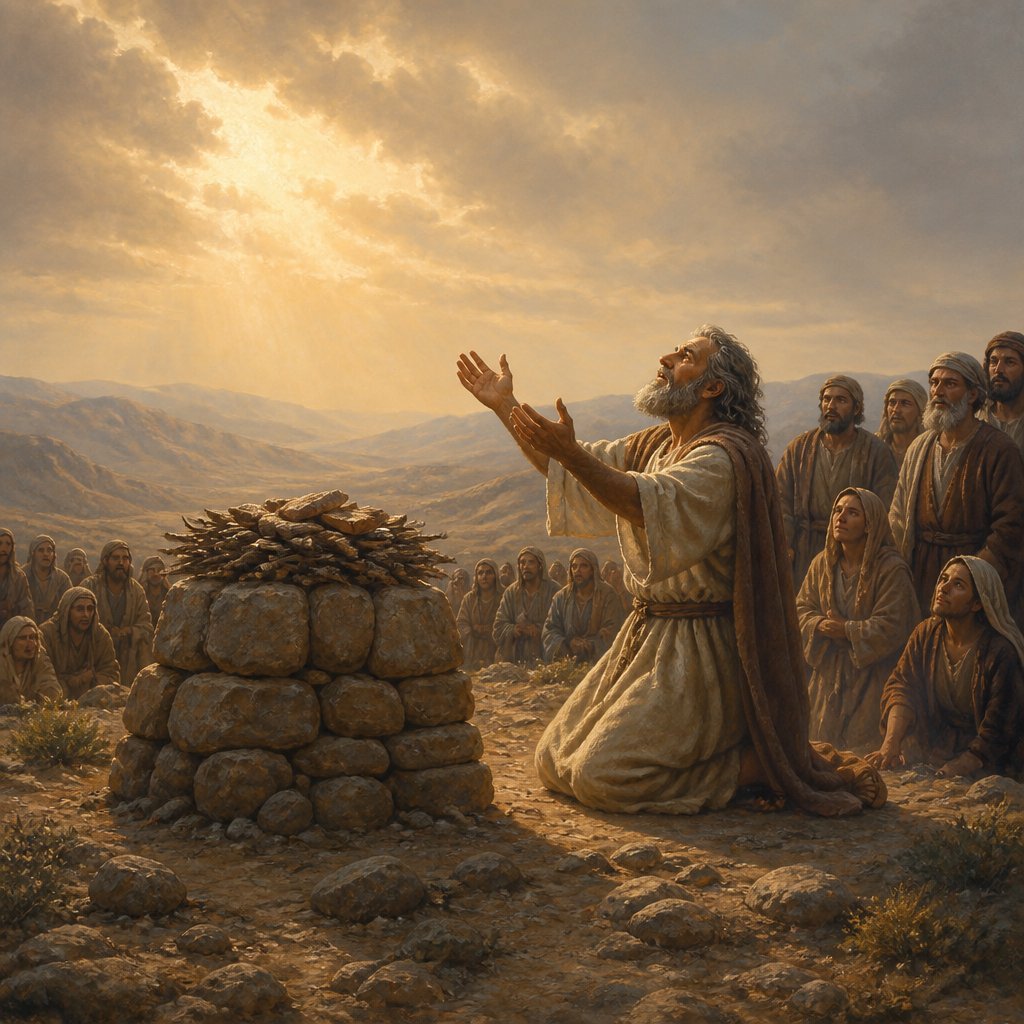
The Bible verse 1 Kings 18:37 in the King James Version (KJV) states, "Hear me, O Lord, hear me, that this people may know that thou art the Lord God, and that thou hast turned their heart back again." This verse comes from the story of the contest between the prophet Elijah and the prophets of Baal on Mount Carmel.
To fully understand the significance of 1 Kings 18:37, it is important to provide some context. The prophet Elijah had challenged the 450 prophets of Baal to a contest to determine whose God was truly the Almighty. The prophets of Baal built an altar and called on their god to send fire to consume their offering, but nothing happened. Elijah then built an altar to the Lord and called on Him to send fire to consume his offering. In response to Elijah's prayer, the Lord sent fire from heaven which consumed not only the offering, but also the wood, stones, and soil, demonstrating His power and authority.
In 1 Kings 18:37, Elijah is praying to the Lord as the people of Israel witness this miraculous display of divine power. His prayer is for the people to know that the Lord is the one true God and that He has turned their hearts back to Him. This prayer is significant because it reveals Elijah's deep desire for the people to recognize and turn back to the Lord. It also serves as a declaration of the Lord's authority and sovereignty over all creation.
One of the key themes present in this verse is the concept of repentance and restoration. Elijah's prayer demonstrates his longing for the people of Israel to repent of their idolatry and turn back to the one true God. His plea for the Lord to "turn their heart back again" reflects the importance of genuine repentance and a sincere return to God. It also emphasizes God's willingness to forgive and restore His people when they earnestly seek Him.
Another significant theme in this verse is the power and authority of God. Through the miraculous display of fire from heaven, the Lord demonstrates His supreme power and authority over all other gods. Elijah's prayer serves as a declaration of God's sovereignty and supremacy, and it emphasizes the importance of acknowledging and honoring Him as the one true God.
Symbolism is also present in this verse, particularly in the imagery of fire. Fire is often used in the Bible to symbolize God's presence, power, and purification. In this context, the fire that consumes Elijah's offering represents God's presence and approval. It also symbolizes His power to purify and refine His people, as well as His ability to answer prayers and demonstrate His authority.
In summary, 1 Kings 18:37 in the King James Version of the Bible encapsulates the themes of repentance, restoration, and the power and authority of God. Elijah's prayer serves as a powerful declaration of God's sovereignty and His desire for His people to turn back to Him. The symbolism present in the verse adds depth and richness to its meaning, further emphasizing the significance of God's presence and power. This verse serves as a powerful reminder of the importance of genuine repentance, the restoration of the relationship with God, and the acknowledgment of His supreme authority.
Get our apps


Artwork for 1 Kings 18:37

1 Kings 18:37 - "Hear me, O LORD, hear me, that this people may know that thou art the LORD God, and that thou hast turned their heart back again."
"Hear me, O LORD, hear me, that this people may know that thou art the LORD God, and that thou hast turned their heart back again." - 1 Kings 18:37

Isaiah 37:18 - "Of a truth, LORD, the kings of Assyria have laid waste all the nations, and their countries,"

1 Kings 22:37 - "¶ So the king died, and was brought to Samaria; and they buried the king in Samaria."

1 Kings 6:37 - "¶ In the fourth year was the foundation of the house of the LORD laid, in the month Zif:"

2 Kings 18:37 - "Then came Eliakim the son of Hilkiah, which was over the household, and Shebna the scribe, and Joah the son of Asaph the recorder, to Hezekiah with their clothes rent, and told him the words of Rabshakeh."

"Of a truth, LORD, the kings of Assyria have laid waste all the nations, and their countries," - Isaiah 37:18

1 Kings 19:1-18

1 Kings 11:37 - "And I will take thee, and thou shalt reign according to all that thy soul desireth, and shalt be king over Israel."

1 Kings 1:37 - "As the LORD hath been with my lord the king, even so be he with Solomon, and make his throne greater than the throne of my lord king David."

1 Kings 7:37 - "After this manner he made the ten bases: all of them had one casting, one measure, and one size."

1 Kings 4:18 - "Shimei the son of Elah, in Benjamin:"

1 Kings 9:18 - "And Baalath, and Tadmor in the wilderness, in the land,"

1 Kings 8:37 - "¶ If there be in the land famine, if there be pestilence, blasting, mildew, locust, or if there be caterpiller; if their enemy besiege them in the land of their cities; whatsoever plague, whatsoever sickness there be;"

2 Kings 1:18 - "Now the rest of the acts of Ahaziah which he did, are they not written in the book of the chronicles of the kings of Israel?"

1 Kings 1:18 - "And now, behold, Adonijah reigneth; and now, my lord the king, thou knowest it not:"

"¶ So the king died, and was brought to Samaria; and they buried the king in Samaria." - 1 Kings 22:37

1 Kings 20:37 - "Then he found another man, and said, Smite me, I pray thee. And the man smote him, so that in smiting he wounded him."

"¶ In the fourth year was the foundation of the house of the LORD laid, in the month Zif:" - 1 Kings 6:37

1 Kings 10:18 - "¶ Moreover the king made a great throne of ivory, and overlaid it with the best gold."

1 Kings 2:18 - "And Bath-sheba said, Well; I will speak for thee unto the king."

Luke 18:37 - "And they told him, that Jesus of Nazareth passeth by."

Elijah in the scene 1 Kings 18:36–38

1 Kings 18:2 - "And Elijah went to shew himself unto Ahab. And there was a sore famine in Samaria."

1 Kings 18:35 - "And the water ran round about the altar; and he filled the trench also with water."

1 Kings 18:11 - "And now thou sayest, Go, tell thy lord, Behold, Elijah is here."

Psalms 37:18 - "The LORD knoweth the days of the upright: and their inheritance shall be for ever."

1 Kings 18:18 - "And he answered, I have not troubled Israel; but thou, and thy father's house, in that ye have forsaken the commandments of the LORD, and thou hast followed Baalim."

"Shimei the son of Elah, in Benjamin:" - 1 Kings 4:18

"And Baalath, and Tadmor in the wilderness, in the land," - 1 Kings 9:18