Strength in Weakness: The Resilience of God’s People
“And they smote the Philistines that day from Michmash to Aijalon: and the people were very faint.” — 1 Samuel 14:31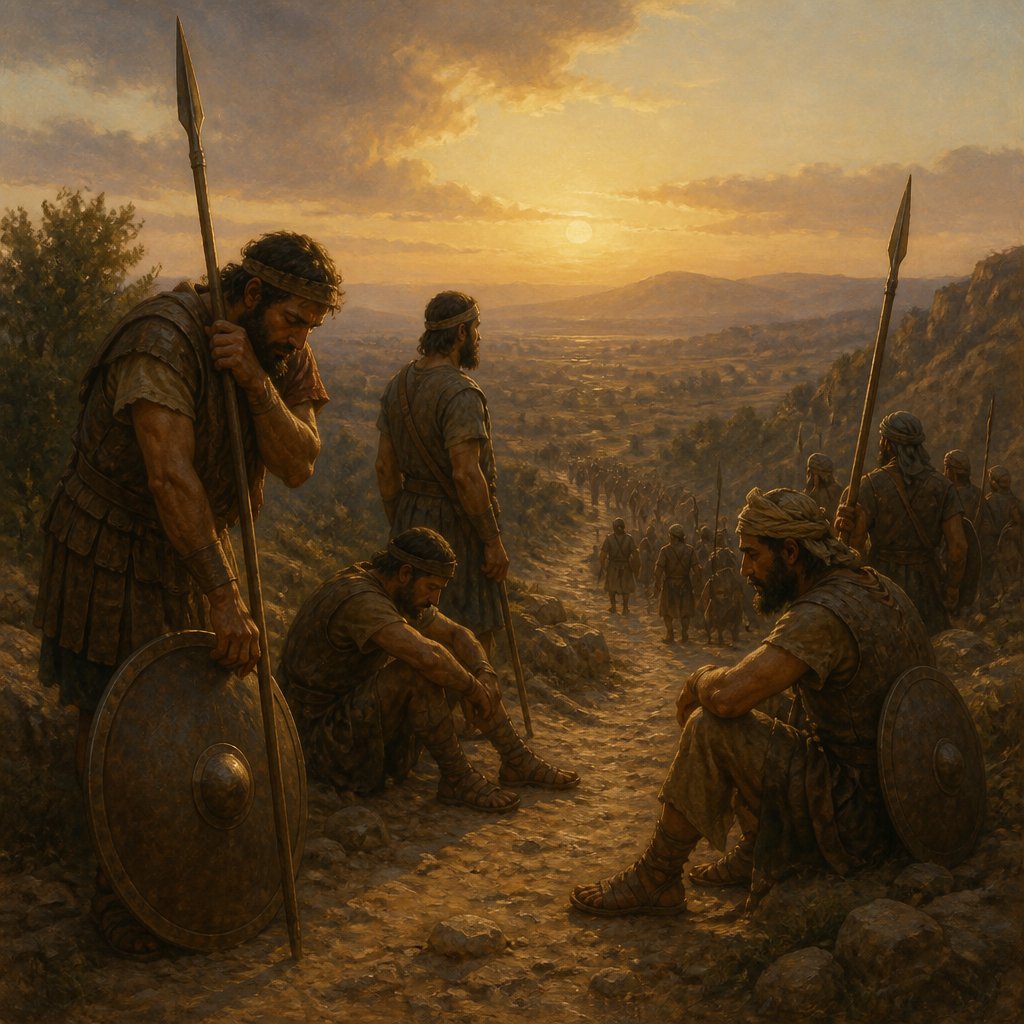
In 1 Samuel 14:31 we read, “And they smote the Philistines that day from Michmash to Aijalon: and the people were very faint.” This verse encapsulates a powerful moment in Israel’s history—a moment of decisive victory coupled with profound exhaustion. Here, we encounter the juxtaposition of triumph and fatigue, showing us that faith and human frailty often coexist in our spiritual journeys.
The historical context of this passage shines a light on the struggles faced by the Israelites. They were engaged in a fierce battle against the Philistines, a relentless and oppressive force. Saul, the anointed king of Israel, had led the charge, and with Jonathan, his son, they rallied the troops for this defining moment. They went into battle not only with swords but also with the faith that God would fight alongside them.
However, as the battle waged on, it became apparent that the soldiers were physically drained. They had been fighting hard, yet the fatigue weighed heavily upon them. Verse 31 reveals something profound about human nature and our walk of faith: even in times of great victory and divine intervention, we may find ourselves feeling faint and weary.
This resonates deeply with us today. In our modern lives, we often pursue goals and face challenges that can lead us to exert ourselves to the limit. We might fight battles against sin, familial discord, financial upheaval, or mental health concerns. As we press forward, victories might be achieved, yet often we are left feeling exhausted and spent.
We should remember that physical faintness does not invalidate our victories. As the Israelites pushed the Philistines back to Aijalon, they were reminded that their strength was not their own but a divine source empowering their actions. Similarly, we also draw our strength from God. Paul reminds us in 2 Corinthians 12:9 that God’s grace is sufficient for us, for His power is made perfect in our weakness. When we acknowledge our limitations and lean into God, we are allowing His strength to manifest in our lives.
Moreover, the verse from 1 Samuel indicates the extent of the conflict: it stretched from Michmash to Aijalon, showcasing not only the physical space conquered but also the significant commitment and dedication of these men. The names of the places themselves carry significance. Michmash was the starting point—their challenge; Aijalon, a place where they found glory in victory. This journey reflects our own lives, where we oftentimes start at a point of struggle, but through faith, prayers, and the persistence in our battles, we are led to places of victory and peace.
As we reflect on this passage, we are encouraged to remember that after the battle, when we feel faint, it is crucial to seek the restoration that God provides. Jesus invites us in Matthew 11:28, saying, “Come unto me, all ye that labour and are heavy laden, and I will give you rest.” This rest is not merely physical; it is profound spiritual renewal. In moments of exhaustion, we must turn to God, surrendering our tiredness and burdens at His feet, allowing Him to fill us with fresh strength.
Furthermore, the story of the Israelites fighting the Philistines symbolizes the spiritual warfare we face daily. Ephesians 6 calls us to put on the whole armor of God, acknowledging that our struggle is not against flesh and blood but against spiritual forces. Just as the Israelites faced their adversaries head-on, we too must confront our spiritual battles, knowing that God equips us and empowers us even in our faint moments.
Ultimately, God is the architect of our victories, and every battle we win is a testament to His faithfulness. As we encounter our own Michmashes and Aijalon experiences, let us take courage from the Israelite’s example, pressing on with persistence, relying on God’s strength, and resting in His grace when we feel faint.
Get our apps


Artwork for 1 Samuel 14:31

1 Samuel 14:31 - "And they smote the Philistines that day from Michmash to Aijalon: and the people were very faint."
"And they smote the Philistines that day from Michmash to Aijalon: and the people were very faint." - 1 Samuel 14:31
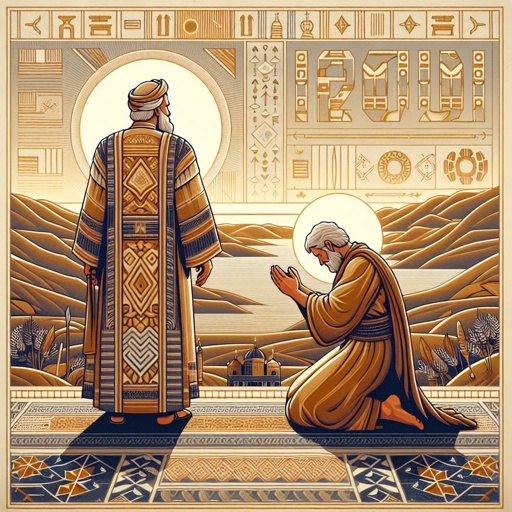
1 Samuel 15:31 - "So Samuel turned again after Saul; and Saul worshipped the LORD."

Mateo 14:31

2 Samuel 14:31 - "Then Joab arose, and came to Absalom unto his house, and said unto him, Wherefore have thy servants set my field on fire?"

1 Samuel 31:11 - "¶ And when the inhabitants of Jabesh-gilead heard of that which the Philistines had done to Saul;"

1 Samuel 14:6

1 Samuel 31:13 - "And they took their bones, and buried them under a tree at Jabesh, and fasted seven days."

1 Samuel 14:7

1 Samuel 31:3 - "And the battle went sore against Saul, and the archers hit him; and he was sore wounded of the archers."

1 Samuel 31:10 - "And they put his armour in the house of Ashtaroth: and they fastened his body to the wall of Beth-shan."

"So Samuel turned again after Saul; and Saul worshipped the LORD." - 1 Samuel 15:31

1 Samuel 31:6 - "So Saul died, and his three sons, and his armourbearer, and all his men, that same day together."

1 Samuel 14:27
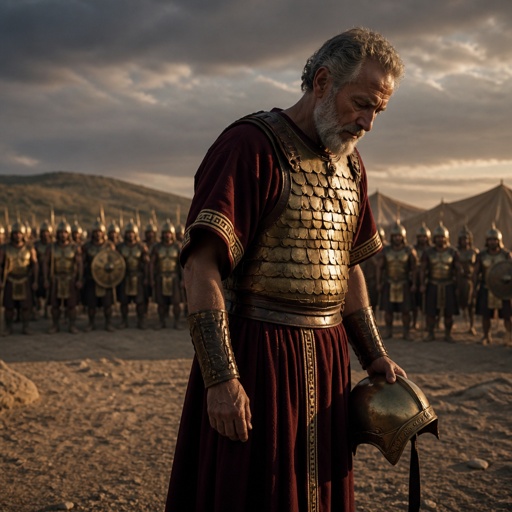
1 Samuel 13:14

2 Samuel 6:14

1 Samuel 31:1 - "Now the Philistines fought against Israel: and the men of Israel fled from before the Philistines, and fell down slain in mount Gilboa."

1 Samuel 11:14 - "Then said Samuel to the people, Come, and let us go to Gilgal, and renew the kingdom there."

1 Samuel 31:5 - "And when his armourbearer saw that Saul was dead, he fell likewise upon his sword, and died with him."

1 Samuel 17:31 - "And when the words were heard which David spake, they rehearsed them before Saul: and he sent for him."
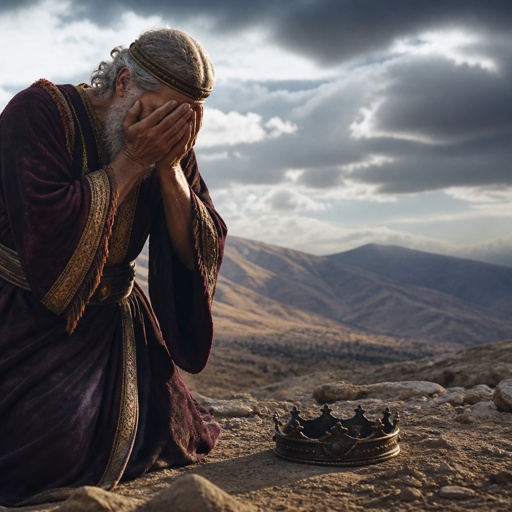
1 Samuel 13:13-14

1 Samuel 17:14 - "And David was the youngest: and the three eldest followed Saul."
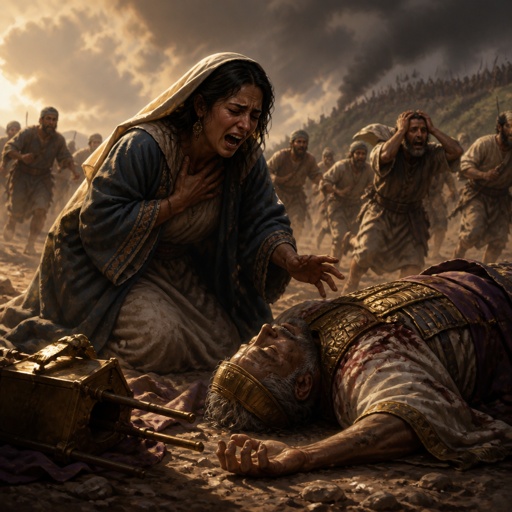
1 Samuel 4:14-16

1 Samuel 30:31 - "And to them which were in Hebron, and to all the places where David himself and his men were wont to haunt."

1 Samuel 15:14 - "And Samuel said, What meaneth then this bleating of the sheep in mine ears, and the lowing of the oxen which I hear?"
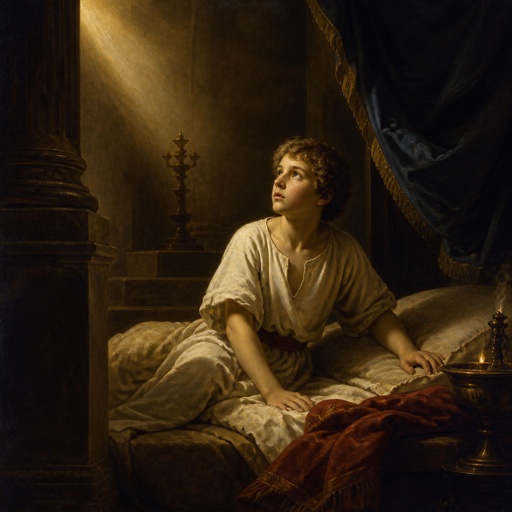
1 Samuel 3:1

1 Samuel 3:1

1 Samuel 31:8 - "And it came to pass on the morrow, when the Philistines came to strip the slain, that they found Saul and his three sons fallen in mount Gilboa."

1 Samuel 31:2 - "And the Philistines followed hard upon Saul and upon his sons; and the Philistines slew Jonathan, and Abinadab, and Malchi-shua, Saul's sons."

1 Corinthians 14:31 - "For ye may all prophesy one by one, that all may learn, and all may be comforted."