Covenant Remembrance: The Significance of the Passover
“And they killed the passover, and the priests sprinkled the blood from their hands, and the Levites flayed them.” — 2 Chronicles 35:11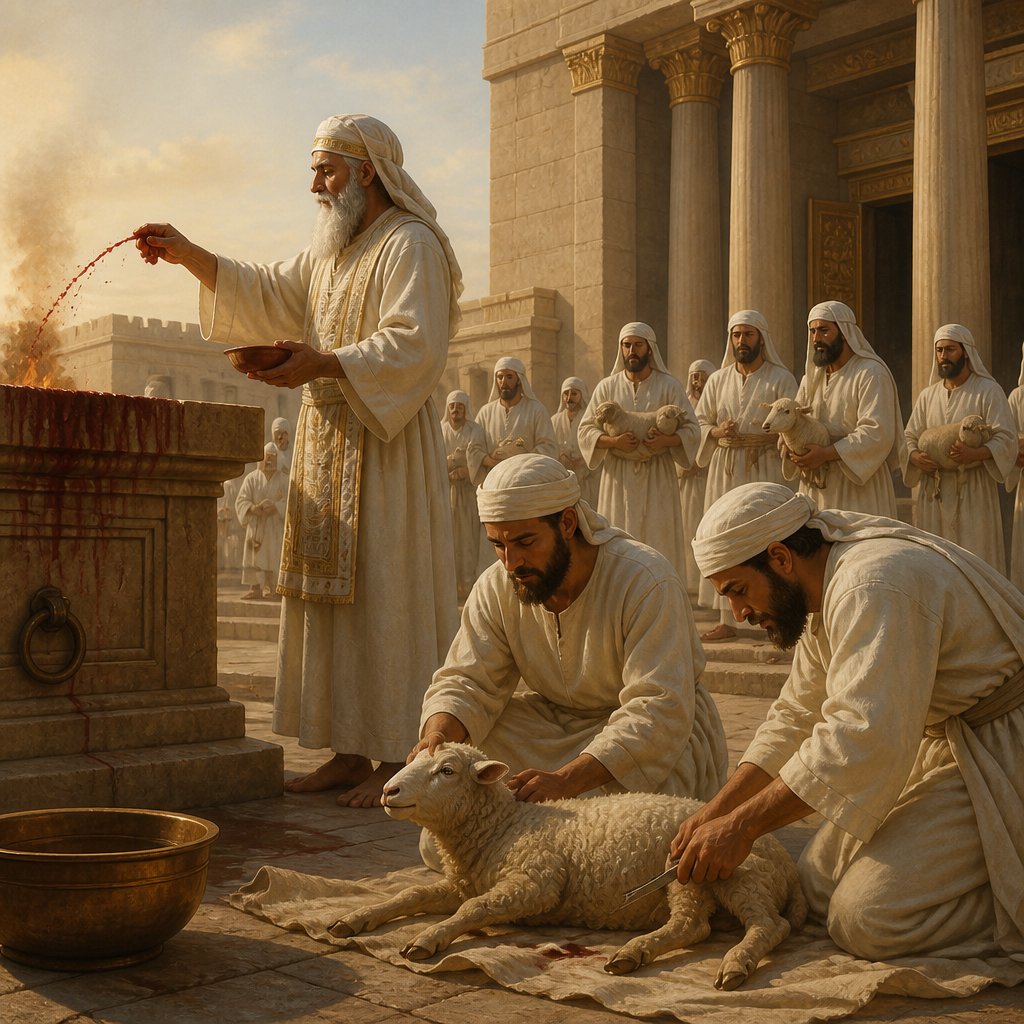
As we delve into 2 Chronicles 35:11, "And they killed the passover, and the priests sprinkled the blood from their hands, and the Levites flayed them," we find a powerful illustration of obedience, sacrifice, and the covenant that God established with His people. This verse captures a pivotal moment in Israel’s history during the reign of King Josiah when the nation gathered to celebrate the Passover. The practices described here remind us of the profound history and significance surrounding this solemn event.
The Passover holds a unique place in the heart of Jewish tradition, commemorating the Exodus of the Israelites from Egypt. It was not merely a remembrance of physical deliverance from slavery but, more importantly, a remembrance of spiritual salvation. In the Book of Exodus, God instructed the Israelites to kill a lamb, smear its blood on their doorposts, and eat the flesh in haste, so that when the angel of death passed over the land of Egypt, it would spare them. This intricate ritual was steeped in symbolism - the blood of the lamb is often associated with protection, redemption, and the price of deliverance.
In 2 Chronicles 35, this blood-sprinkling by the priests signifies several layers of meaning. First, it emphasizes the role of the priesthood in mediating between God and the people. The act of sprinkling blood represents a critical aspect of worship and covenant relationship. Through their actions, the priests affirmed that life is found in sacrifice, and it is through the shedding of blood that atonement is made. This sacrificial act was not just about the physical killing of the lamb but was symbolically preparing the way for the ultimate sacrifice Jesus Christ would make centuries later. The New Testament clarifies this in Hebrews 9:22, stating, "And almost all things are by the law purged with blood; and without shedding of blood is no remission."
The Levites' role in flaying the lamb conveys their importance in maintaining the holiness of the sacrifice. They were responsible for the care and preparation of the offerings, and in doing so, they demonstrated the proper approach to worship. It illustrates that worship is not a casual affair but a serious commitment that demands reverence and preparation. This can serve as a gentle reminder to us about the importance of approaching our worship with the right heart and intention. As we prepare our hearts for worship, we should remember that it is an act of dedicating ourselves wholly to God, acknowledging His worthiness to be praised.
King Josiah’s dedication to refreshing the Passover observance underlines the importance of remembering God's faithfulness. This historical context reveals a king who was not only aware of the people's past but was determined to lead them in a renewal of the covenant with God. In our lives today, we too are called to revisit the monumental acts of God in our history - to reflect, repent, and renew our commitment to Him. This could be through regular communion, personal devotion, or community worship – all signifying our remembrance of Christ’s sacrifice.
As we apply this to our modern Christian lives, it is essential to embrace the truth of unity in Christ. The Passover was a communal experience, and the Church today is called to gather and celebrate the life we have in Jesus together. As we consider this verse, let us be reminded of the beautiful interconnectedness of sacrifice, faithfulness, and remembrance.
Ultimately, let us not forget that the sprinkling of blood and the flaying of the lamb were more than just practices in the temple; they symbolize our own lives, called to sacrifice in service to God and each other. Like the lamb, we are called to present ourselves as living sacrifices, holy and acceptable unto God. In our reflection on this pivotal moment in scripture, may we be compelled to honor our covenant with God and celebrate the ultimate Passover Lamb, Jesus Christ, who brings us redemption and life eternal.
Get our apps


Artwork for 2 Chronicles 35:11

2 Chronicles 35:11

"And they killed the passover, and the priests sprinkled the blood from their hands, and the Levites flayed them." - 2 Chronicles 35:11

1 Chronicles 11:35 - "Ahiam the son of Sacar the Hararite, Eliphal the son of Ur,"
2 Chronicles 35:23

2 Chronicles 35:10

2 Chronicles 35:2 - "And he set the priests in their charges, and encouraged them to the service of the house of the LORD,"

2 Chronicles 35:19 - "In the eighteenth year of the reign of Josiah was this passover kept."

2 Chronicles 6:35 - "Then hear thou from the heavens their prayer and their supplication, and maintain their cause."

2 Chronicles 35:27 - "And his deeds, first and last, behold, they are written in the book of the kings of Israel and Judah."

"Ahiam the son of Sacar the Hararite, Eliphal the son of Ur," - 1 Chronicles 11:35

2 Chronicles 35:10 - "So the service was prepared, and the priests stood in their place, and the Levites in their courses, according to the king's commandment."

2 Chronicles 35:26 - "Now the rest of the acts of Josiah, and his goodness, according to that which was written in the law of the LORD,"

2 Chronicles 35:17 - "And the children of Israel that were present kept the passover at that time, and the feast of unleavened bread seven days."

1 Chronicles 2:35 - "And Sheshan gave his daughter to Jarha his servant to wife; and she bare him Attai."

2 Chronicles 35:1 - "Moreover Josiah kept a passover unto the LORD in Jerusalem: and they killed the passover on the fourteenth day of the first month."

2 Chronicles 35:5 - "And stand in the holy place according to the divisions of the families of the fathers of your brethren the people, and after the division of the families of the Levites."

2 Chronicles 20:35 - "¶ And after this did Jehoshaphat king of Judah join himself with Ahaziah king of Israel, who did very wickedly:"

2 Chronicles 35:6 - "So kill the passover, and sanctify yourselves, and prepare your brethren, that they may do according to the word of the LORD by the hand of Moses."

2 Chronicles 35:23 - "And the archers shot at king Josiah; and the king said to his servants, Have me away; for I am sore wounded."

"In the eighteenth year of the reign of Josiah was this passover kept." - 2 Chronicles 35:19

2 Chronicles 11:20

2 Chronicles 11:2 - "But the word of the LORD came to Shemaiah the man of God, saying,"

2 Chronicles 11:8 - "And Gath, and Mareshah, and Ziph,"

2 Chronicles 11:9 - "And Adoraim, and Lachish, and Azekah,"

"And he set the priests in their charges, and encouraged them to the service of the house of the LORD," - 2 Chronicles 35:2

2 Chronicles 11:7 - "And Beth-zur, and Shoco, and Adullam,"

2 Chronicles 35:4 - "And prepare yourselves by the houses of your fathers, after your courses, according to the writing of David king of Israel, and according to the writing of Solomon his son."

2 Chronicles 35:13 - "And they roasted the passover with fire according to the ordinance: but the other holy offerings sod they in pots, and in caldrons, and in pans, and divided them speedily among all the people."

2 Chronicles 35:12 - "And they removed the burnt offerings, that they might give according to the divisions of the families of the people, to offer unto the LORD, as it is written in the book of Moses. And so did they with the oxen."

2 Chronicles 11:11 - "And he fortified the strong holds, and put captains in them, and store of victual, and of oil and wine."