Sons of Destiny: Reflections on David’s Legacy
“And unto David were sons born in Hebron: and his firstborn was Amnon, of Ahinoam the Jezreelitess;” — 2 Samuel 3:2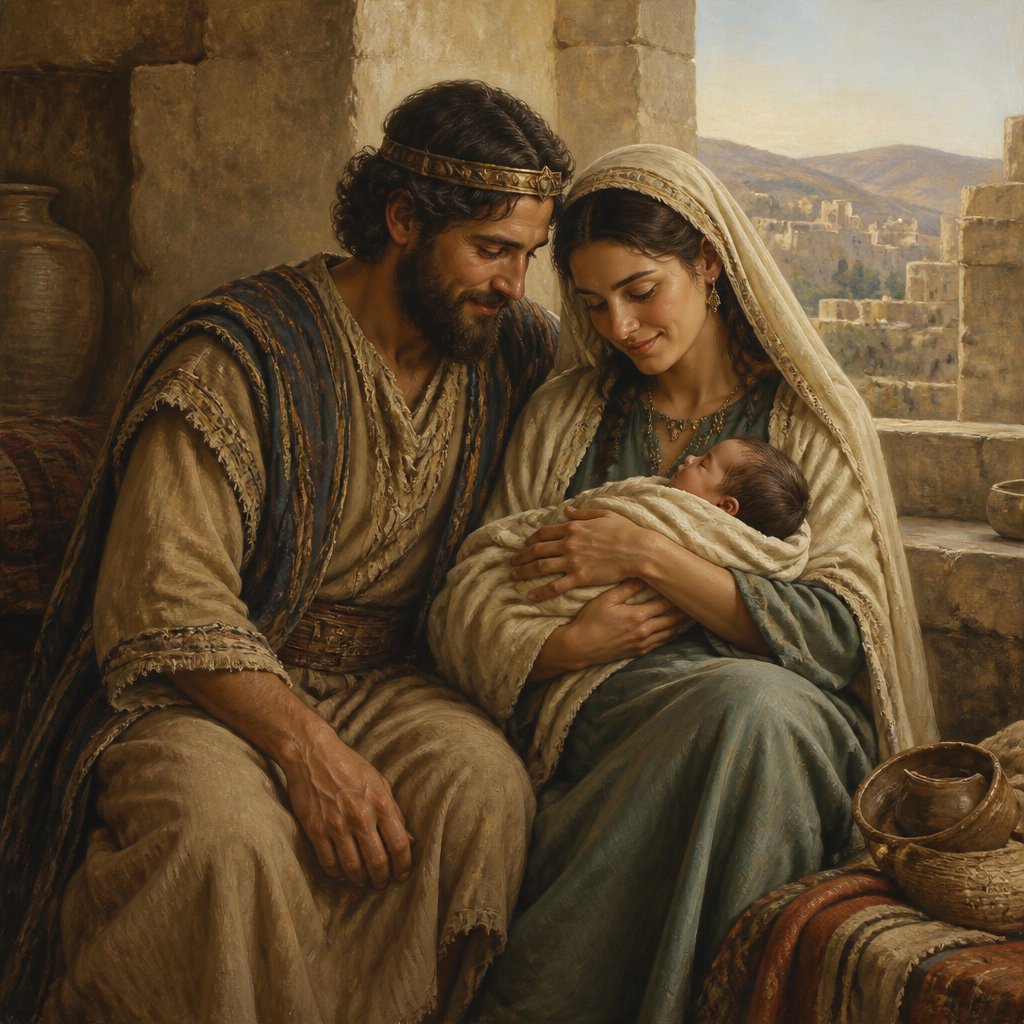
In the rich and intricate tapestry of biblical history, few figures stand as prominently as King David. His life is marked by victories, tragedies, and profound lessons on faith, leadership, and the human experience. The verse from 2 Samuel 3:2 captures a significant aspect of David's life that often goes unnoticed: "And unto David were sons born in Hebron: and his firstborn was Amnon, of Ahinoam the Jezreelitess" (KJV). Although this verse may appear as a simple genealogical record, it invites a deeper exploration into the themes of purpose, heritage, and the unfolding of God’s plan in our lives.
At first glance, this passage introduces us to Amnon, David's firstborn son, born during his reign in Hebron. Perhaps we can look at Hebron not merely as a location but a symbol of a transitional phase in David's life—where his past meets the promise of his future. David had been anointed king; however, he had not yet fully realized the kingdom he was destined to govern. In this period of waiting and preparation, the arrival of his sons bore witness to the unfolding of God's covenant promise.
Each child represents not just an offspring but a legacy. Amnon, being the firstborn, holds a special significance, carrying the weight of expectation. However, as we progress through David's narrative, we learn that Amnon's story is marred by sin and tragedy (2 Samuel 13). He is infamous for his illicit actions against his half-sister, Tamar, and his subsequent murder at the hands of Absalom, his brother. This complex family dynamic serves as a striking reminder of the duality of life—how even those chosen and anointed can experience deep flaws and failures.
As we ponder these events, we also must remember that David was not just a figure of triumph but also one filled with human frailty. His own sins—adultery with Bathsheba and the orchestrated death of Uriah—serve to paint a fuller picture of David’s humanity. Within this narrative lies a deeper theological truth: our families, like our lives, are often a mixture of divine purposes intertwined with human brokenness. Just as David brought forth sons despite his flaws, we too are called to raise and nurture the generations that follow us, often amid our own imperfections.
Moreover, this verse invites us to reflect on the importance of our heritage. David’s lineage was significant; it was through him that the Messiah would come. This foundational truth gives powerful hope that God orchestrates even our seemingly mundane or flawed family dynamics for His greater purpose. In the complexity of our own legacies—be it joy, ruin, or a blend of both—there lies an opportunity for redemption and purpose.
In this moment of contemplation, we can ask ourselves: What legacy are we leaving behind? How are we nurturing the potential of those who come after us? Just as David’s life was marked by trials and triumphs, we too can model resilience and faithfulness in our families and communities. Recognizing that our stories, intertwined with others', can contribute to a larger narrative of God’s work in the world invites us to live intentionally.
Let us embrace the truth that our journeys—even those marked by mistakes—can still lead to significant legacies. As we nurture the ‘sons and daughters’ in our lives, may we inspire them not only through our successes but also through our redemptive comebacks and faithful perseverance. God sees your lineage and can use every part of it, the glorious and the flawed, to fulfill His promises. With each new generation, may we build a heritage that echoes faithfulness, love, and grace.
Get our apps


Artwork for 2 Samuel 3:2

2 Samuel 3:2 - "¶ And unto David were sons born in Hebron: and his firstborn was Amnon, of Ahinoam the Jezreelitess;"
"¶ And unto David were sons born in Hebron: and his firstborn was Amnon, of Ahinoam the Jezreelitess;" - 2 Samuel 3:2

2 Samuel 2:3 - "And his men that were with him did David bring up, every man with his household: and they dwelt in the cities of Hebron."

2 Samuel 4:3 - "And the Beerothites fled to Gittaim, and were sojourners there until this day.)"

2 Samuel 3:4 - "And the fourth, Adonijah the son of Haggith; and the fifth, Shephatiah the son of Abital;"

2 Samuel 3:33 - "And the king lamented over Abner, and said, Died Abner as a fool dieth?"

2 Samuel 3:5 - "And the sixth, Ithream, by Eglah David's wife. These were born to David in Hebron."

2 Samuel 3:3 - "And his second, Chileab, of Abigail the wife of Nabal the Carmelite; and the third, Absalom the son of Maacah the daughter of Talmai king of Geshur;"

2 Samuel 7:3 - "And Nathan said to the king, Go, do all that is in thine heart; for the LORD is with thee."

2 Samuel 3:11 - "And he could not answer Abner a word again, because he feared him."

2 Samuel 3:37 - "For all the people and all Israel understood that day that it was not of the king to slay Abner the son of Ner."

2 Samuel 14:3 - "And come to the king, and speak on this manner unto him. So Joab put the words in her mouth."

2 Samuel 3:36 - "And all the people took notice of it, and it pleased them: as whatsoever the king did pleased all the people."

2 Samuel 3:15 - "And Ish-bosheth sent, and took her from her husband, even from Phaltiel the son of Laish."

2 Samuel 3:38 - "And the king said unto his servants, Know ye not that there is a prince and a great man fallen this day in Israel?"

2 Samuel 3:6 - "¶ And it came to pass, while there was war between the house of Saul and the house of David, that Abner made himself strong for the house of Saul."

2 Samuel 11:3 - "And David sent and enquired after the woman. And one said, Is not this Bath-sheba, the daughter of Eliam, the wife of Uriah the Hittite?"

2 Samuel 19:3 - "And the people gat them by stealth that day into the city, as people being ashamed steal away when they flee in battle."

2 Samuel 3:17 - "¶ And Abner had communication with the elders of Israel, saying, Ye sought for David in times past to be king over you:"

2 Samuel 3:32 - "And they buried Abner in Hebron: and the king lifted up his voice, and wept at the grave of Abner; and all the people wept."

2 Samuel 15:3 - "And Absalom said unto him, See, thy matters are good and right; but there is no man deputed of the king to hear thee."

2 Samuel 13:3 - "But Amnon had a friend, whose name was Jonadab, the son of Shimeah David's brother: and Jonadab was a very subtil man."

2 Samuel 3:30 - "So Joab and Abishai his brother slew Abner, because he had slain their brother Asahel at Gibeon in the battle."

2 Samuel 8:3 - "¶ David smote also Hadadezer, the son of Rehob, king of Zobah, as he went to recover his border at the river Euphrates."

2 Samuel 3:20 - "So Abner came to David to Hebron, and twenty men with him. And David made Abner and the men that were with him a feast."

2 Samuel 3:1 - "Now there was long war between the house of Saul and the house of David: but David waxed stronger and stronger, and the house of Saul waxed weaker and weaker."

2 Samuel 3:9 - "So do God to Abner, and more also, except, as the LORD hath sworn to David, even so I do to him;"

2 Samuel 23:3 - "The God of Israel said, the Rock of Israel spake to me, He that ruleth over men must be just, ruling in the fear of God."

2 Samuel 3:10 - "To translate the kingdom from the house of Saul, and to set up the throne of David over Israel and over Judah, from Dan even to Beer-sheba."

2 Samuel 3:16 - "And her husband went with her along weeping behind her to Bahurim. Then said Abner unto him, Go, return. And he returned."