A Kingdom Not of This World: Embracing Our True Allegiance
"Whom Jason hath received: and these all do contrary to the decrees of Caesar, saying that there is another king, one Jesus." - Acts 17:7
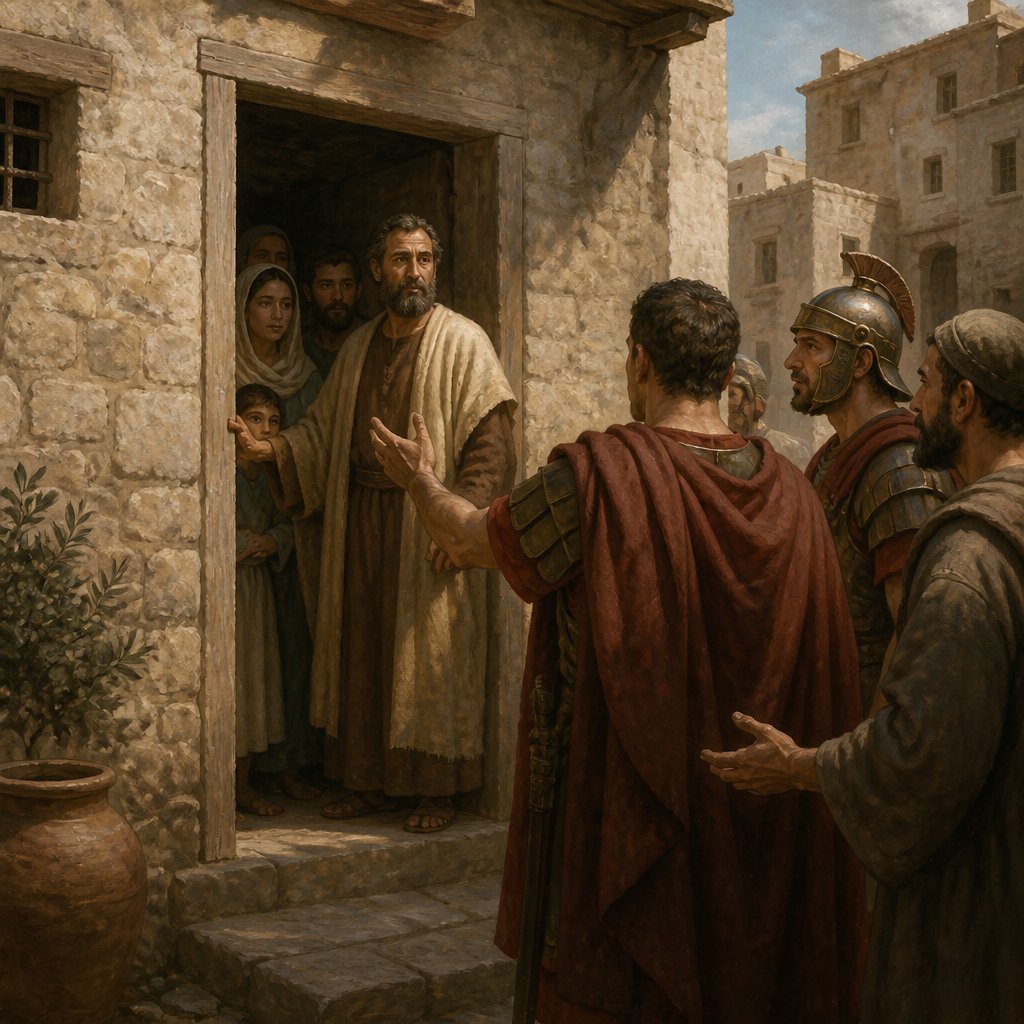
In Acts 17:7, we come across a significant moment in the early church's struggle against the prevailing cultural and political powers of the time. The verse states, "Whom Jason hath received: and these all do contrary to the decrees of Caesar, saying that there is another king, one Jesus." This statement serves not just as an accusation against Paul and Silas, who were spreading the gospel, but also as a powerful declaration of the radical nature of their message.
To understand the weight of this verse, we must first recognize the context of the early church. Following the resurrection of Christ, the disciples were no longer just followers of a new religious movement; they were proclaiming a new reality—the lordship of Jesus over all creation. In a Roman society where allegiance was pledged to Caesar as the divine emperor, claiming that another king existed was audacious and countercultural. The followers of Christ were not just challenging local authorities, but also the very fabric of societal norms that revered Caesar as the ultimate authority.
When Jason received Paul and Silas into his home, it symbolized the welcoming of a new idea, a new order that was wholly different from that of the Roman Empire. By accepting these missionaries, Jason was aligning himself with the nascent Christian movement, and as a result, he was putting himself in jeopardy. The risk he took shows the radical commitment required to follow Christ.
Let us reflect on the implications of claiming that there is 'another king.' In our modern context, we may not live under an emperor who demands our allegiance in such a direct and pronounced manner. However, we, too, inhabit a world full of kings and dominions: wealth, power, societal acceptance, or even personal ambition can hold sway over our hearts. The daring proclamation of the early church invites us to question the authorities we choose to serve and define our commitments.
By declaring Jesus as King, we are acknowledging His sovereignty over every aspect of our lives, from our personal decisions to our deep convictions about morality, justice, and purpose. Jesus' kingship asks for loyalty that defies the normative expectations of our culture. It encourages us to stand up for truth in times when society may push us towards conformity.
One aspect of the early church’s commitment to declaring Jesus as king was their readiness for persecution and suffering. By opposing the decrees of Caesar, they faced hostility and imprisonment. Knowing this, we are called to explore the depths of our own faith and consider how far we would go to stand for Jesus in a world that often stands against Him. Are we willing to face social ostracism, job loss, or familial strife in pursuit of God's kingdom?
Moreover, the phrase 'another king' encapsulates the fundamental message of the Gospel: it invites all to enter the kingdom of God, which is characterized by love, justice, and mercy—not by oppression or fear. Instead of a tyrant, we follow a King who laid down His life for His subjects. This is the essence of Jesus' kingship: He reigns not by force or intimidation but through grace and sacrifice. Thus, we are called to embody this Kingdom by being agents of love, truth, and reconciliation in our own spheres of influence.
As we meditate on Acts 17:7, let us ask ourselves: Who or what holds the throne of our hearts? To whom do our lives bear witness? In a world that often prioritizes the decrees of money, power, and fame, let us choose to place our faith in Jesus, allowing His life and teachings to shape our actions and decisions.
In conclusion, embracing the lofty declaration that ‘there is another king, one Jesus’ within our lives requires courage. It challenges us to live counter to the norms around us and be willing to stand firm in our faith. May we take inspiration from Jason and the early believers, setting aside all that vies for our allegiance, and steadfastly proclaim the truth of Christ's lordship over every corner of our lives.
Want to reflect more on Acts 17:7?
Continue your spiritual journey with Bible Chat — an AI-powered tool for exploring God's Word through conversation. Ask questions, discover connections, and deepen your understanding.
Get Our Apps


Acts 17:7 Artwork

Acts 17:7 - "Whom Jason hath received: and these all do contrary to the decrees of Caesar, saying that there is another king, one Jesus."
"Whom Jason hath received: and these all do contrary to the decrees of Caesar, saying that there is another king, one Jesus." - Acts 17:7

Acts 7:17 - "But when the time of the promise drew nigh, which God had sworn to Abraham, the people grew and multiplied in Egypt,"

Acts 2:17

Acts 2:17

Acts 2:17

Acts 16:17

Acts 17:15

Acts 14:17

Acts 17:27

"But when the time of the promise drew nigh, which God had sworn to Abraham, the people grew and multiplied in Egypt," - Acts 7:17

Acts 17:17 - "Therefore disputed he in the synagogue with the Jews, and with the devout persons, and in the market daily with them that met with him."

Acts 3:6-7

Acts 3:6-7

Acts 3:6-7

Acts 3:6-7

Acts 3:6-7

Acts 17:33 - "So Paul departed from among them."

Acts 8:17 - "Then laid they their hands on them, and they received the Holy Ghost."

Acts 17:8 - "And they troubled the people and the rulers of the city, when they heard these things."

Acts 1:17 - "For he was numbered with us, and had obtained part of this ministry."

Acts 14:7 - "And there they preached the gospel."

create an image to show Acts 2:17

Depict the events of Acts 19:14-17

Acts 20:17 - "¶ And from Miletus he sent to Ephesus, and called the elders of the church."

acts 20:7-12

Acts 17:9 - "And when they had taken security of Jason, and of the other, they let them go."

Acts 7:47 - "But Solomon built him an house."

John 7:17-18

John 7:17-18