Embracing the Wilderness: Lessons from Moses in Madian
“Then fled Moses at this saying, and was a stranger in the land of Madian, where he begat two sons.” — Acts 7:29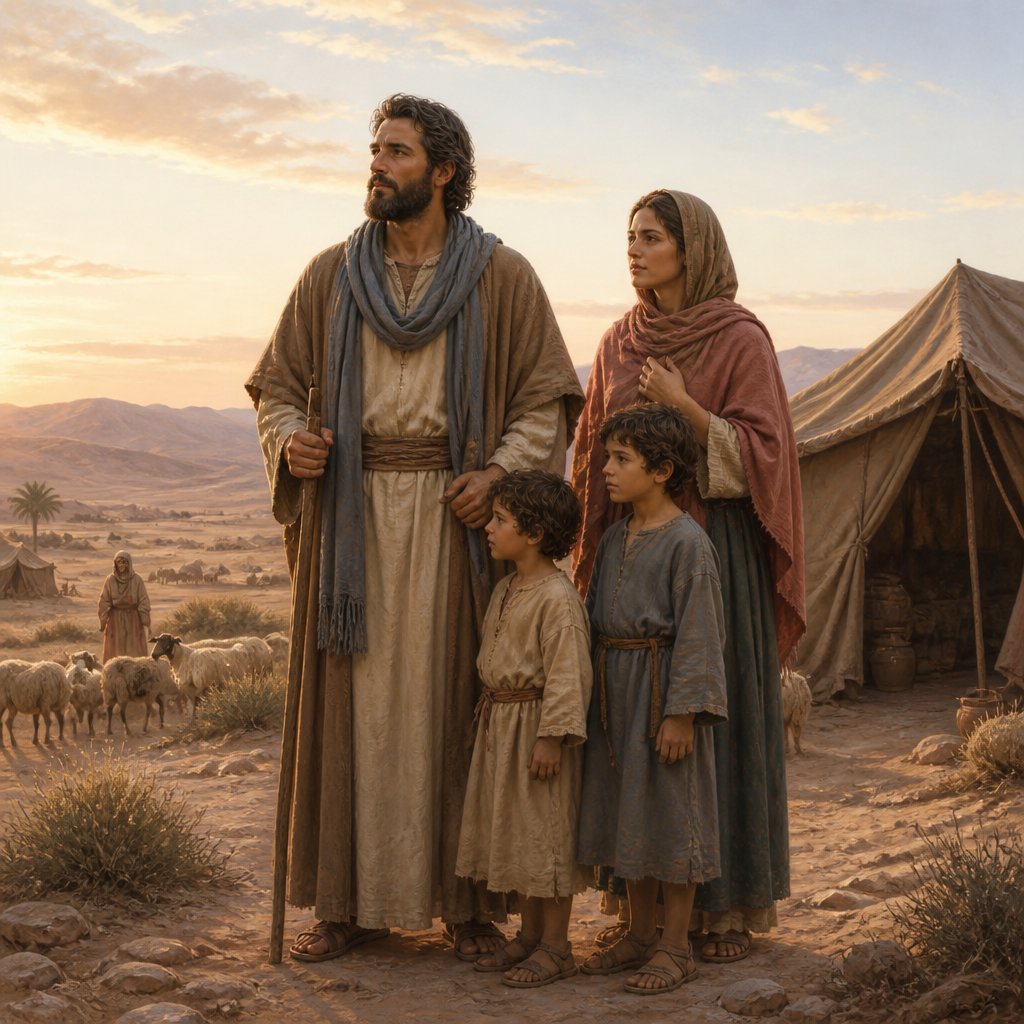
Moses, a name synonymous with leadership, faith, and deliverance, has a story rich with lessons that echo through the ages. Acts 7:29 (KJV) states: "Then fled Moses at this saying, and was a stranger in the land of Madian, where he begat two sons." This verse encapsulates a critical moment in the life of Moses—a moment of flight, alienation, and eventual transformation.
As we delve into the context of this verse, we must return to the preceding events. Moses, raised in the court of Pharaoh, identified with his Hebrew roots and felt the injustice of his people’s suffering. In a momentary lapse of judgment and in the heat of anger, he took the life of an Egyptian who was mistreating a Hebrew slave. This act set into motion a series of events that would lead him to flee Egypt, leaving behind a life of privilege for an uncertain future.
In fleeing to Madian, we find Moses in the wilderness—both literally and metaphorically. The wilderness of Madian can be seen as a place of estrangement. It is here that Moses found himself as a stranger, a new identity shaped by the choices he had made. Stripped of the accolades and comforts of the palace, he was reduced to the humble status of a shepherd, tending to the flocks of Jethro, a priest of Midian. This was not an easy transition; however, it was necessary for the molding of a leader.
Being a stranger in a foreign land is often reflective of our spiritual journey. God’s ways can lead us into unfamiliar territories—places of discomfort, doubt, and dislocation. It is in these spaces that we are often called to confront our fears, failures, and the full weight of God's call on our lives. Moses, in his alienation and obscurity, found God shaping him for his ultimate purpose. Here, he learned patience, reliance on God, and the tender heart of a shepherd—all vital traits for the leader he was destined to become.
Moreover, the act of "begatting" two sons in Madian signifies more than just family growth; it symbolizes a new beginning. In this wilderness, Moses not only learned to live differently but also to plant roots. His sons, Gershom and Eliezer, would carry forward the legacy of a man who learned the profound lesson of being called out to lead through personal experience of suffering and redemption.
Moses’ time in Madian teaches us that every wilderness we enter—whether self-imposed or divinely ordained—is laden with opportunities. It is within these unfamiliar places that God forges our character, honing our skills for the work He has for us. The wilderness is not merely a phase to endure; it is a sanctified space for growth. It is here, in solitude away from the noise of society and expectation, that we encounter God in unexpected ways.
As we reflect on Acts 7:29, we are invited to ask ourselves: What wildernesses are we currently navigating? Are we resisting this season of estrangement, or could it be the very thing God is using to prepare us for our next step in His plan?
Let us embrace the wilderness moments, seeking God’s presence amid our trials. Just as Moses was transformed in the land of Madian, so too can we learn to see our struggles and uncertainties as essential to our spiritual journey. In these times, we remember that God is not absent; rather, He is often crafting us into vessels of His grace, ready to be used for His glory at the appointed time. Thus, we are encouraged to trust that in our wandering, the Lord is leading us toward our destiny.
Get our apps


Artwork for Acts 7:29

Acts 7:29 - "Then fled Moses at this saying, and was a stranger in the land of Madian, where he begat two sons."
"Then fled Moses at this saying, and was a stranger in the land of Madian, where he begat two sons." - Acts 7:29

put on a scroll acts 15:29

1 Chronicles 29:29 - "Now the acts of David the king, first and last, behold, they are written in the book of Samuel the seer, and in the book of Nathan the prophet, and in the book of Gad the seer,"

Acts 8:29 - "Then the Spirit said unto Philip, Go near, and join thyself to this chariot."

Numbers 29:7

Genesis 29-7

Acts 16:29 - "Then he called for a light, and sprang in, and came trembling, and fell down before Paul and Silas,"

Acts 3:6-7

Acts 3:6-7

Acts 3:6-7

Acts 3:6-7

Acts 3:6-7

Acts 5:29 - "¶ Then Peter and the other apostles answered and said, We ought to obey God rather than men."

Acts 28:29 - "And when he had said these words, the Jews departed, and had great reasoning among themselves."

Matthew 7:24-29

Matthew 7:24-29

1 Kings 14:29 - "¶ Now the rest of the acts of Rehoboam, and all that he did, are they not written in the book of the chronicles of the kings of Judah?"

Acts 9:29 - "And he spake boldly in the name of the Lord Jesus, and disputed against the Grecians: but they went about to slay him."

Acts 20:29 - "For I know this, that after my departing shall grievous wolves enter in among you, not sparing the flock."

Acts 21:29 - "(For they had seen before with him in the city Trophimus an Ephesian, whom they supposed that Paul had brought into the temple.)"

Acts 14:7 - "And there they preached the gospel."

Acts 23:29 - "Whom I perceived to be accused of questions of their law, but to have nothing laid to his charge worthy of death or of bonds."

Acts 4:29 - "And now, Lord, behold their threatenings: and grant unto thy servants, that with all boldness they may speak thy word,"

Acts 13:29 - "And when they had fulfilled all that was written of him, they took him down from the tree, and laid him in a sepulchre."

Acts 11:29 - "Then the disciples, every man according to his ability, determined to send relief unto the brethren which dwelt in Judaea:"

Psalms 29:7 - "The voice of the LORD divideth the flames of fire."

Acts 27:29 - "Then fearing lest we should have fallen upon rocks, they cast four anchors out of the stern, and wished for the day."

2 Samuel 7:1–29

acts 20:7-12