The Year of Release: A Divine Invitation to Freedom
“At the end of every seven years thou shalt make a release.” — Deuteronomy 15:1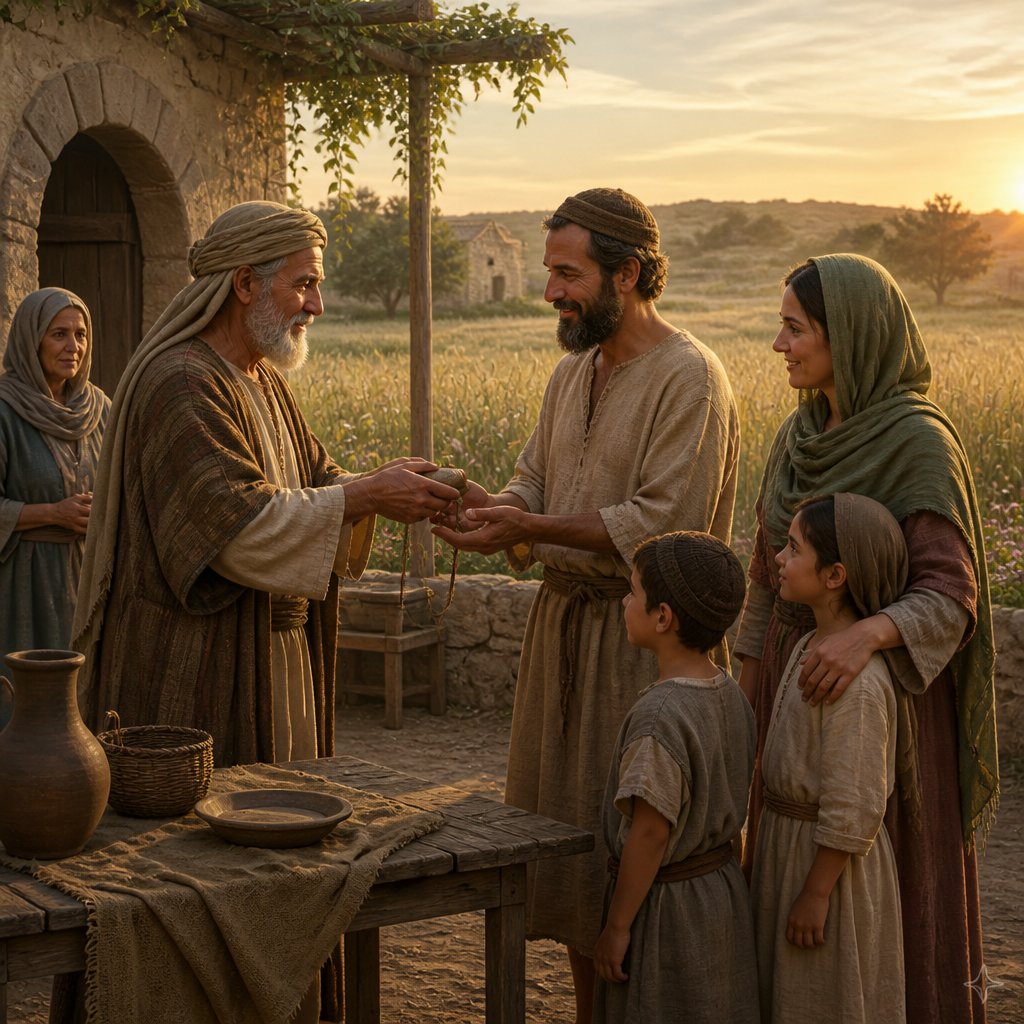
Deuteronomy 15:1 states, "At the end of every seven years thou shalt make a release." Within this simple directive, there lies an expansive theological principle that speaks to the heart of God’s grace, mercy, and justice. The practice of releasing debts every seven years is not only a social law for the Israelites, but it is also a profound lesson for us today about the nature of God’s Kingdom.
The context of this command is rooted in the Mosaic Covenant, where God outlines the social fabric of Israelite society. The seventh year, termed the "Year of Release," was an intentional time set apart by God for the community to experience renewed freedom, both materially and spiritually. In a society where debts could accumulate and lead to generational bondage, the command to release was a drastic but merciful act, providing an opportunity for restoration and preventing the cycle of poverty from become entrenched.
The principle of release serves several purposes. First, it reminds us of the notion that everything we have ultimately belongs to God. During the sixth year, a farmer may have experienced a bountiful harvest, leading him to accumulate wealth and debts. But when the seventh year arrived, all debts were forgiven, and ownership was reinstated. This required faith, trust, and a recognition that God sustains us, not merely our own efforts. It is a striking reminder to us today that God is our provider and sustainer, and we are called to live with an open hand, releasing some of what we have back into His Temple and to those in need.
Second, the Year of Release serves as a testament to God’s desire for community. In redistributing wealth, the community was invited to practice care for one another, recognizing that every person has value and deserves dignity. The act of forgiving debts allowed families to begin anew, free from burdens that could stifle their potential. In our contemporary world, where the gaps between the wealthy and the poor seem to widen, God’s invitation to release is just as pertinent. It beckons us to extend our hands in generosity, understanding that when we release what we have, we become a channel of God’s grace in the lives of others, reflecting a community built on love and support.
Moreover, the commandment directs our hearts towards forgiveness. Just as physical debts were forgiven, so too are the spiritual debts we hold against one another. Jesus echoes this in Matthew 6:12, when He teaches us to pray, "And forgive us our debts, as we forgive our debtors." The Year of Release calls us to embrace a lifestyle of forgiveness—letting go of grudges and resentments that can burden our hearts and souls.
We must also notice the timing of this release. Number seven biblically represents completion or perfection. The seven-year cycle reveals God’s intention for His creation—not to create burdens and chains but to cultivate liberty and rest. Life in Christ is meant to be a life of freedom. In Galatians 5:1, we read, "Stand fast therefore in the liberty wherewith Christ hath made us free, and be not entangled again with the yoke of bondage." This calls us to evaluate if we regularly practice releases, whether financial, emotional, or spiritual.
In conclusion, Deuteronomy 15:1 is not merely a statute from ancient Israel; rather, it is an enduring challenge that urges a deeper practice in our discipleship. It compels us to examine our lives: Are we holding tightly to our possessions, our grievances, or our past? Or are we living as examples of the grace extended to us, continually forgiving, letting go, and restoring? As we reflect on the Year of Release, may we embrace the generous spirit of our God, who invites us into a cycle of renewal, freedom, and community, trusting that in every release, we find the fullness of His grace. Amen.
Get our apps


Artwork for Deuteronomy 15:1

Deuteronomy 15:1 - "At the end of every seven years thou shalt make a release."
"At the end of every seven years thou shalt make a release." - Deuteronomy 15:1

Deuteronomy 3:15 - "And I gave Gilead unto Machir."

Deuteronomy 14:15 - "And the owl, and the night hawk, and the cuckow, and the hawk after his kind,"

Deuteronomy 33:15 - "And for the chief things of the ancient mountains, and for the precious things of the lasting hills,"

Deuteronomy 15:15 - "And thou shalt remember that thou wast a bondman in the land of Egypt, and the LORD thy God redeemed thee: therefore I command thee this thing to day."
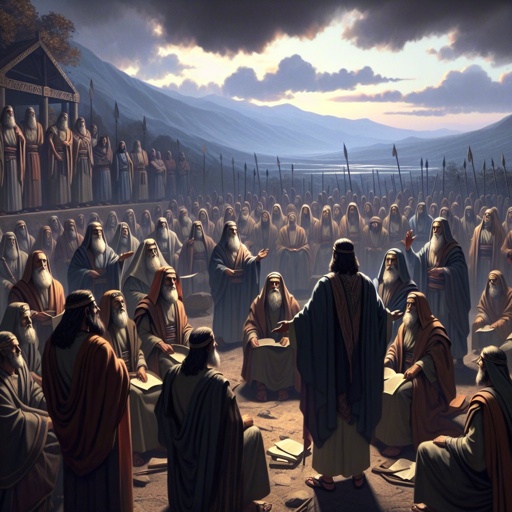
Deuteronomy 1:15 - "So I took the chief of your tribes, wise men, and known, and made them heads over you, captains over thousands, and captains over hundreds, and captains over fifties, and captains over tens, and officers among your tribes."

Deuteronomy 31:15 - "And the LORD appeared in the tabernacle in a pillar of a cloud: and the pillar of the cloud stood over the door of the tabernacle."

Deuteronomy 11:15 - "And I will send grass in thy fields for thy cattle, that thou mayest eat and be full."

Deuteronomy 30:15 - "¶ See, I have set before thee this day life and good, and death and evil;"

Deuteronomy 15:23 - "Only thou shalt not eat the blood thereof; thou shalt pour it upon the ground as water."

"And I gave Gilead unto Machir." - Deuteronomy 3:15

Deuteronomy 15:3 - "Of a foreigner thou mayest exact it again: but that which is thine with thy brother thine hand shall release;"

Deuteronomy 2:15 - "For indeed the hand of the LORD was against them, to destroy them from among the host, until they were consumed."

Deuteronomy 23:15 - "¶ Thou shalt not deliver unto his master the servant which is escaped from his master unto thee:"

Deuteronomy 29:15 - "But with him that standeth here with us this day before the LORD our God, and also with him that is not here with us this day:"

Deuteronomy 15:22 - "Thou shalt eat it within thy gates: the unclean and the clean person shall eat it alike, as the roebuck, and as the hart."

Deuteronomy 15:13 - "And when thou sendest him out free from thee, thou shalt not let him go away empty:"

Deuteronomy 22:15 - "Then shall the father of the damsel, and her mother, take and bring forth the tokens of the damsel's virginity unto the elders of the city in the gate:"

Deuteronomy 20:15 - "Thus shalt thou do unto all the cities which are very far off from thee, which are not of the cities of these nations."

Deuteronomy 15:21 - "And if there be any blemish therein, as if it be lame, or blind, or have any ill blemish, thou shalt not sacrifice it unto the LORD thy God."

Deuteronomy 32:41

Deuteronomy 9:15 - "So I turned and came down from the mount, and the mount burned with fire: and the two tables of the covenant were in my two hands."

Deuteronomy 15:20 - "Thou shalt eat it before the LORD thy God year by year in the place which the LORD shall choose, thou and thy household."

Deuteronomy 32:43

Deuteronomy 15:8 - "But thou shalt open thine hand wide unto him, and shalt surely lend him sufficient for his need, in that which he wanteth."

Deuteronomy 15:5 - "Only if thou carefully hearken unto the voice of the LORD thy God, to observe to do all these commandments which I command thee this day."

"And the owl, and the night hawk, and the cuckow, and the hawk after his kind," - Deuteronomy 14:15

"And for the chief things of the ancient mountains, and for the precious things of the lasting hills," - Deuteronomy 33:15

Deuteronomy 21:15 - "¶ If a man have two wives, one beloved, and another hated, and they have born him children, both the beloved and the hated; and if the firstborn son be hers that was hated:"