A Legacy of Generosity: The Call to Give Freely
“And when thou sendest him out free from thee, thou shalt not let him go away empty:” — Deuteronomy 15:13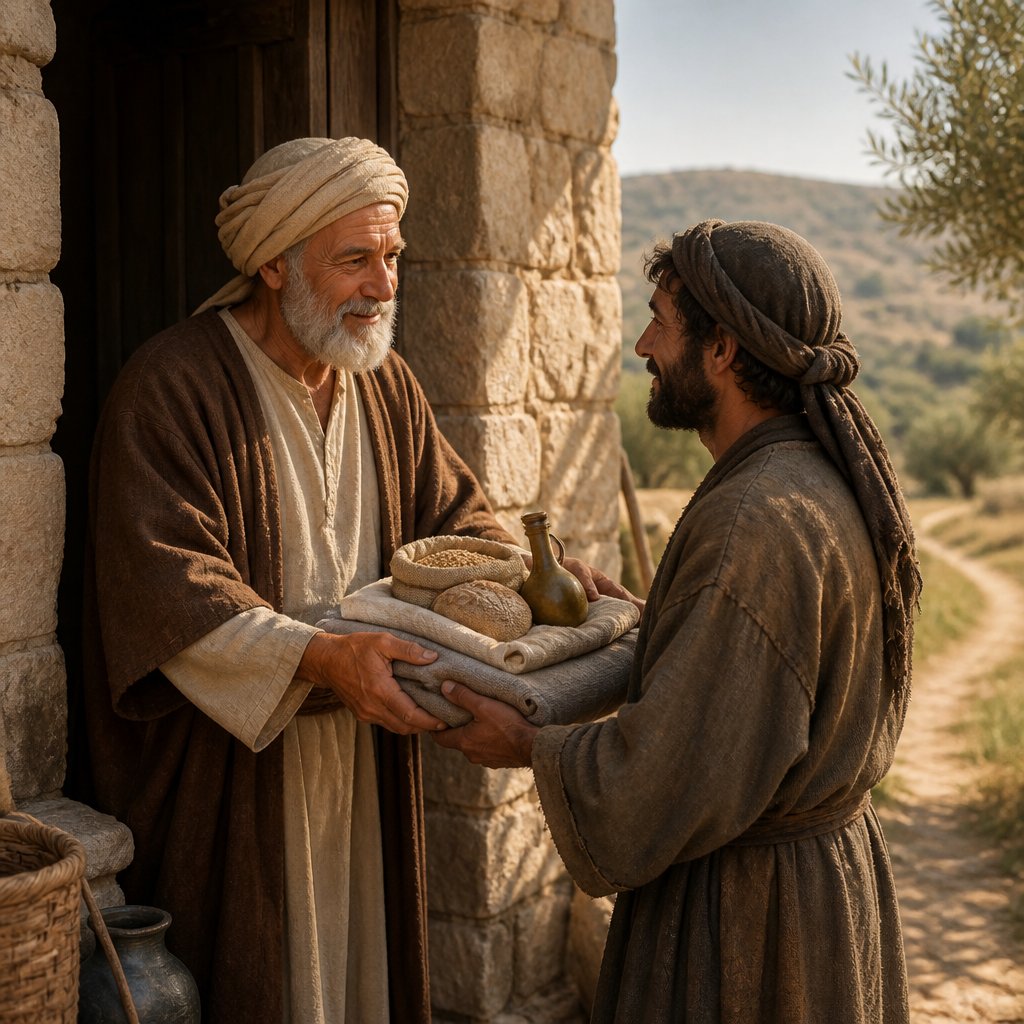
In Deuteronomy 15:13, the scripture reminds us of a crucial moral and spiritual principle inherent in our faith and practice: “And when thou sendest him out free from thee, thou shalt not let him go away empty.” This commandment, embedded in the Law given to Israel, carries profound implications about our character as believers in Christ, the depth of our generosity, and our understanding of freedom.
To understand this verse, we must first grasp its historical context. The Israelites, upon entering the Promised Land, were commanded not just to adhere to laws but to instill a way of life that reflected God’s nature. In ancient Israel, it was permissible for an Israelite to become a servant due to debt or poverty. However, the Year of Jubilee was instituted to ensure that these servants were eventually released and restored to their families and land. The command in Deuteronomy 15:13 comes in the context of these liberations. It emphasizes the importance of not sending those who have served us away in poverty or need, but instead, it encourages us to bless them as they step back into their freedom.
This idea can be likened to the freedom we receive through Jesus Christ. When Christ set us free from sin and the bondage of the law, He did not do so to leave us empty-handed. The fullness we receive through Him is not merely forgiveness but also the promise of provision, peace, and purpose. As Christians, we are called to reflect this act of divine generosity in our interactions with others. The idea is not just about a physical release but also about completing that transaction with liberality and kindness.
As we think through what it means to "not let him go away empty," we must ask ourselves: how do we respond when others are in our lives, even temporarily? Do we send them away empty-handed, devoid of grace, hope, and tangible support? Or are we extensions of God’s love and generosity?
In our day-to-day lives, this principle can manifest in various ways. It could be as simple as sharing our resources—finances, time, or skills—so that others are equipped to succeed once they are independent. This could refer to supporting a friend during a difficult time, mentoring someone in our profession, or donating to those in need. When we encounter individuals who find themselves in difficult circumstances, it is crucial that we provide them with what they need as they step into a new season of their lives.
Moreover, this principle of generosity transcends mere material support. Providing guidance, encouragement, and a listening ear are also vital components of giving. We live in a society that encourages hoarding wealth and turning inward, but scripture calls us to dismantle that mindset. Generosity is not simply a transaction; it cultivates community and sustains relationships.
The impact of being generous and not allowing someone to go away empty also promotes a deeper sense of accountability among believers. We are reminded that our relationships with people—as God’s vessels—should be characterized more by the giving than the taking. This principle reassures us that everything we have is not solely for our benefit but is a channel through which God’s blessings can flow out to others.
As we reflect upon this verse, let it serve as a reminder that true freedom is linked with responsibility. We are all caretakers of God’s gifts, and we are accountable for how we share those with others. Ultimately, it is through our generosity that we reflect the heart of Jesus, who freely gave Himself for us. As we respond to those around us, let us consider how we can liberally bless them rather than sending them out empty. In doing this, we not only uphold God’s commands but also cultivate a community rich in grace and love.
Get our apps


Artwork for Deuteronomy 15:13

Deuteronomy 15:13 - "And when thou sendest him out free from thee, thou shalt not let him go away empty:"
"And when thou sendest him out free from thee, thou shalt not let him go away empty:" - Deuteronomy 15:13

"Thou shalt surely smite the inhabitants of that city with the edge of the sword, destroying it utterly, and all that is therein, and the cattle thereof, with the edge of the sword." - Deuteronomy 13:15

Deuteronomy 3:15 - "And I gave Gilead unto Machir."

Deuteronomy 14:13 - "And the glede, and the kite, and the vulture after his kind,"

Deuteronomy 18:13 - "Thou shalt be perfect with the LORD thy God."

Deuteronomy 15:1 - "At the end of every seven years thou shalt make a release."

Deuteronomy 14:15 - "And the owl, and the night hawk, and the cuckow, and the hawk after his kind,"

Deuteronomy 33:15 - "And for the chief things of the ancient mountains, and for the precious things of the lasting hills,"

Deuteronomy 17:13 - "And all the people shall hear, and fear, and do no more presumptuously."

Deuteronomy 15:15 - "And thou shalt remember that thou wast a bondman in the land of Egypt, and the LORD thy God redeemed thee: therefore I command thee this thing to day."

Deuteronomy 25:13 - "¶ Thou shalt not have in thy bag divers weights, a great and a small."

Deuteronomy 5:13 - "Six days thou shalt labour, and do all thy work:"

Deuteronomy 22:13 - "¶ If any man take a wife, and go in unto her, and hate her,"

Deuteronomy 31:15 - "And the LORD appeared in the tabernacle in a pillar of a cloud: and the pillar of the cloud stood over the door of the tabernacle."

Deuteronomy 11:15 - "And I will send grass in thy fields for thy cattle, that thou mayest eat and be full."

Deuteronomy 30:15 - "¶ See, I have set before thee this day life and good, and death and evil;"

Deuteronomy 13:1 - "If there arise among you a prophet, or a dreamer of dreams, and giveth thee a sign or a wonder,"

Genesis 15:13

Deuteronomy 15:23 - "Only thou shalt not eat the blood thereof; thou shalt pour it upon the ground as water."

"And I gave Gilead unto Machir." - Deuteronomy 3:15

Deuteronomy 6:13 - "Thou shalt fear the LORD thy God, and serve him, and shalt swear by his name."

Deuteronomy 13:11 - "And all Israel shall hear, and fear, and shall do no more any such wickedness as this is among you."

Deuteronomy 15:3 - "Of a foreigner thou mayest exact it again: but that which is thine with thy brother thine hand shall release;"

Deuteronomy 2:15 - "For indeed the hand of the LORD was against them, to destroy them from among the host, until they were consumed."

Deuteronomy 27:13 - "And these shall stand upon mount Ebal to curse; Reuben, Gad, and Asher, and Zebulun, Dan, and Naphtali."

Deuteronomy 12:13 - "Take heed to thyself that thou offer not thy burnt offerings in every place that thou seest:"

Deuteronomy 10:13 - "To keep the commandments of the LORD, and his statutes, which I command thee this day for thy good?"

Romans 10:13-15

Deuteronomy 23:15 - "¶ Thou shalt not deliver unto his master the servant which is escaped from his master unto thee:"