What does Deuteronomy 15:13 mean?
“And when thou sendest him out free from thee, thou shalt not let him go away empty:” — Deuteronomy 15:13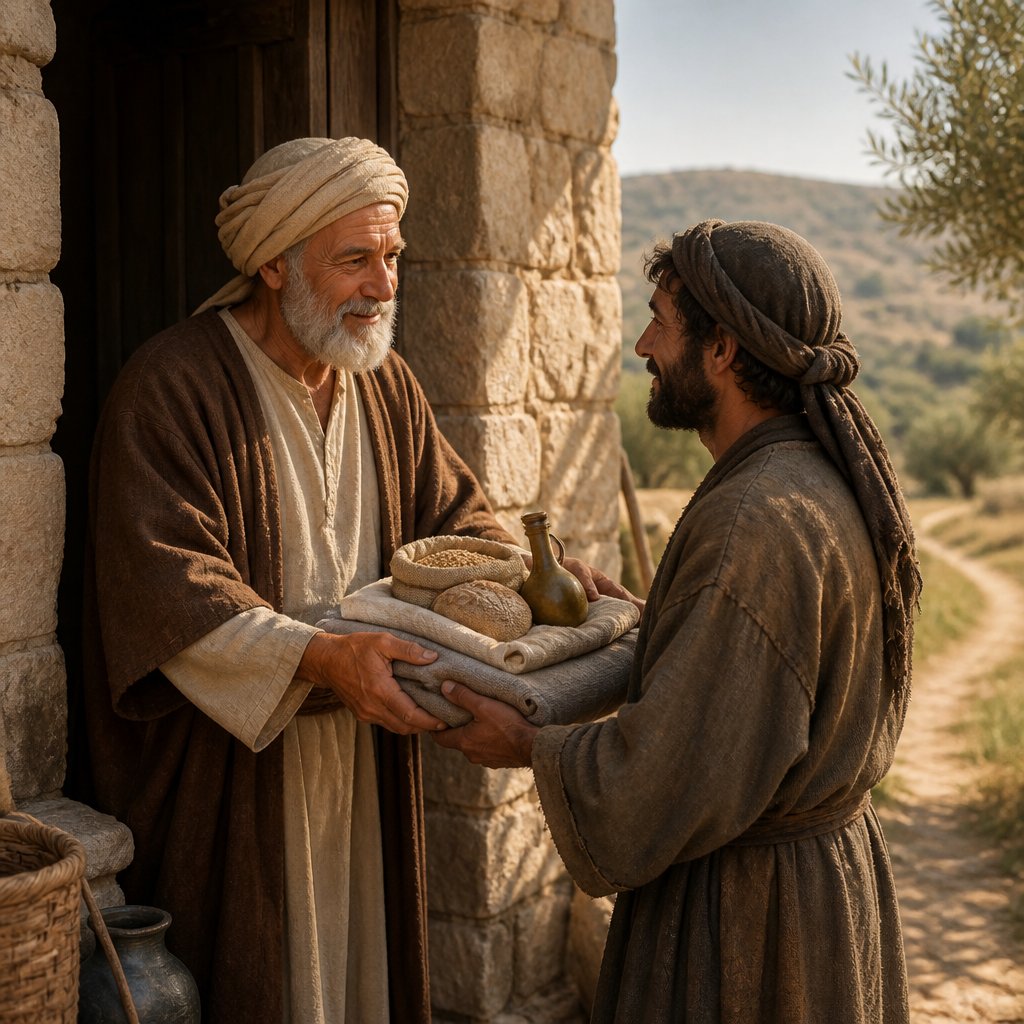
Deuteronomy 15:13 (KJV) states: "And when thou sendest him out free from thee, thou shalt not let him go away empty."
This verse is part of a passage in which God provides laws and regulations for the treatment of slaves. In the preceding verses, the Israelites are instructed to release their fellow Hebrews from servitude after a period of six years, and to provide them with generous provisions to help them start anew. Deuteronomy 15:13 specifically refers to the treatment of a released slave, emphasizing the importance of ensuring that they are not left destitute when they are set free.
The verse carries a crucial social and ethical message. It serves as a reminder that compassion and fairness should underpin the treatment of others, especially those who are vulnerable or marginalized. In this context, "letting him go away empty" signifies neglecting the freed slave's basic needs, such as food, clothing, and resources to support themselves. By instructing the Israelites not to allow this to happen, the verse highlights the moral obligation to ensure that those who have been oppressed or disadvantaged are given the means to rebuild their lives and achieve a sense of dignity and self-sufficiency.
One of the key themes of Deuteronomy 15:13 is the concept of empathy and social responsibility. The verse reflects God's concern for the well-being of those who have experienced hardship and injustice. It stresses the importance of recognizing the humanity and worth of individuals who have been in servitude, and of providing them with the essentials to help them transition out of their former circumstances. This aligns with broader biblical principles of compassion and altruism, reinforcing the idea that one's actions should be guided by a genuine concern for the welfare of others.
Furthermore, the verse promotes the idea of societal and economic justice. By ensuring that freed slaves are not sent away empty-handed, the Israelites are encouraged to address the systemic inequalities and injustices that may have contributed to their servitude in the first place. The provision of resources and support for the newly liberated individuals signifies a commitment to rectifying past wrongs and promoting a more equitable and inclusive society.
Symbolically, Deuteronomy 15:13 can be seen as an expression of God's grace and mercy. It underscores the notion of second chances and the possibility of redemption, emphasizing that individuals should not be defined or constrained by past circumstances. Instead, they should be offered the opportunity to rebuild their lives and cultivate a sense of hope and self-worth. In this sense, the verse encapsulates the biblical concept of liberation and renewal, emphasizing the transformative power of compassion and generosity.
In a broader context, Deuteronomy 15:13 also speaks to the universal human experience of freedom and agency. It reminds us that every individual deserves to have the opportunity to live a life of dignity, self-determination, and fulfillment. By addressing the specific needs of the freed slaves, the verse conveys a message of empowerment and resilience, highlighting the capacity of individuals to overcome adversity and thrive when given the necessary support and resources.
Overall, Deuteronomy 15:13 carries profound significance as a reflection of God's concern for the well-being and rights of all individuals, especially those who have experienced oppression and disadvantage. It calls upon us to embody the principles of empathy, justice, and compassion in our interactions with others, and to actively work towards creating a more just and compassionate society. As such, the verse continues to resonate as a timeless and relevant ethical and moral teaching for believers and non-believers alike.
Get our apps


Artwork for Deuteronomy 15:13

Deuteronomy 15:13 - "And when thou sendest him out free from thee, thou shalt not let him go away empty:"
"And when thou sendest him out free from thee, thou shalt not let him go away empty:" - Deuteronomy 15:13

"Thou shalt surely smite the inhabitants of that city with the edge of the sword, destroying it utterly, and all that is therein, and the cattle thereof, with the edge of the sword." - Deuteronomy 13:15

Deuteronomy 3:15 - "And I gave Gilead unto Machir."

Deuteronomy 14:13 - "And the glede, and the kite, and the vulture after his kind,"

Deuteronomy 18:13 - "Thou shalt be perfect with the LORD thy God."

Deuteronomy 15:1 - "At the end of every seven years thou shalt make a release."

Deuteronomy 14:15 - "And the owl, and the night hawk, and the cuckow, and the hawk after his kind,"

Deuteronomy 33:15 - "And for the chief things of the ancient mountains, and for the precious things of the lasting hills,"

Deuteronomy 17:13 - "And all the people shall hear, and fear, and do no more presumptuously."

Deuteronomy 15:15 - "And thou shalt remember that thou wast a bondman in the land of Egypt, and the LORD thy God redeemed thee: therefore I command thee this thing to day."

Deuteronomy 25:13 - "¶ Thou shalt not have in thy bag divers weights, a great and a small."

Deuteronomy 5:13 - "Six days thou shalt labour, and do all thy work:"

Deuteronomy 22:13 - "¶ If any man take a wife, and go in unto her, and hate her,"

Deuteronomy 31:15 - "And the LORD appeared in the tabernacle in a pillar of a cloud: and the pillar of the cloud stood over the door of the tabernacle."

Deuteronomy 11:15 - "And I will send grass in thy fields for thy cattle, that thou mayest eat and be full."

Deuteronomy 30:15 - "¶ See, I have set before thee this day life and good, and death and evil;"

Deuteronomy 13:1 - "If there arise among you a prophet, or a dreamer of dreams, and giveth thee a sign or a wonder,"

Genesis 15:13

Deuteronomy 15:23 - "Only thou shalt not eat the blood thereof; thou shalt pour it upon the ground as water."

"And I gave Gilead unto Machir." - Deuteronomy 3:15

Deuteronomy 6:13 - "Thou shalt fear the LORD thy God, and serve him, and shalt swear by his name."

Deuteronomy 13:11 - "And all Israel shall hear, and fear, and shall do no more any such wickedness as this is among you."

Deuteronomy 15:3 - "Of a foreigner thou mayest exact it again: but that which is thine with thy brother thine hand shall release;"

Deuteronomy 2:15 - "For indeed the hand of the LORD was against them, to destroy them from among the host, until they were consumed."

Deuteronomy 27:13 - "And these shall stand upon mount Ebal to curse; Reuben, Gad, and Asher, and Zebulun, Dan, and Naphtali."

Deuteronomy 12:13 - "Take heed to thyself that thou offer not thy burnt offerings in every place that thou seest:"

Deuteronomy 10:13 - "To keep the commandments of the LORD, and his statutes, which I command thee this day for thy good?"

Romans 10:13-15

Deuteronomy 23:15 - "¶ Thou shalt not deliver unto his master the servant which is escaped from his master unto thee:"