Divine Provision in Times of Conflict: A Reflection on Deuteronomy 20:14
“But the women, and the little ones, and the cattle, and all that is in the city, even all the spoil thereof, shalt thou take unto thyself; and thou shalt eat the spoil of thine enemies, which the LORD thy God hath given thee.” — Deuteronomy 20:14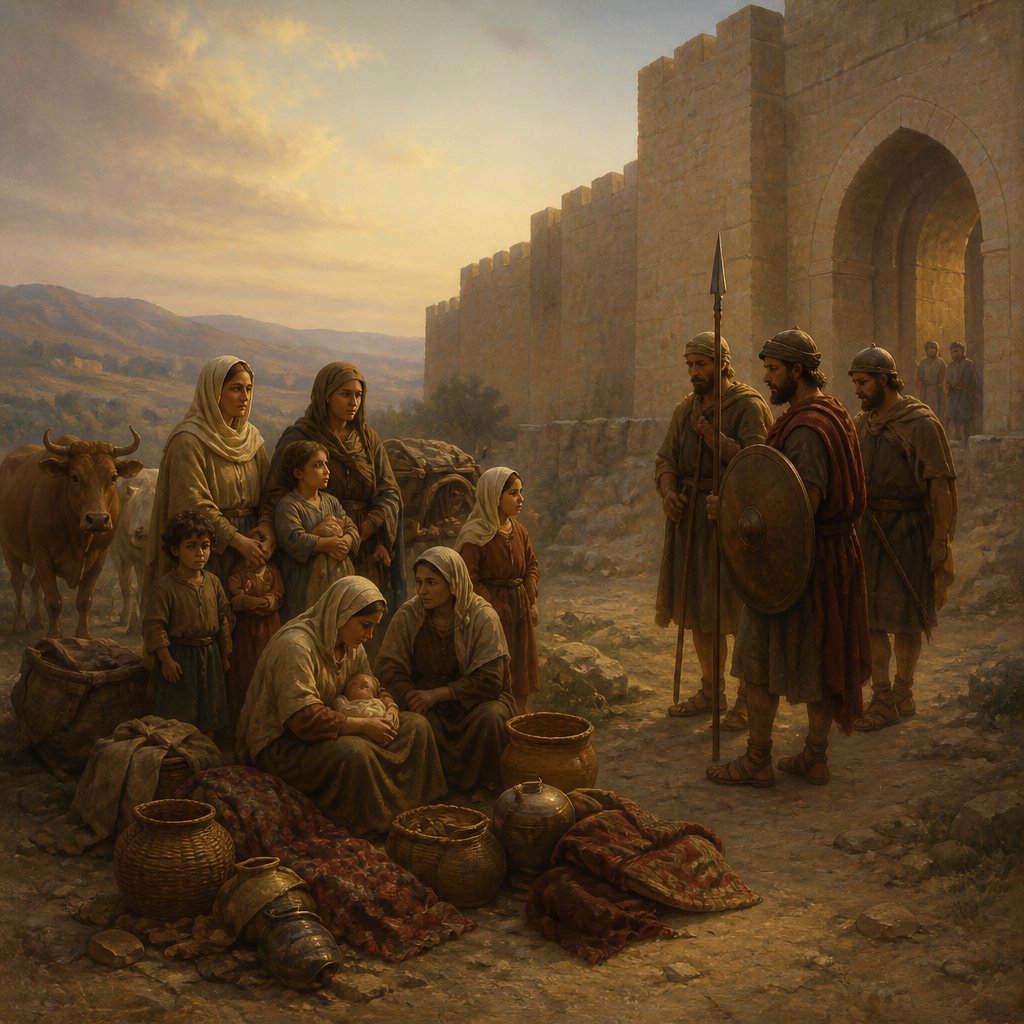
In the book of Deuteronomy, we find a profound narrative meant to instruct the children of Israel as they stand at the threshold of the Promised Land. Amongst the various laws and instructions provided, Deuteronomy 20:14 stands out, offering insight into God's provision amidst conflict. The King James Version reads: "But the women, and the little ones, and the cattle, and all that is in the city, even all the spoil thereof, shalt thou take unto thyself; and thou shalt eat the spoil of thine enemies, which the LORD thy God hath given thee."
This verse embodies both divine justice and mercy. God specifically allows the Israelites to take certain things after battles, indicating that victory is not just an act of might but a provision from God. It teaches us that in every conflict we face, whether physical or spiritual, God equips us with what we need to sustain ourselves.
**Understanding the Context**
To appreciate the depth of this verse, we must understand the historical context. The Israelites were about to enter lands occupied by enemy nations. These nations represented not only military opposition but also cultural and spiritual adversaries. The instruction given in Deuteronomy was not merely about physical survival but also about possessing the land and integrating into a new way of life that honors God. The presence of women, children, and livestock in this context reflects God's inclusiveness and compassion towards vulnerable groups who often bear the brunt of conflict.
The spoil—defined as goods, treasures, and resources taken after victory—is a potent symbol within this passage. In their warfare, the Israelites were not given carte blanche to take everything. The directive speaks directly to a sense of restrained appropriateness of what could be taken. The instruction was clear: even in times of conquest, they were to acknowledge and give honor to God as the provider of these blessings.
**Reflecting on God’s Generosity**
God's provision, as mentioned in this verse, encourages us to reflect on His generosity. When we think of warfare, it can often be about destruction and loss; however, this passage offers a striking contrast: in God's economy, battles can yield richness and blessings. The spoils represent not just victory but God's generosity toward His people after a hard-fought battle. He acknowledges their labor and struggle and rewards them accordingly.
This analogy resonates deeply with our own lives. Many of us encounter personal battles: issues of faith, temptation, conflict within relationships, and various life challenges. In our struggles, God promises that we will emerge not empty-handed, but rather filled with blessings, understanding, and maturity. He is a God who knows our struggles and provides the necessary components for our sustenance.
**Eating of the Spoils**
The latter part of the verse indicates that the Israelites shall “eat the spoil.” This phrase is significant because it symbolizes not just ownership of material things but a communal enjoyment and celebration of God's bounty. To eat together is to share stories, to fortify relationships, and to create community. In our Christian walk, when we experience God’s blessings after trials, it is crucial we do not isolate ourselves but share our testimonies and blessings with others. It emphasizes the notion that God’s provisions are insufficient when kept just for ourselves, and we must engage with our communities, sharing the joys of His goodness.
**Conclusion: A Call to Remember**
Deuteronomy 20:14 stands as a beautiful testament to the dual nature of God’s provision: that amid struggles, we can find nourishment in the spoils He gives us. Each trial brings with it the promise of blessings, both for us and for those around us. As we confront our own battles, let us remember that the Lord our God is present, and His blessings are not just for our sustenance but for the enrichment of our communities, a reminder to always share in the goodness of God. Let this verse encourage you today to look for the spoils of blessings after the battles of life and to celebrate them as a community, thanking God for His everlasting mercy and provision.
Get our apps


Artwork for Deuteronomy 20:14
Deuteronomy 20:14 - "But the women, and the little ones, and the cattle, and all that is in the city, even all the spoil thereof, shalt thou take unto thyself; and thou shalt eat the spoil of thine enemies, which the LORD thy God hath given thee."
"But the women, and the little ones, and the cattle, and all that is in the city, even all the spoil thereof, shalt thou take unto thyself; and thou shalt eat the spoil of thine enemies, which the LORD thy God hath given thee." - Deuteronomy 20:14

Deuteronomy 14:20 - "But of all clean fowls ye may eat."

"But of all clean fowls ye may eat." - Deuteronomy 14:20

Deuteronomy 20:16

Deuteronomy 20:16

Deuteronomy 20:16

Deuteronomy 14:14 - "And every raven after his kind,"

Create a picture of Deuteronomy 11:20

Deuteronomy 22:20 - "But if this thing be true, and the tokens of virginity be not found for the damsel:"

Deuteronomy 14:17 - "And the pelican, and the gier eagle, and the cormorant,"

"And every raven after his kind," - Deuteronomy 14:14

Deuteronomy 14:16 - "The little owl, and the great owl, and the swan,"

Deuteronomy 14:3 - "¶ Thou shalt not eat any abominable thing."

Deuteronomy 14:11 - "¶ Of all clean birds ye shall eat."

Deuteronomy 14:13 - "And the glede, and the kite, and the vulture after his kind,"

Deuteronomy 5:20 - "Neither shalt thou bear false witness against thy neighbour."

Deuteronomy 14:18 - "And the stork, and the heron after her kind, and the lapwing, and the bat."

Deuteronomy 14:12 - "But these are they of which ye shall not eat: the eagle, and the ossifrage, and the ospray,"

Deuteronomy 20:12 - "And if it will make no peace with thee, but will make war against thee, then thou shalt besiege it:"

John 20:14

Exodus 20:14

Deuteronomy 14:15 - "And the owl, and the night hawk, and the cuckow, and the hawk after his kind,"

Deuteronomy 29:14 - "Neither with you only do I make this covenant and this oath;"

Genesis 20-14

Deuteronomy 14:4 - "These are the beasts which ye shall eat: the ox, the sheep, and the goat,"

Deuteronomy 20:10 - "¶ When thou comest nigh unto a city to fight against it, then proclaim peace unto it."

Deuteronomy 14:19 - "And every creeping thing that flieth is unclean unto you: they shall not be eaten."

Deuteronomy 25:14 - "Thou shalt not have in thine house divers measures, a great and a small."

Deuteronomy 11:20 - "And thou shalt write them upon the door posts of thine house, and upon thy gates:"