What does Deuteronomy 20:14 mean?
“But the women, and the little ones, and the cattle, and all that is in the city, even all the spoil thereof, shalt thou take unto thyself; and thou shalt eat the spoil of thine enemies, which the LORD thy God hath given thee.” — Deuteronomy 20:14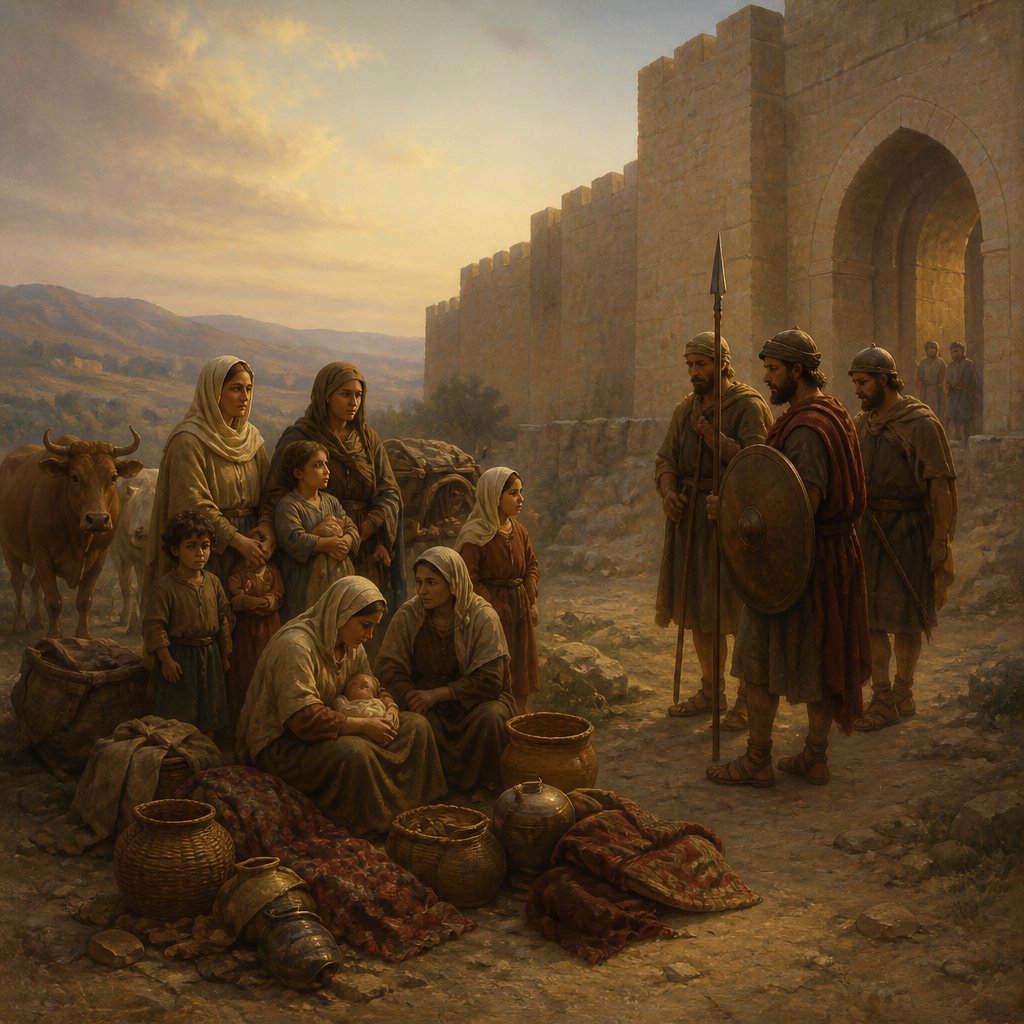
Deuteronomy 20:14 (KJV) states, "But the women, and the little ones, and the cattle, and all that is in the city, even all the spoil thereof, shalt thou take unto thyself; and thou shalt eat the spoil of thine enemies, which the Lord thy God hath given thee."
This verse comes from the Book of Deuteronomy in the Old Testament of the Bible. The Book of Deuteronomy is the fifth book of the Bible and is attributed to Moses, as he is believed to have written it as a series of speeches delivered to the Israelites in the plains of Moab before they entered the Promised Land. The book serves as a reminder of God's covenant with the Israelites and contains laws and instructions for a holy and devout community.
In the context of Deuteronomy 20:14, it is within a larger passage that outlines instructions for warfare. The preceding verses discuss the conditions under which the Israelites are to engage in battle, and the subsequent verses provide instructions for laying siege to a city. Deuteronomy 20:14 specifically addresses the spoils of war and dictates that the victorious Israelites are to take the women, children, livestock, and all the plunder from the conquered city for themselves.
The themes present in this verse include the concept of God's favor and provision for his people, the consequences of war, and the treatment of enemies and their possessions. Additionally, the verse reflects the ancient cultural and religious practices of the Israelites at that time and serves as a historical and religious guide for their conduct in warfare.
The verse begins with the directive to take "the women, and the little ones, and the cattle, and all that is in the city." This command illustrates the harsh reality of ancient warfare in which the victorious army would often take the defeated population as slaves and plunder their possessions. From a modern perspective, this practice is deeply troubling, as it represents the subjugation and exploitation of the conquered people.
The passage continues by stating that the Israelites are to "eat the spoil of thine enemies." This is a depiction of the brutal nature of war and the devastating consequences it brings. The Israelites are instructed to consume the spoils of their enemies, symbolizing the complete and utter defeat of their adversaries. This consumption also serves as a tangible reminder of their victory and the favor of the Lord in granting them such triumph.
One interpretation of this verse is that it reflects the harsh realities of ancient warfare and the preservation of the Israelites as a conquering nation. In the context of the time in which it was written, the verse served as a means of establishing the dominance and superiority of the Israelites over their enemies, as well as a demonstration of the divine favor bestowed upon them by God. However, in a contemporary context, this verse raises ethical and moral questions regarding the treatment of enemies and the consequences of war.
Additionally, the verse can be interpreted symbolically as a representation of the spiritual warfare that believers face in their lives. The "spoils" of this warfare may be seen as the blessings and rewards that come from overcoming spiritual battles and trials. Just as the Israelites were instructed to "take unto thyself" the spoils, believers are encouraged to claim the abundant blessings and rewards that God provides through their faith and obedience.
In conclusion, Deuteronomy 20:14 is a verse from the Old Testament that provides guidance for the Israelites in the context of warfare. It reflects the harsh realities of ancient warfare and the cultural and religious practices of the time. From a contemporary perspective, it challenges readers to consider the ethical and moral implications of warfare and the treatment of enemies. It also offers a symbolic interpretation of spiritual warfare and the abundance of blessings that believers can receive through their faith. Ultimately, this verse prompts reflection on the complexities of war and the divine favor and provision of God for his people.
Get our apps


Artwork for Deuteronomy 20:14
Deuteronomy 20:14 - "But the women, and the little ones, and the cattle, and all that is in the city, even all the spoil thereof, shalt thou take unto thyself; and thou shalt eat the spoil of thine enemies, which the LORD thy God hath given thee."
"But the women, and the little ones, and the cattle, and all that is in the city, even all the spoil thereof, shalt thou take unto thyself; and thou shalt eat the spoil of thine enemies, which the LORD thy God hath given thee." - Deuteronomy 20:14

Deuteronomy 14:20 - "But of all clean fowls ye may eat."

"But of all clean fowls ye may eat." - Deuteronomy 14:20

Deuteronomy 20:16

Deuteronomy 20:16

Deuteronomy 20:16

Deuteronomy 14:14 - "And every raven after his kind,"

Create a picture of Deuteronomy 11:20

Deuteronomy 22:20 - "But if this thing be true, and the tokens of virginity be not found for the damsel:"

Deuteronomy 14:17 - "And the pelican, and the gier eagle, and the cormorant,"

"And every raven after his kind," - Deuteronomy 14:14

Deuteronomy 14:16 - "The little owl, and the great owl, and the swan,"

Deuteronomy 14:3 - "¶ Thou shalt not eat any abominable thing."

Deuteronomy 14:11 - "¶ Of all clean birds ye shall eat."

Deuteronomy 14:13 - "And the glede, and the kite, and the vulture after his kind,"

Deuteronomy 5:20 - "Neither shalt thou bear false witness against thy neighbour."

Deuteronomy 14:18 - "And the stork, and the heron after her kind, and the lapwing, and the bat."

Deuteronomy 14:12 - "But these are they of which ye shall not eat: the eagle, and the ossifrage, and the ospray,"

Deuteronomy 20:12 - "And if it will make no peace with thee, but will make war against thee, then thou shalt besiege it:"

John 20:14

Exodus 20:14

Deuteronomy 14:15 - "And the owl, and the night hawk, and the cuckow, and the hawk after his kind,"

Deuteronomy 29:14 - "Neither with you only do I make this covenant and this oath;"

Genesis 20-14

Deuteronomy 14:4 - "These are the beasts which ye shall eat: the ox, the sheep, and the goat,"

Deuteronomy 20:10 - "¶ When thou comest nigh unto a city to fight against it, then proclaim peace unto it."

Deuteronomy 14:19 - "And every creeping thing that flieth is unclean unto you: they shall not be eaten."

Deuteronomy 25:14 - "Thou shalt not have in thine house divers measures, a great and a small."

Deuteronomy 11:20 - "And thou shalt write them upon the door posts of thine house, and upon thy gates:"