The Wisdom of the Poor: A Reflection on Ecclesiastes 6:8
“For what hath the wise more than the fool? what hath the poor, that knoweth to walk before the living?” — Ecclesiastes 6:8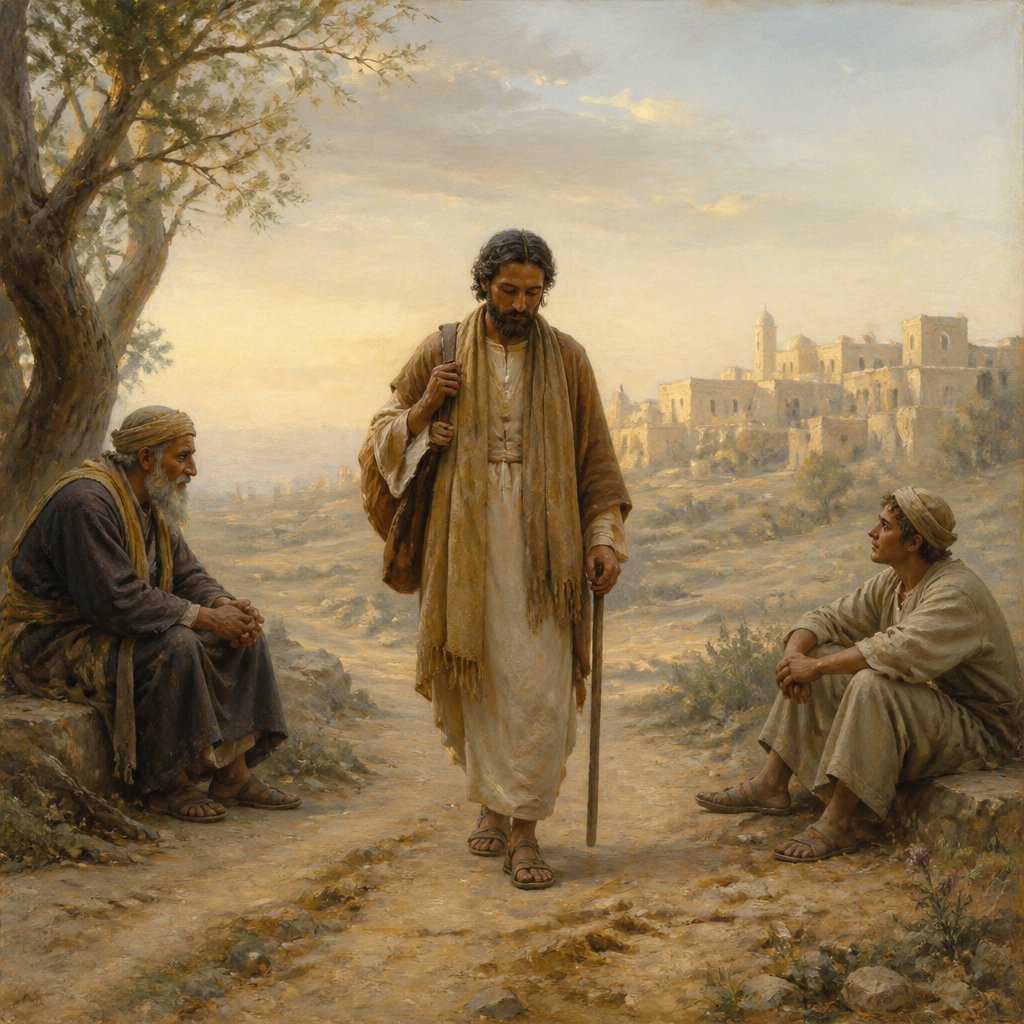
The book of Ecclesiastes, attributed to King Solomon, often grapples with the meaning of life, the vanity of human pursuits, and the search for wisdom. In Ecclesiastes 6:8, we are confronted with a thought-provoking question: "For what hath the wise more than the fool? what hath the poor, that knoweth to walk before the living?" This verse invites us to delve deeply into the contrast between wisdom and foolishness, as well as the significance of knowing how to live rightly, irrespective of our social standing.
Solomon's observations remind us that wisdom and knowledge, while valuable, do not automatically equate to a fulfilling life. The wise may affirm their superiority over the fool due to their understanding and insight. Yet, the stark reality presented in this verse leads us to ponder: does wisdom provide greater happiness, security, or value when faced with the uncertainties of life? In many respects, it may not. One can be wise yet still face trials that render their wisdom seemingly insufficient.
The second part of the verse introduces another profound thought. Here, Solomon shifts focus from wisdom to the state of the poor, describing one who is poor yet knows how to walk before the living. This knowledge, associated with walking rightly, indicates a certain level of awareness, morality, and relational integrity with others and God. In essence, it is suggesting that it is possible to have little in material wealth but possess a richness that cannot be measured by earthly standards.
Walking before the living can be interpreted as living in accordance with divine principles and with a sense of integrity in our relationships. The “living” can represent God and humanity; thus, engaging fully with life brings meaning. The poor man may understand the essence of living: the significance of love, compassion, community, and the pursuit of righteousness. While the wise may possess theoretical knowledge, the poor who walks justly bears wisdom that transcends mere understanding.
In a world that often equates value with wealth or status, Solomon's words challenge this notion and inspire us to reconsider what makes a life rich and fulfilling. We see this beautifully echoed in the teachings of Jesus, who often uplifted the marginalized and poor—the very ones society deemed unworthy. Through parables and teachings, Jesus exemplified the principle that true wealth comes not from accumulation but from relationship with God and with our fellow beings.
As we reflect on our lives, how do we measure our success? Do we find our worth in accolades, possessions, or intellectual prowess? Or do we seek to walk with integrity and purpose, nurturing relationships that matter while living in obedience to God's call? It is easy to fall into the trap of equating our self-worth with our material wealth or social status, forgetting that God looks at the heart and desires us to connect with His creation in meaningful ways.
Thus, Ecclesiastes 6:8 invites us to celebrate the wisdom that is rooted in humility and the knowledge of how to live before the living. The wise person may possess intelligence, yet true wisdom lies in living out our understanding through our actions and our interactions with others. The richness of life is not found in the accumulation of knowledge alone but in applying that knowledge in love, grace, and truth.
In closing, let us strive to cultivate a heart that values the essence of wisdom—character, humility, and righteousness—over superficial indicators of success. In doing so, we will reflect the love of Christ in our lives, allowing us to walk before the living with integrity and purpose, knowing that our true wealth lies in our righteous walk with God.
Get our apps


Artwork for Ecclesiastes 6:8

Ecclesiastes 6:8 - "For what hath the wise more than the fool? what hath the poor, that knoweth to walk before the living?"

"For what hath the wise more than the fool? what hath the poor, that knoweth to walk before the living?" - Ecclesiastes 6:8

Ecclesiastes 8:6 - "¶ Because to every purpose there is time and judgment, therefore the misery of man is great upon him."

"¶ Because to every purpose there is time and judgment, therefore the misery of man is great upon him." - Ecclesiastes 8:6

ecclesiastes 12:1-8

ecclesiastes 12:1-8

ecclesiastes 12:1-8

ecclesiastes 12:1-8

Ecclesiastes 3:7-8

ecclesiastes 12:1-8

ecclesiastes 12:2-6

Ecclesiastes 12:8 - "¶ Vanity of vanities, saith the preacher; all is vanity."

Ecclesiastes 3:8 - "A time to love, and a time to hate; a time of war, and a time of peace."

Ecclesiastes 10:6 - "Folly is set in great dignity, and the rich sit in low place."

Ecclesiastes 6:7 - "All the labour of man is for his mouth, and yet the appetite is not filled."

Ecclesiastes 8:2 - "I counsel thee to keep the king's commandment, and that in regard of the oath of God."

Ecclesiastes 3:6 - "A time to get, and a time to lose; a time to keep, and a time to cast away;"

Ecclesiastes 6:11 - "¶ Seeing there be many things that increase vanity, what is man the better?"

Ecclesiastes 8:7 - "For he knoweth not that which shall be: for who can tell him when it shall be?"

Ecclesiastes 6:9 - "¶ Better is the sight of the eyes than the wandering of the desire: this is also vanity and vexation of spirit."

Ecclesiastes 6:1 - "There is an evil which I have seen under the sun, and it is common among men:"

Ecclesiastes 6:4 - "For he cometh in with vanity, and departeth in darkness, and his name shall be covered with darkness."

Ecclesiastes 7:6 - "For as the crackling of thorns under a pot, so is the laughter of the fool: this also is vanity."

Ecclesiastes 9:8 - "Let thy garments be always white; and let thy head lack no ointment."

Ecclesiastes 4:6 - "Better is an handful with quietness, than both the hands full with travail and vexation of spirit."

Ecclesiastes 8:4 - "Where the word of a king is, there is power: and who may say unto him, What doest thou?"

Ecclesiastes 7:8 - "Better is the end of a thing than the beginning thereof: and the patient in spirit is better than the proud in spirit."

Ecclesiastes 6:6 - "¶ Yea, though he live a thousand years twice told, yet hath he seen no good: do not all go to one place?"

Ecclesiastes 2:6 - "I made me pools of water, to water therewith the wood that bringeth forth trees:"

"1 There is a time for everything, and a season for every activity under the heavens: 2 a time to be born and a time to die, a time to plant and a time to uproot, 3 a time to kill and a time to heal, a time to tear down and a time to build, 4 a time to weep and a time to laugh, a time to mourn and a time to dance, 5 a time to scatter stones and a time to gather them, a time to embrace and a time to refrain from embracing, 6 a time to search and a time to give up, a time to keep and a time to throw away, 7 a time to tear and a time to mend, a time to be silent and a time to speak, 8 a time to love and a time to hate, a time for war and a time for peace." - Ecclesiastes 3:1-8