What does Ecclesiastes 6:8 mean?
“For what hath the wise more than the fool? what hath the poor, that knoweth to walk before the living?” — Ecclesiastes 6:8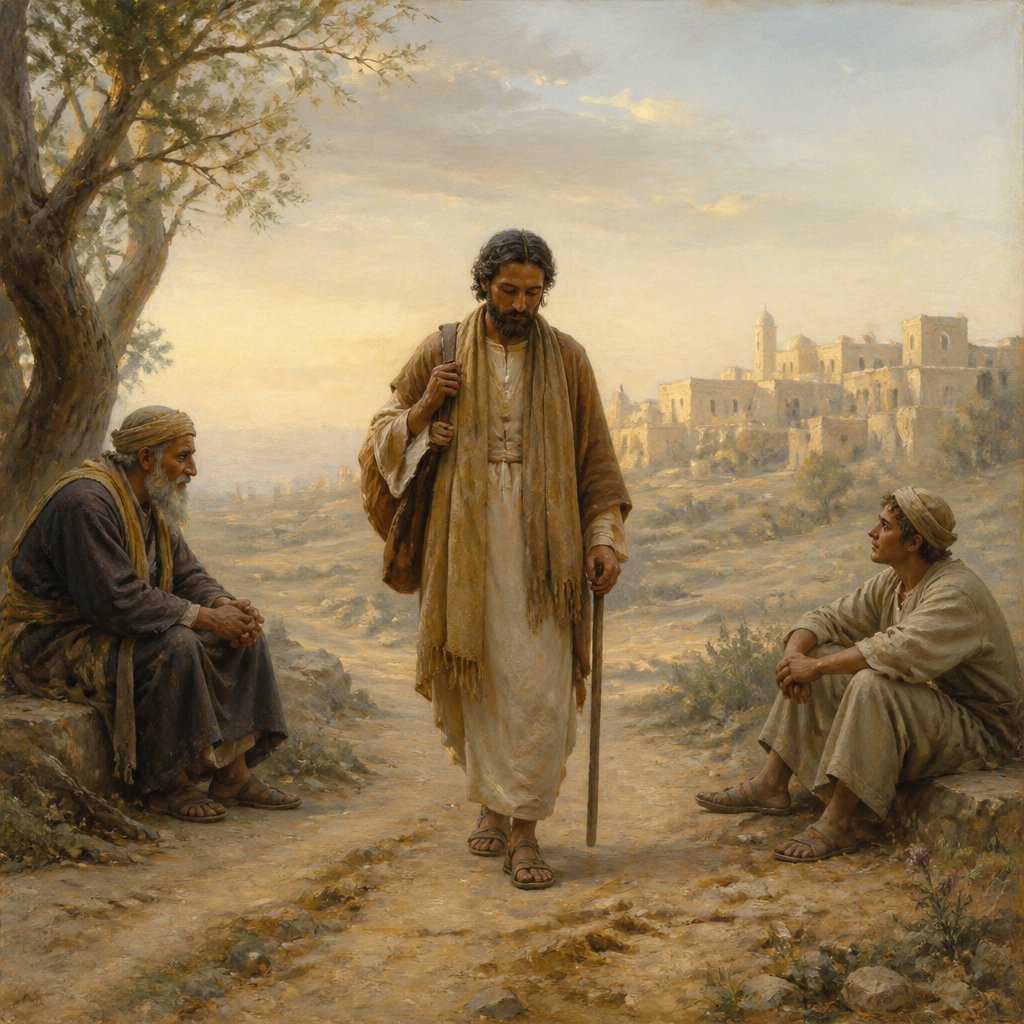
Ecclesiastes 6:8 in the King James Version reads, "For what hath the wise more than the fool? what hath the poor, that knoweth to walk before the living?"
This verse is found in the book of Ecclesiastes, which is attributed to King Solomon. In this book, Solomon reflects on the meaning and purpose of life, grappling with the questions of human existence, the fleeting nature of life, and the ultimate futility of earthly pursuits. This verse in particular addresses the inequality and injustice that seems to permeate the world, despite the wisdom and knowledge that some may possess.
The first part of this verse, "For what hath the wise more than the fool?" speaks to the seemingly arbitrary nature of wisdom and intelligence. Throughout history, there have been individuals who possess great wisdom and knowledge, who have made significant contributions to society and civilization. Yet, despite their intellectual prowess, they are not immune to the same trials and tribulations that befall the fool. The wise may have a deeper understanding of the world around them, but they are still subject to the same uncertainties and injustices that plague the fool. This sentiment echoes the earlier words of Solomon in Ecclesiastes 2:14, "The wise man’s eyes are in his head; but the fool walketh in darkness: and I myself perceived also that one event happeneth to them all."
The second part of the verse, "what hath the poor, that knoweth to walk before the living?" reflects on the plight of the poor and their ability to navigate the complexities of life. Despite their lack of material wealth, the poor may possess a certain wisdom and understanding that enables them to live in a manner that is upright and respectable. They may not have the same resources as the wealthy, but they are able to walk before the living with a sense of dignity and humility. This speaks to the idea that wealth and status do not necessarily equate to a meaningful and purposeful life. The poor may have a different kind of wealth – one that is rooted in character and integrity, rather than material possessions.
The overarching theme of this verse is the existential struggle of human existence and the apparent injustices that persist in the world. It challenges the traditional notions of wisdom, wealth, and status, highlighting the transitory and ultimately unsatisfying nature of such pursuits. This sentiment is encapsulated in the opening verses of Ecclesiastes, where the refrain, "vanity of vanities, all is vanity" recurs throughout the book. This phrase serves as a reminder of the fleeting nature of life and the futility of worldly pursuits when faced with the inevitability of death.
In the larger context of Ecclesiastes, this verse serves as a sobering reminder of the limitations of human wisdom and the arbitrary nature of wealth and status. Despite our best efforts to accumulate knowledge and material possessions, we are ultimately subject to the same uncertainties and injustices that pervade the world. This realization prompts a deeper search for meaning and purpose beyond the confines of earthly pursuits, pointing towards a greater understanding of the divine and the eternal.
Symbolically, this verse can be seen as a call to transcend the temporal concerns of this world and seek a deeper, spiritual understanding of life. It challenges the traditional markers of success and invites the reader to consider a more profound and lasting fulfillment that transcends the limitations of human existence. This spiritual dimension is evoked throughout the book of Ecclesiastes, as Solomon grapples with the paradoxes of life and the ultimate pursuit of wisdom and meaning in the face of mortality.
In conclusion, Ecclesiastes 6:8 offers a poignant reflection on the limitations of human wisdom and the injustices that persist in the world. It challenges the traditional notions of success and invites the reader to consider a more profound and lasting fulfillment that transcends the fleeting nature of earthly pursuits. Through its contemplation of the wise and the fool, the poor and the rich, this verse prompts a deeper search for meaning and purpose that extends beyond the temporal concerns of this world. It serves as a poignant reminder of the ultimate futility of worldly pursuits and the need for a deeper, spiritual understanding of life.
Get our apps


Artwork for Ecclesiastes 6:8

Ecclesiastes 6:8 - "For what hath the wise more than the fool? what hath the poor, that knoweth to walk before the living?"

"For what hath the wise more than the fool? what hath the poor, that knoweth to walk before the living?" - Ecclesiastes 6:8

Ecclesiastes 8:6 - "¶ Because to every purpose there is time and judgment, therefore the misery of man is great upon him."

"¶ Because to every purpose there is time and judgment, therefore the misery of man is great upon him." - Ecclesiastes 8:6

ecclesiastes 12:1-8

ecclesiastes 12:1-8

ecclesiastes 12:1-8

ecclesiastes 12:1-8

Ecclesiastes 3:7-8

ecclesiastes 12:1-8

ecclesiastes 12:2-6

Ecclesiastes 12:8 - "¶ Vanity of vanities, saith the preacher; all is vanity."

Ecclesiastes 3:8 - "A time to love, and a time to hate; a time of war, and a time of peace."

Ecclesiastes 10:6 - "Folly is set in great dignity, and the rich sit in low place."

Ecclesiastes 6:7 - "All the labour of man is for his mouth, and yet the appetite is not filled."

Ecclesiastes 8:2 - "I counsel thee to keep the king's commandment, and that in regard of the oath of God."

Ecclesiastes 3:6 - "A time to get, and a time to lose; a time to keep, and a time to cast away;"

Ecclesiastes 6:11 - "¶ Seeing there be many things that increase vanity, what is man the better?"

Ecclesiastes 8:7 - "For he knoweth not that which shall be: for who can tell him when it shall be?"

Ecclesiastes 6:9 - "¶ Better is the sight of the eyes than the wandering of the desire: this is also vanity and vexation of spirit."

Ecclesiastes 6:1 - "There is an evil which I have seen under the sun, and it is common among men:"

Ecclesiastes 6:4 - "For he cometh in with vanity, and departeth in darkness, and his name shall be covered with darkness."

Ecclesiastes 7:6 - "For as the crackling of thorns under a pot, so is the laughter of the fool: this also is vanity."

Ecclesiastes 9:8 - "Let thy garments be always white; and let thy head lack no ointment."

Ecclesiastes 4:6 - "Better is an handful with quietness, than both the hands full with travail and vexation of spirit."

Ecclesiastes 8:4 - "Where the word of a king is, there is power: and who may say unto him, What doest thou?"

Ecclesiastes 7:8 - "Better is the end of a thing than the beginning thereof: and the patient in spirit is better than the proud in spirit."

Ecclesiastes 6:6 - "¶ Yea, though he live a thousand years twice told, yet hath he seen no good: do not all go to one place?"

Ecclesiastes 2:6 - "I made me pools of water, to water therewith the wood that bringeth forth trees:"

"1 There is a time for everything, and a season for every activity under the heavens: 2 a time to be born and a time to die, a time to plant and a time to uproot, 3 a time to kill and a time to heal, a time to tear down and a time to build, 4 a time to weep and a time to laugh, a time to mourn and a time to dance, 5 a time to scatter stones and a time to gather them, a time to embrace and a time to refrain from embracing, 6 a time to search and a time to give up, a time to keep and a time to throw away, 7 a time to tear and a time to mend, a time to be silent and a time to speak, 8 a time to love and a time to hate, a time for war and a time for peace." - Ecclesiastes 3:1-8