The Feast of Unity: Celebrating God’s Favor in the Ordinary
“And when these days were expired, the king made a feast unto all the people that were present in Shushan the palace, both unto great and small, seven days, in the court of the garden of the king’s palace;” — Esther 1:5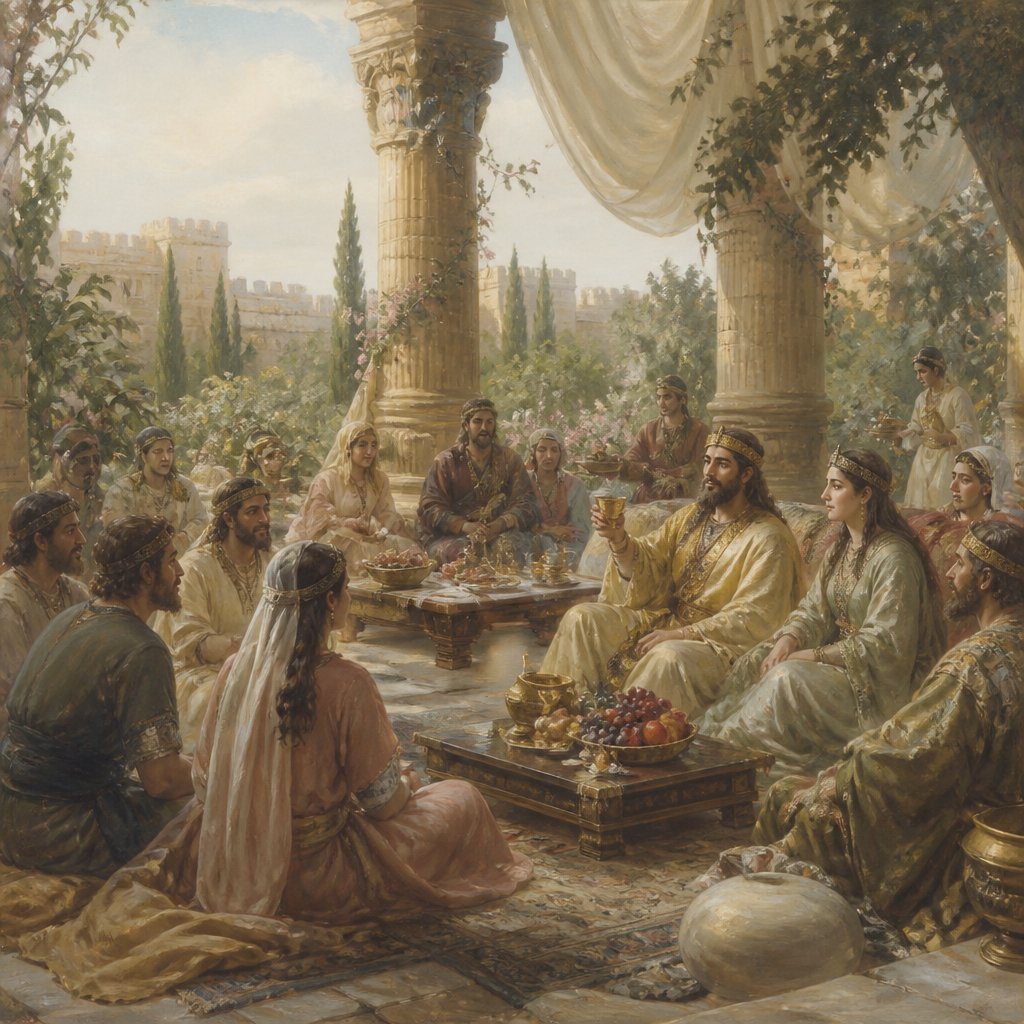
In Esther 1:5, we read, "And when these days were expired, the king made a feast unto all the people that were present in Shushan the palace, both unto great and small, seven days, in the court of the garden of the king's palace." At first glance, this verse may appear as a simple record of a royal celebration, but beneath the surface, it invites us to consider the profound implications of community, unity, and God's provision in our lives.
This feast was not an ordinary gathering; it was a magnificent display of the king’s power and wealth, but more importantly, it was a powerful act of inclusion and fellowship. The text stresses that the feast was for "both unto great and small." In a culture where social status often dictated one's value, the king’s decision to invite all — regardless of their rank — highlights a principle central to the Kingdom of God: inclusivity. God’s love is not reserved for the elite or the powerful; it extends to everyone.
Reflecting on this truth ignites a sense of gratitude within us. Just like the citizens of Shushan who were invited to partake in the king's provisions, we too are invited to experience the rich blessings of God’s kingdom. Jesus Himself illustrated this attitude in His ministry. He often broke societal norms by dining with tax collectors and sinners, reminding us that the love of God transcends barriers and biases. He came to seek and save those who were lost, embracing every soul with open arms.
Now, let us consider the significance of the setting for this feast: the court of the garden of the king’s palace. Gardens often symbolize growth, cultivation, and a place of beauty. They are crafted with care, designed to flourish and provide sustenance. In many ways, the garden serves as a metaphor for the community that we build in our lives. Just as a garden requires intentionality and care to thrive, so does our community. The gathering in Shushan symbolizes a moment where relationships are fostered, and joy is shared. It reminds us that our lives are meant to be lived in fellowship, serving and celebrating one another.
During the seven days of this feast, we can imagine laughter echoing through the court, stories being shared, and connections being built. This gathering, steeped in unity, foreshadows a greater narrative woven throughout the book of Esther. In these moments of shared joy, God’s providence is at work, quietly positioning Esther for her divine purpose in a turbulent time. This theme resonates throughout Scripture, reminding us that often in moments of celebration and community, God is laying the groundwork for His plans to unfold.
As we reflect on Esther 1:5, let us not miss the lesson on the importance of celebrating ‘the ordinary’ and acknowledging God’s presence in our everyday lives. How often do we neglect the significance of gathering together? It can be easy to overlook the power of shared meals, whether they occur at a dining table or during a coffee break at work. Just as the king's feast served to honor the people of Shushan, our gatherings can create spaces of honor, love, and unity.
In conclusion, this verse challenges us to emulate the hospitality and care that the king exhibited. Let us strive to include others, whether in joy or in sorrow, hosting our own 'feasts' that welcome those around us into fellowship and community. And as we gather, may we be reminded of the ultimate feast that awaits us in God's kingdom, where we, His beloved people, will celebrate together for eternity. Through these moments, may we recognize that every gathering is an opportunity to see the hand of God at work, inviting us deeper into His presence and purposes.
Get our apps


Artwork for Esther 1:5
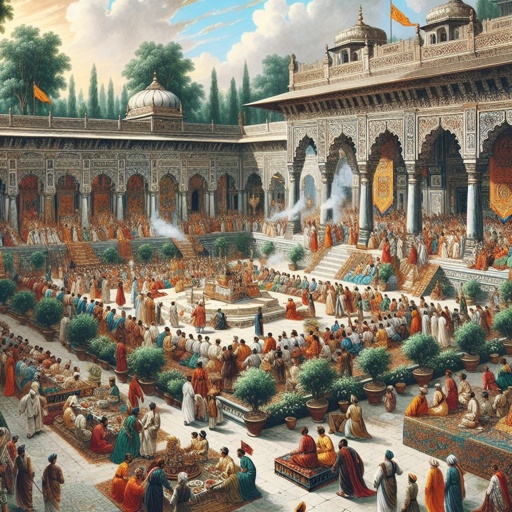
Esther 1:5 - "And when these days were expired, the king made a feast unto all the people that were present in Shushan the palace, both unto great and small, seven days, in the court of the garden of the king's palace;"
"And when these days were expired, the king made a feast unto all the people that were present in Shushan the palace, both unto great and small, seven days, in the court of the garden of the king's palace;" - Esther 1:5

Esther 5:5 - "Then the king said, Cause Haman to make haste, that he may do as Esther hath said. So the king and Haman came to the banquet that Esther had prepared."

Esther 5:7 - "Then answered Esther, and said, My petition and my request is;"

Esther 5:1 - "Now it came to pass on the third day, that Esther put on her royal apparel, and stood in the inner court of the king's house, over against the king's house: and the king sat upon his royal throne in the royal house, over against the gate of the house."

Esther 5:2

Esther 5:2 - "And it was so, when the king saw Esther the queen standing in the court, that she obtained favour in his sight: and the king held out to Esther the golden sceptre that was in his hand. So Esther drew near, and touched the top of the sceptre."

Esther 5:2

Esther 5:2

Esther 5:4 - "And Esther answered, If it seem good unto the king, let the king and Haman come this day unto the banquet that I have prepared for him."
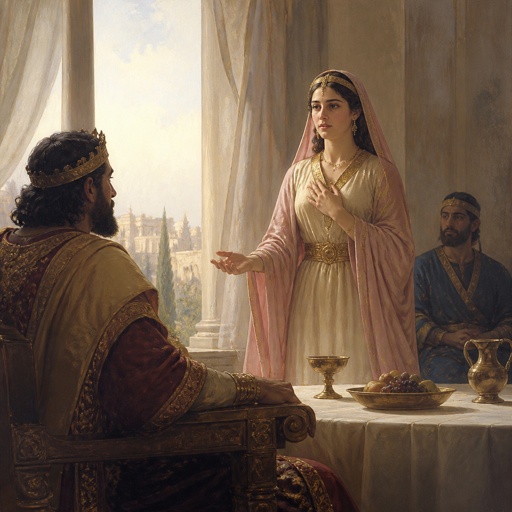
"Then answered Esther, and said, My petition and my request is;" - Esther 5:7

Esther 5:3 - "Then said the king unto her, What wilt thou, queen Esther? and what is thy request? it shall be even given thee to the half of the kingdom."

Esther 7:5 - "¶ Then the king Ahasuerus answered and said unto Esther the queen, Who is he, and where is he, that durst presume in his heart to do so?"

Esther 5:2 - "And it was so, when the king saw Esther the queen standing in the court, that she obtained favour in his sight: and the king held out to Esther the golden sceptre that was in his hand. So Esther drew near, and touched the top of the sceptre."
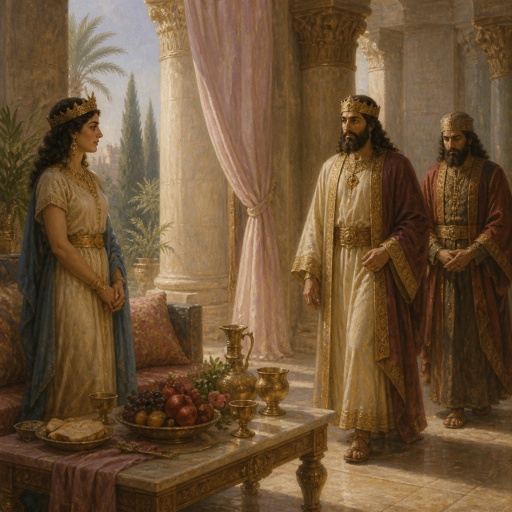
"Then the king said, Cause Haman to make haste, that he may do as Esther hath said. So the king and Haman came to the banquet that Esther had prepared." - Esther 5:5

Esther 4:5 - "Then called Esther for Hatach, one of the king's chamberlains, whom he had appointed to attend upon her, and gave him a commandment to Mordecai, to know what it was, and why it was."

Esther 7:1 - "So the king and Haman came to banquet with Esther the queen."

Esther 5:6 - "¶ And the king said unto Esther at the banquet of wine, What is thy petition? and it shall be granted thee: and what is thy request? even to the half of the kingdom it shall be performed."

Esther 1:17

Esther 8:1 - "On that day did the king Ahasuerus give the house of Haman the Jews' enemy unto Esther the queen. And Mordecai came before the king; for Esther had told what he was unto her."

Esther 5:12 - "Haman said moreover, Yea, Esther the queen did let no man come in with the king unto the banquet that she had prepared but myself; and to morrow am I invited unto her also with the king."

Esther, the courageous queen

"So the king and Haman came to banquet with Esther the queen." - Esther 7:1

Esther 1:6

Esther 3:5 - "And when Haman saw that Mordecai bowed not, nor did him reverence, then was Haman full of wrath."
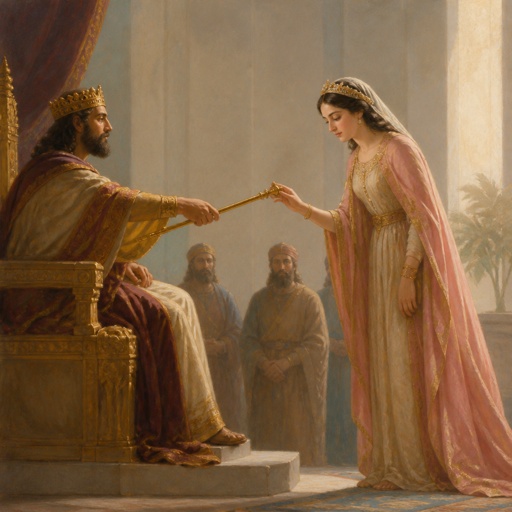
"And it was so, when the king saw Esther the queen standing in the court, that she obtained favour in his sight: and the king held out to Esther the golden sceptre that was in his hand. So Esther drew near, and touched the top of the sceptre." - Esther 5:2

Esther 6:5 - "And the king's servants said unto him, Behold, Haman standeth in the court. And the king said, Let him come in."

Esther 5:13 - "Yet all this availeth me nothing, so long as I see Mordecai the Jew sitting at the king's gate."

Esther 2:5 - "¶ Now in Shushan the palace there was a certain Jew, whose name was Mordecai, the son of Jair, the son of Shimei, the son of Kish, a Benjamite;"

Esther 5:10 - "Nevertheless Haman refrained himself: and when he came home, he sent and called for his friends, and Zeresh his wife."